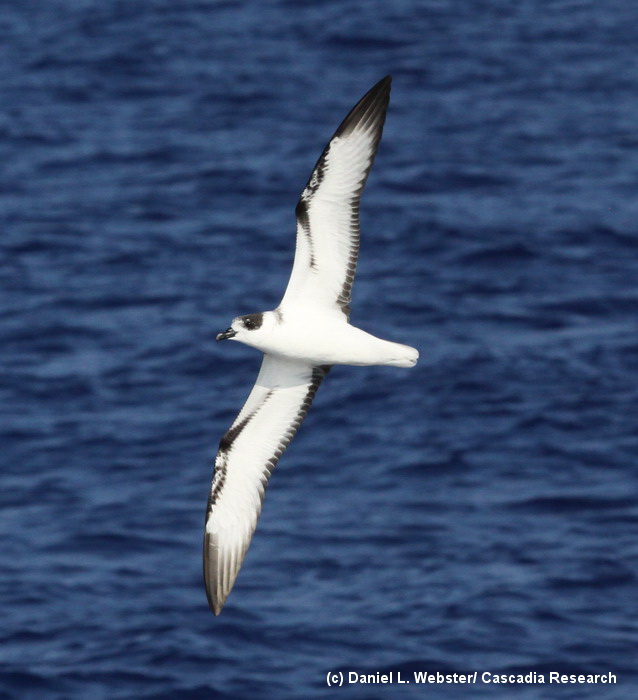
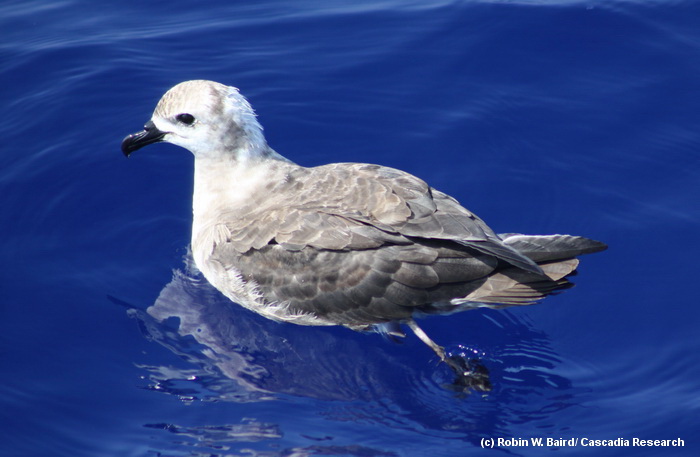
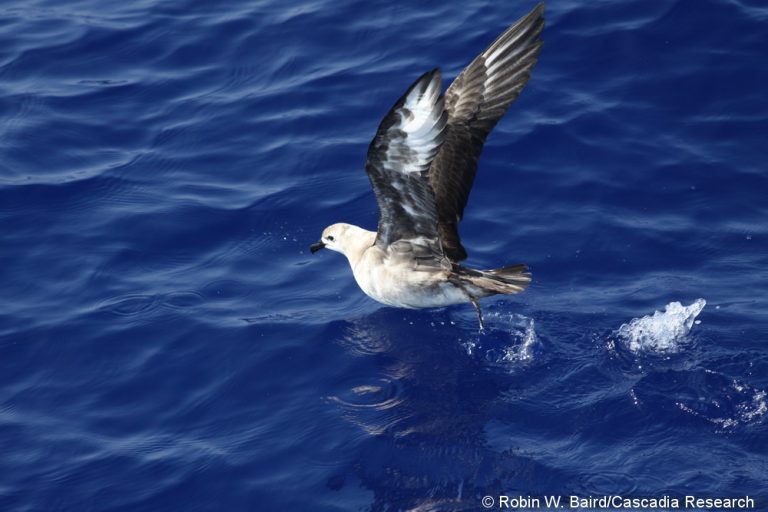
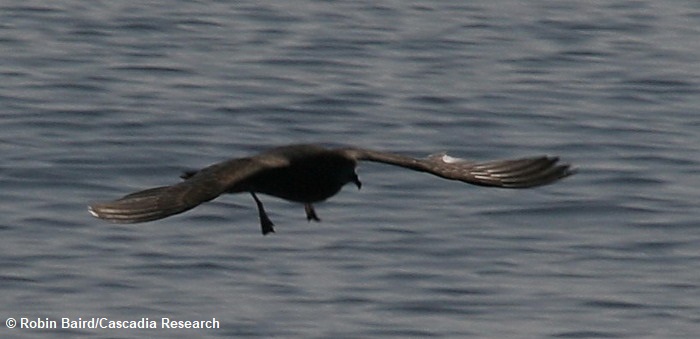
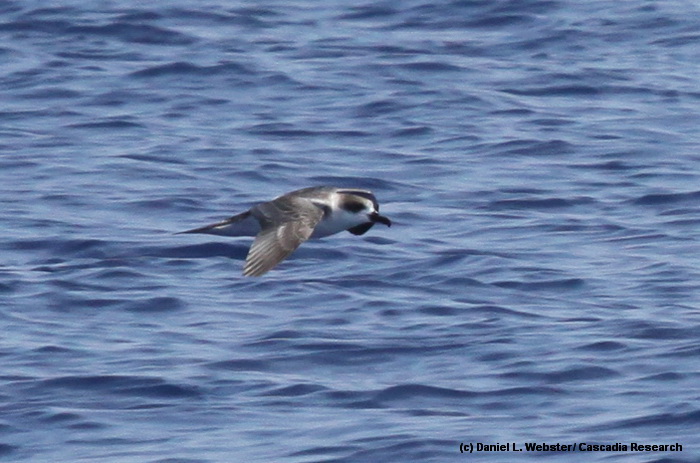
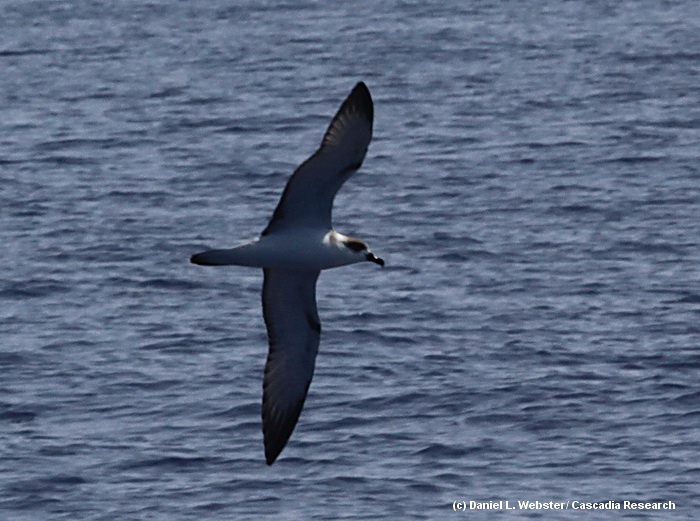
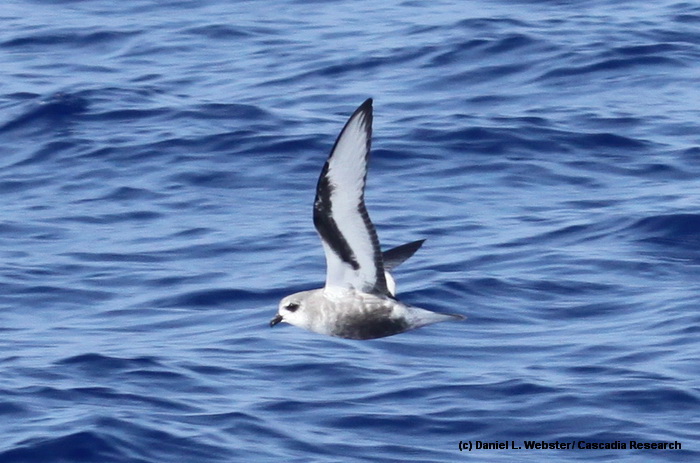
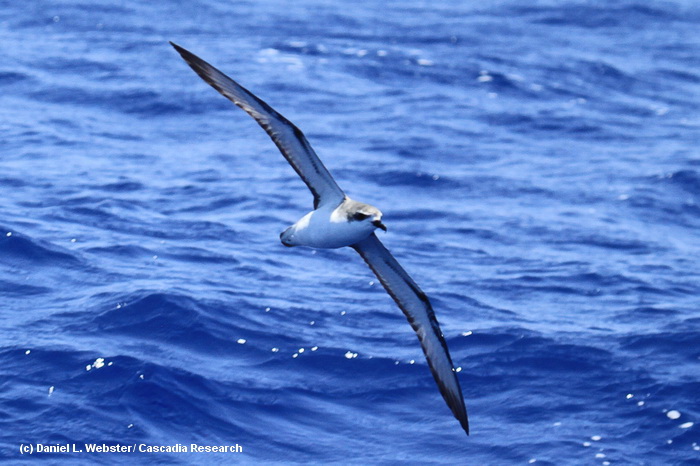
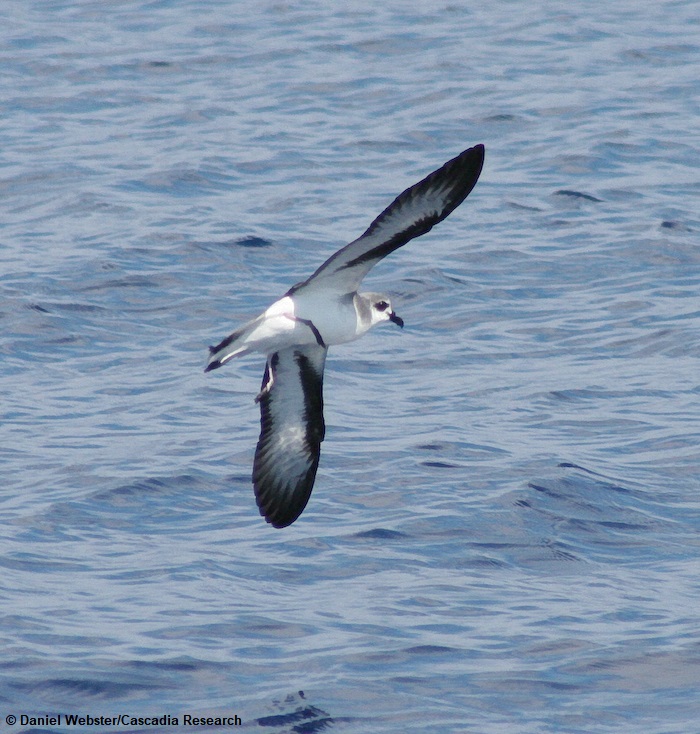
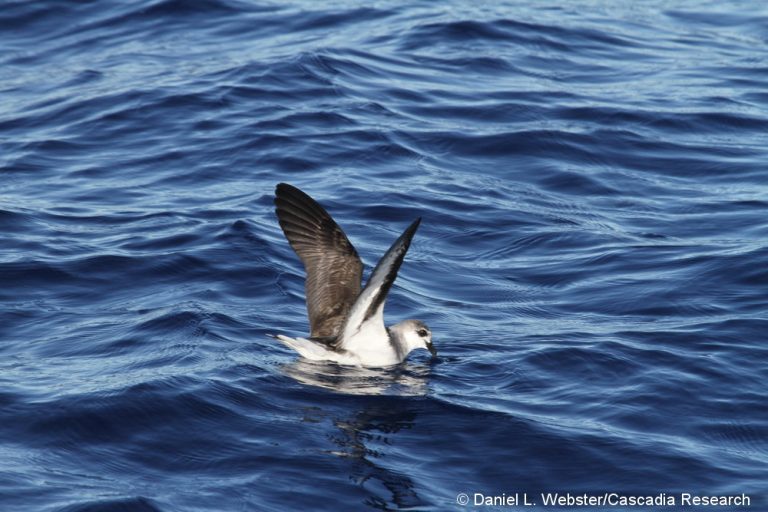
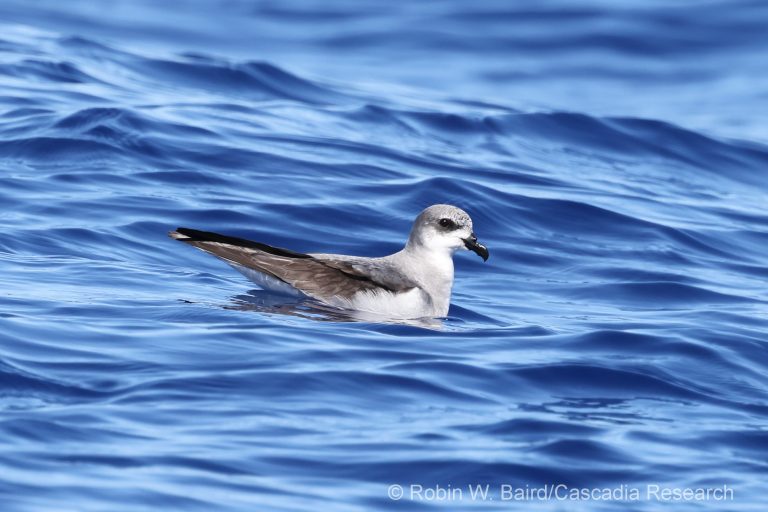
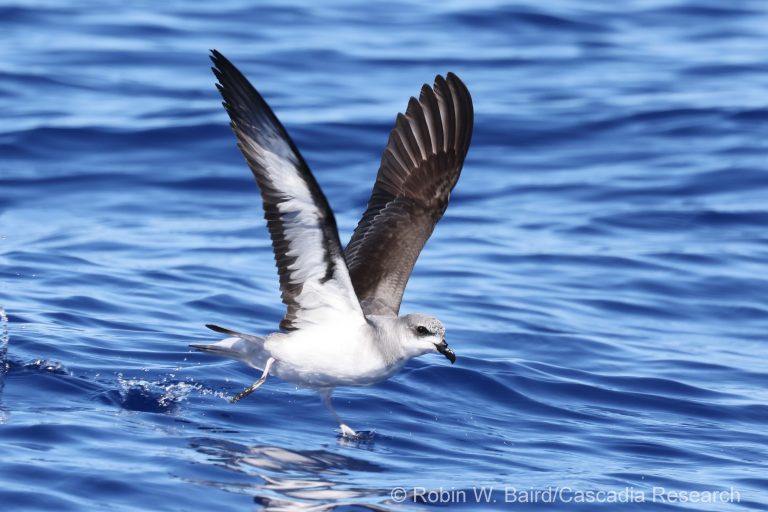
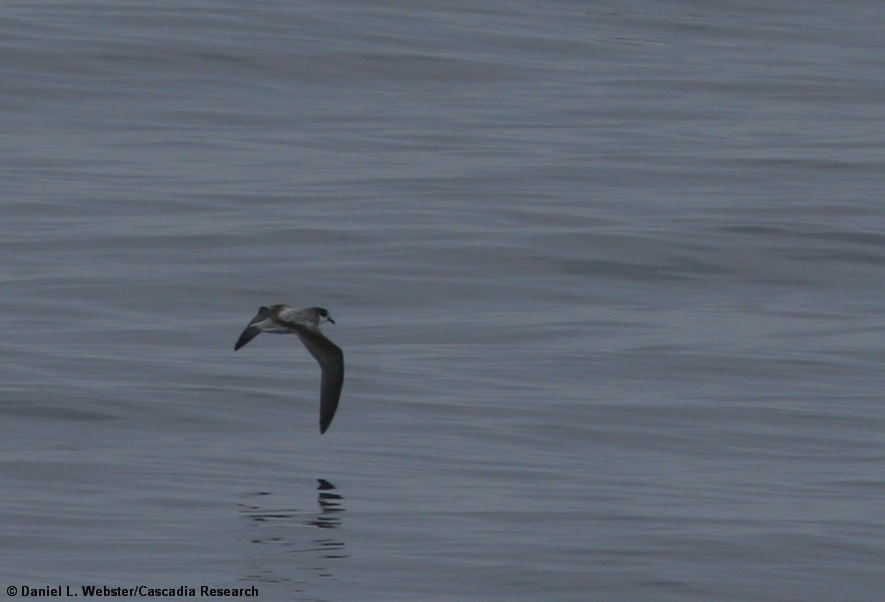
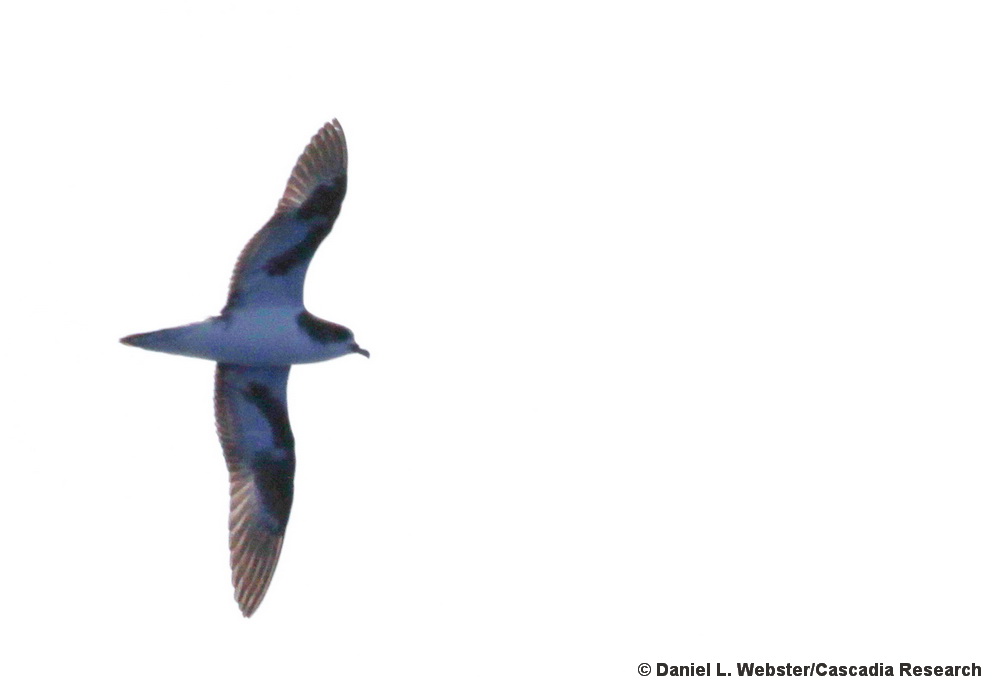
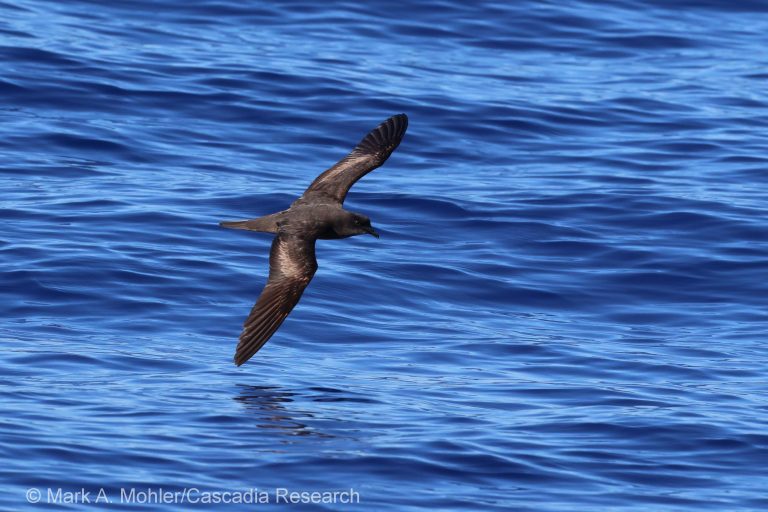
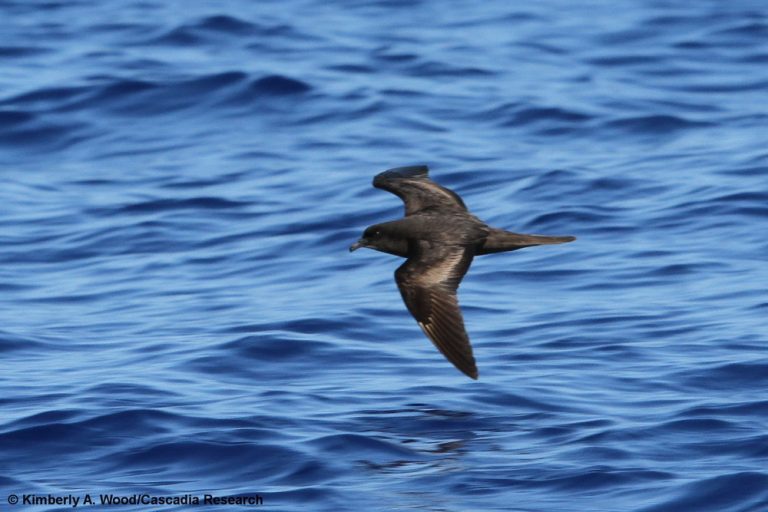
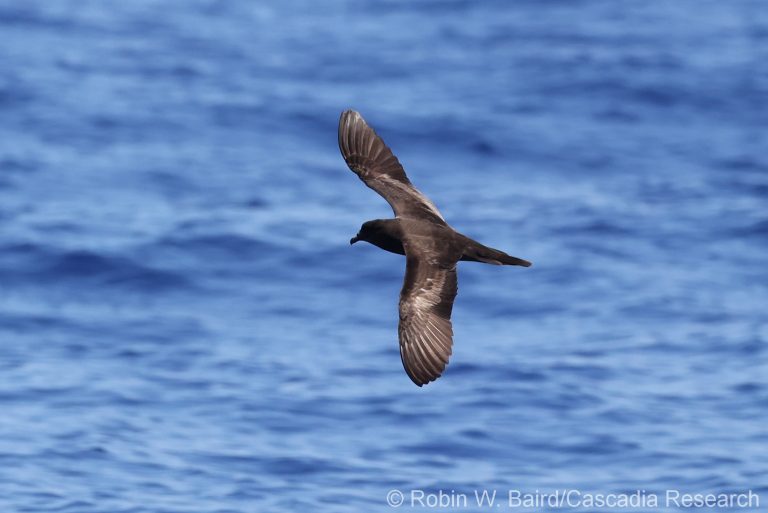
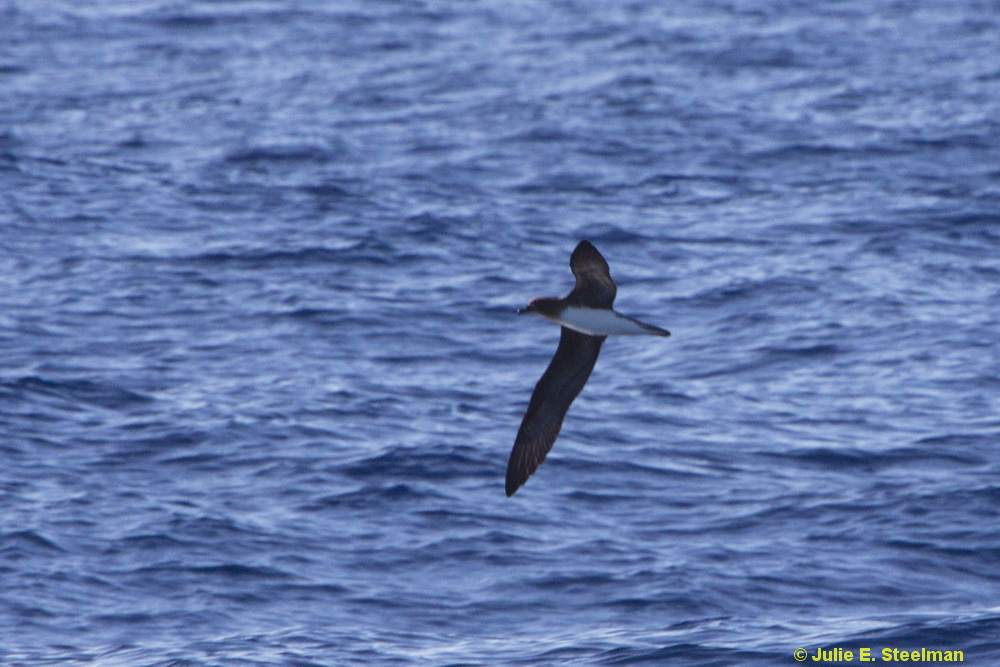
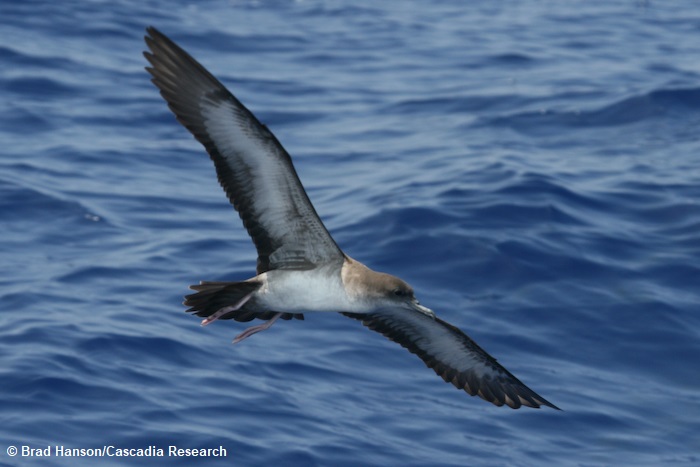
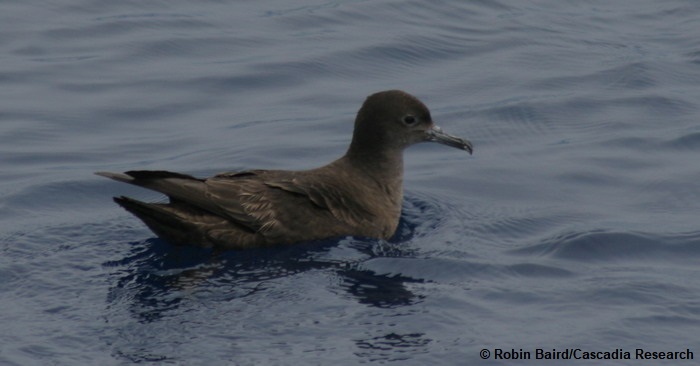
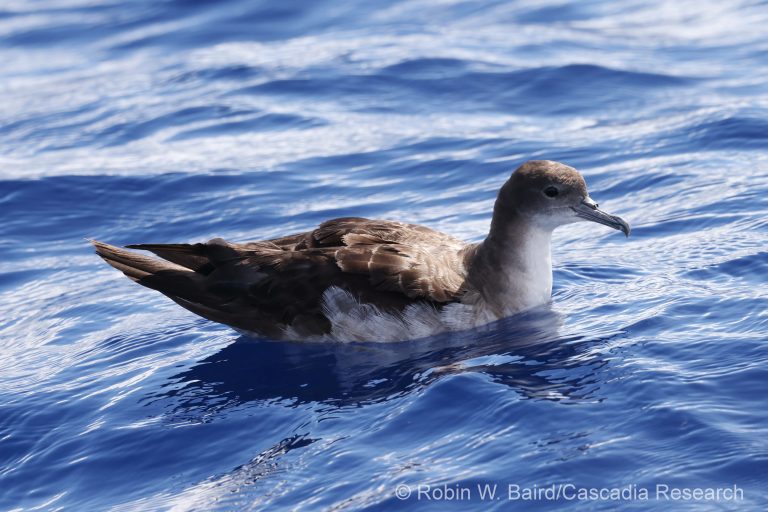
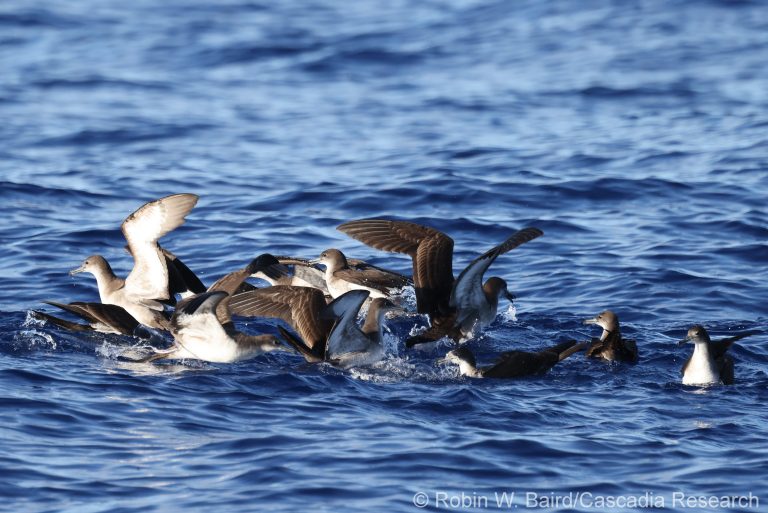
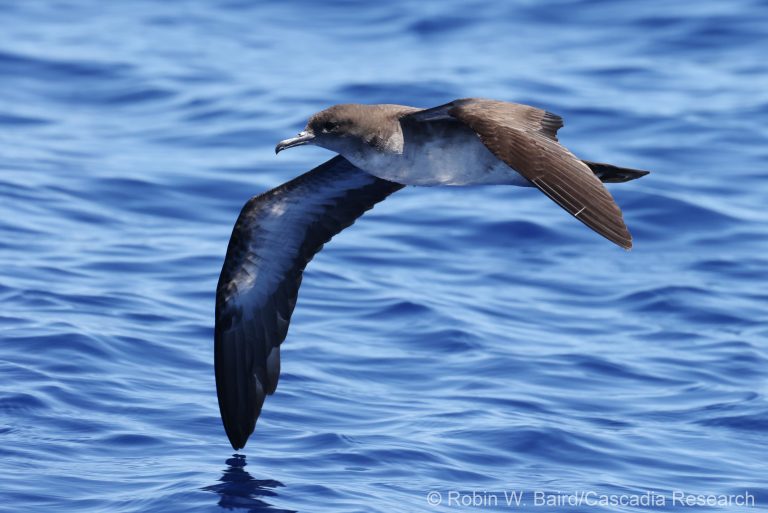
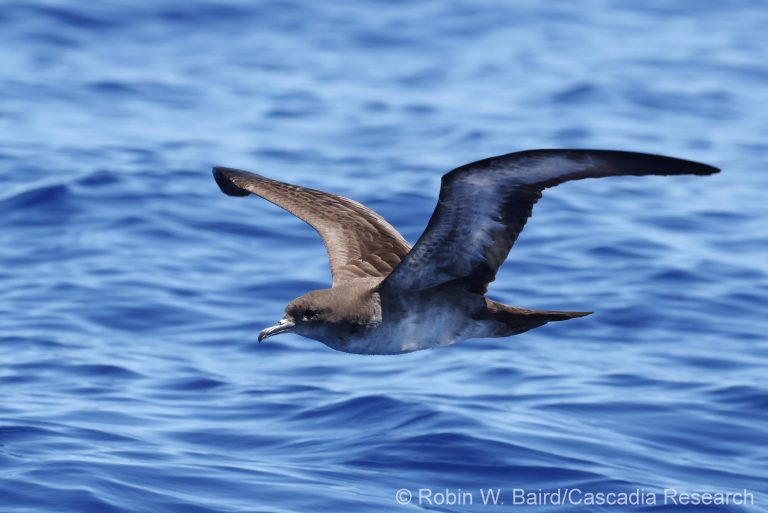
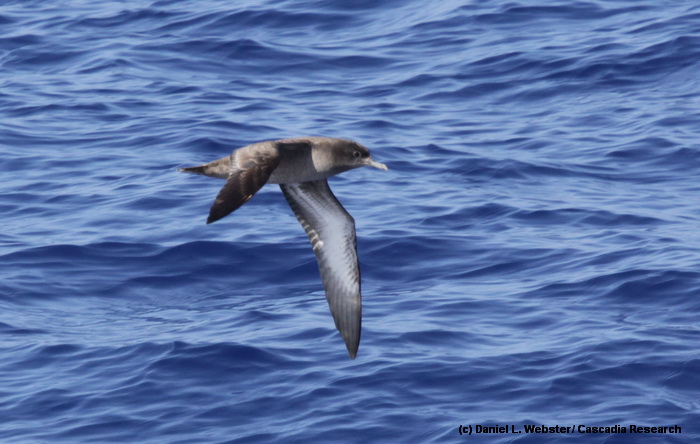
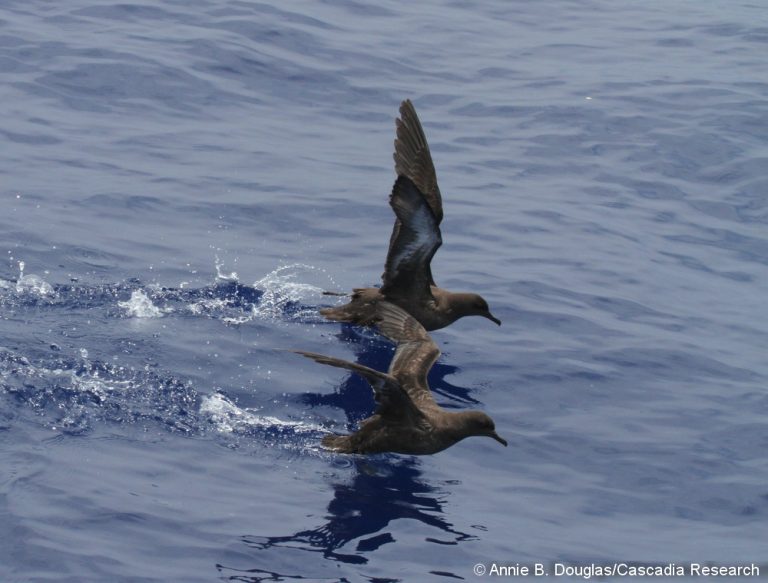
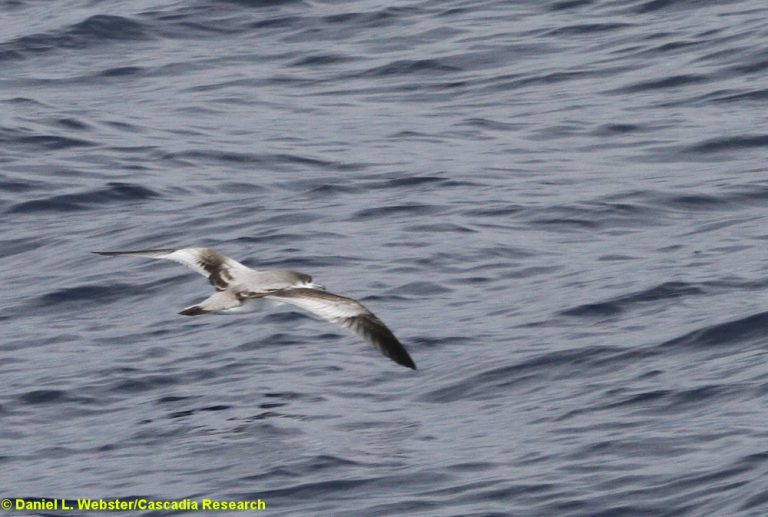
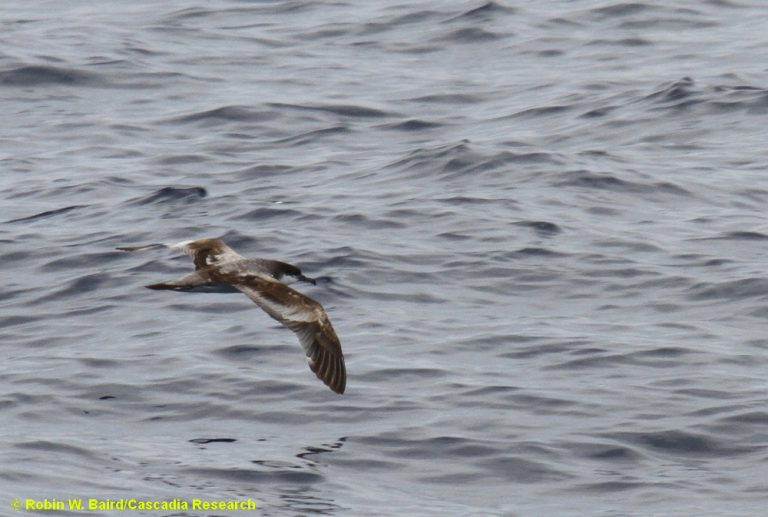
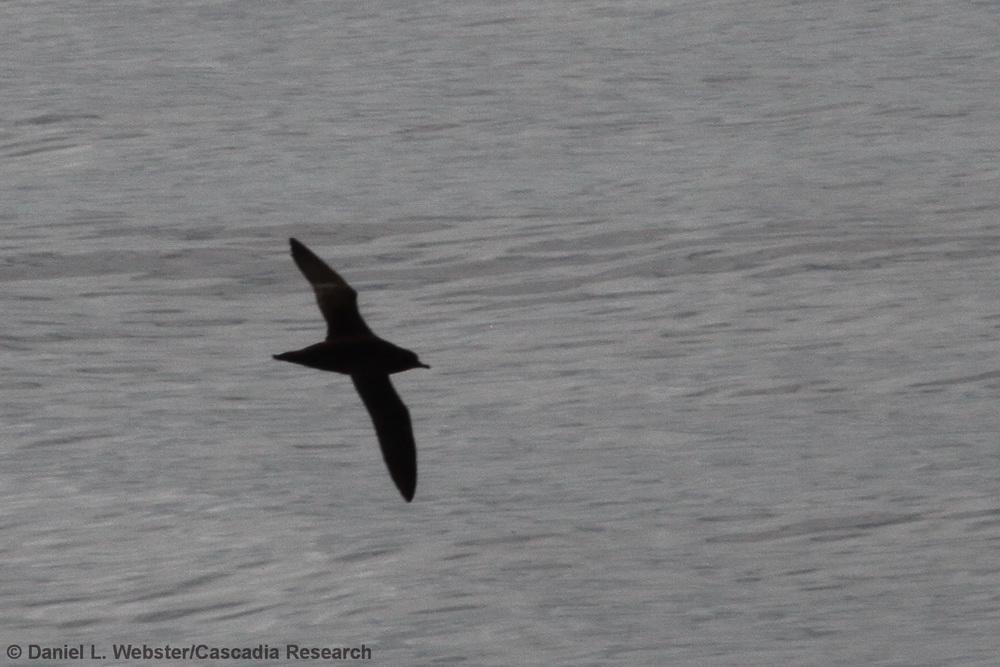
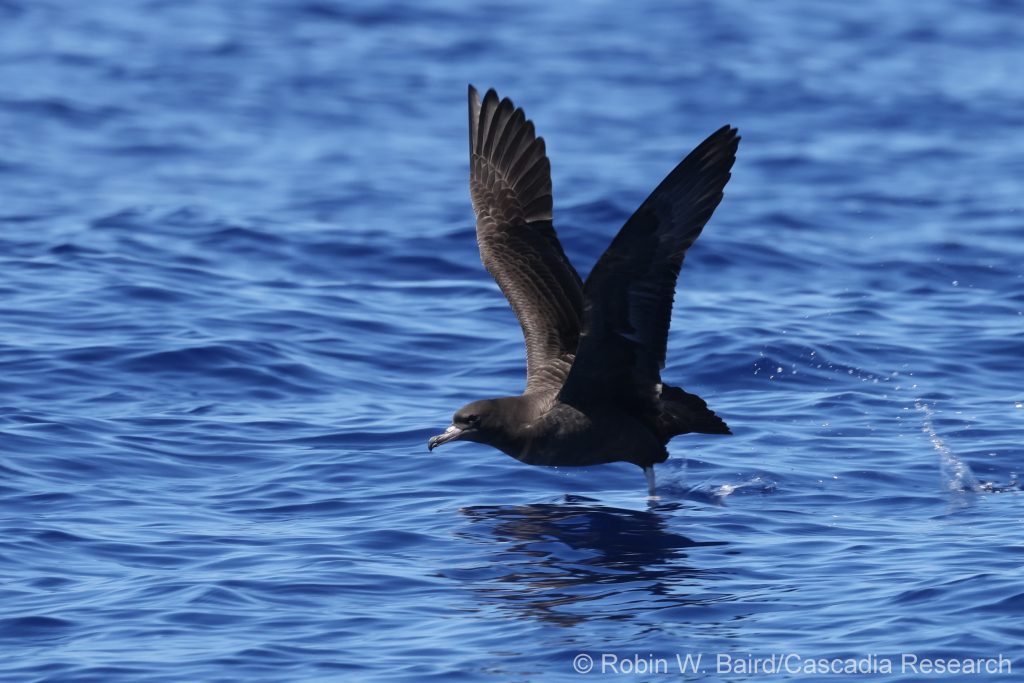
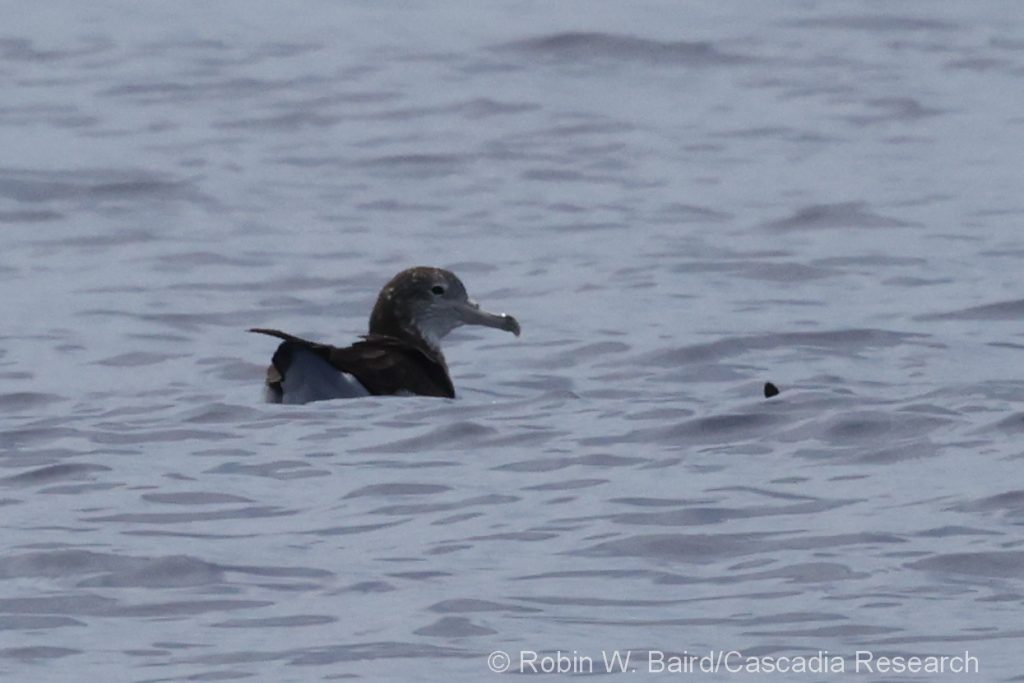
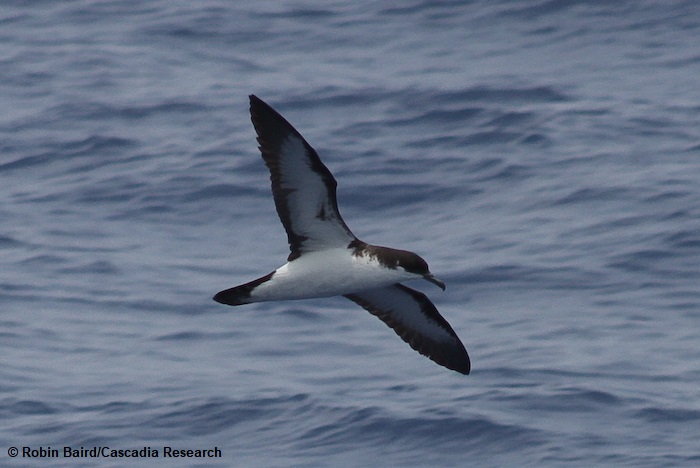
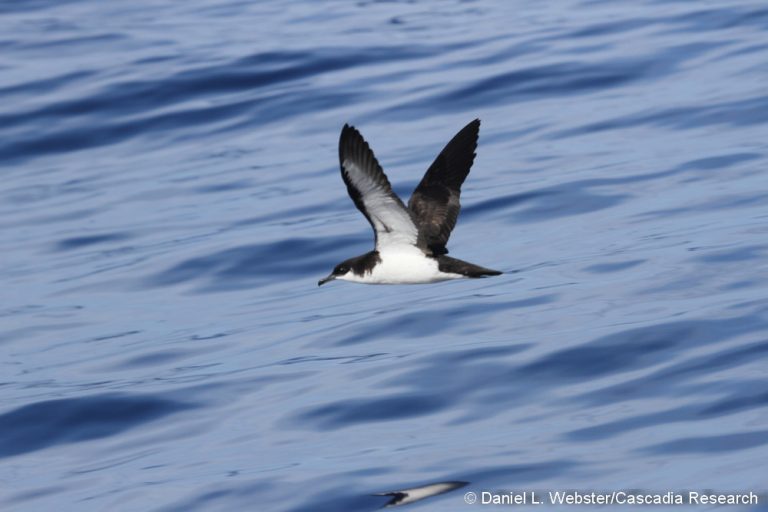
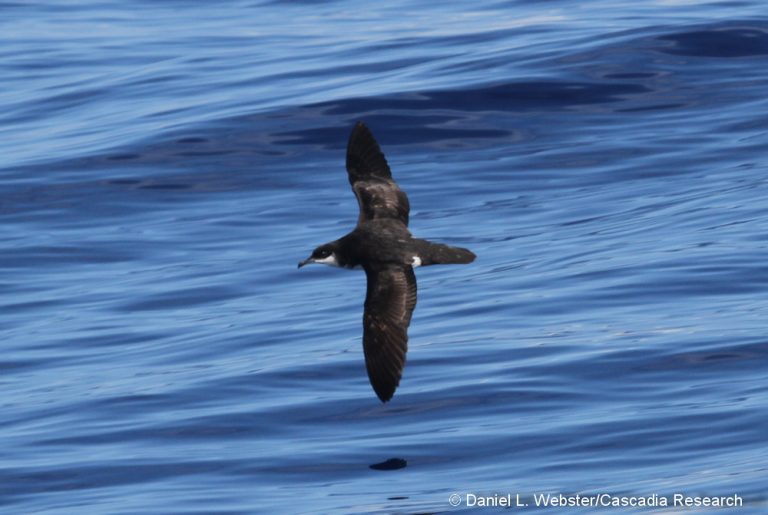
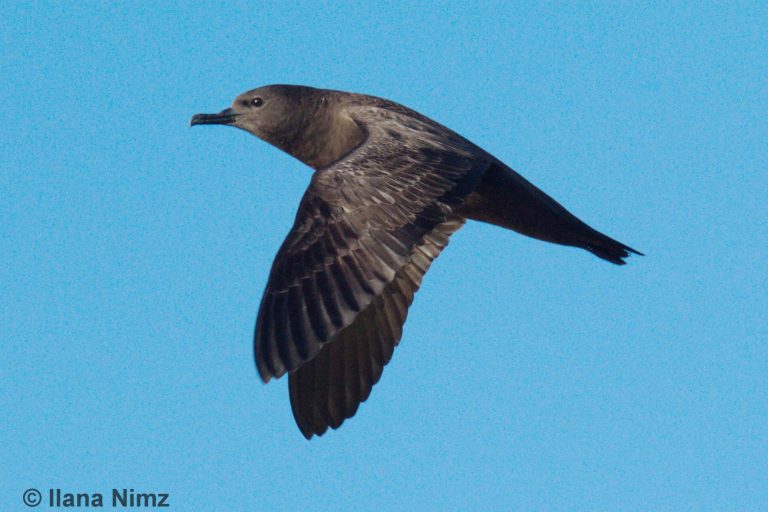
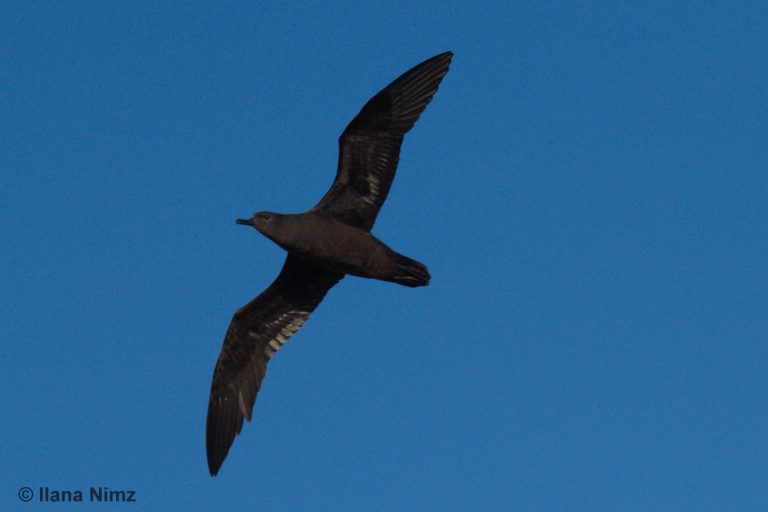
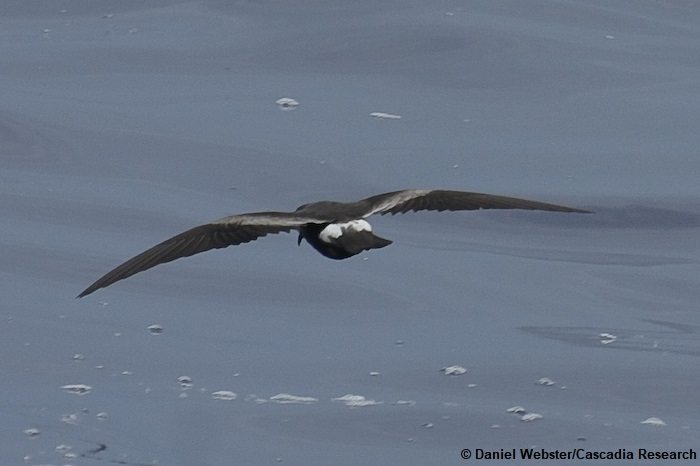
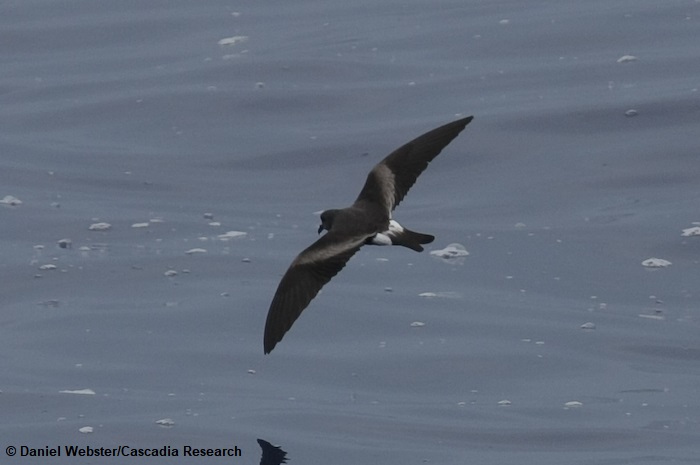
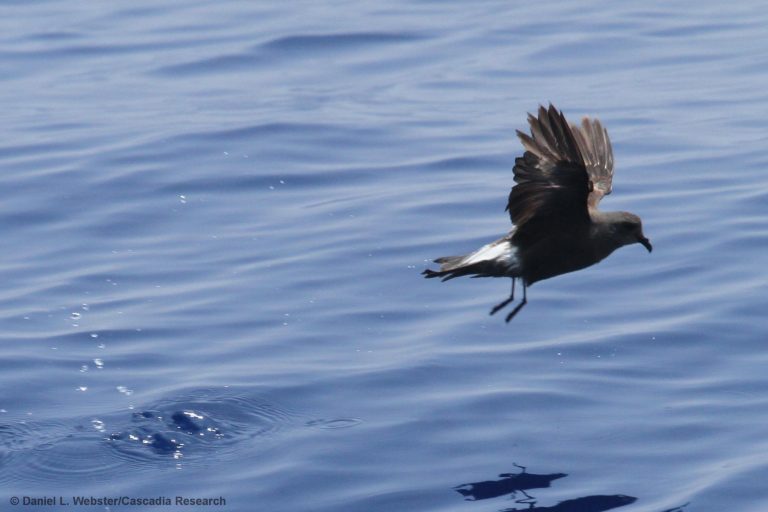
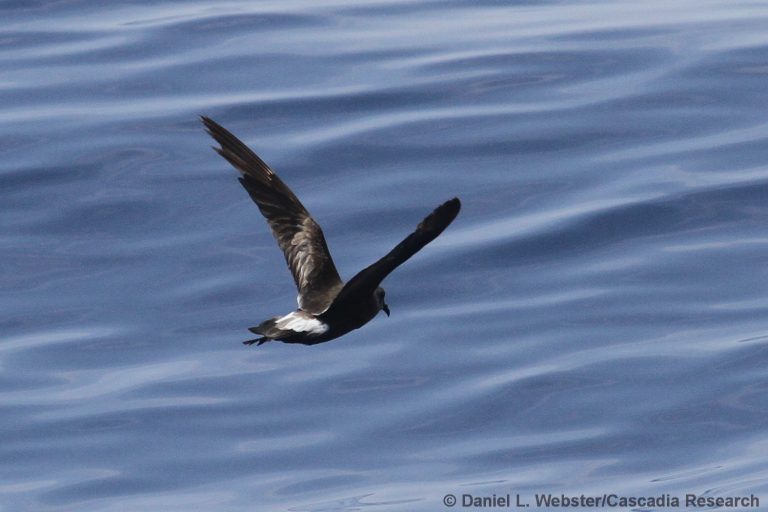
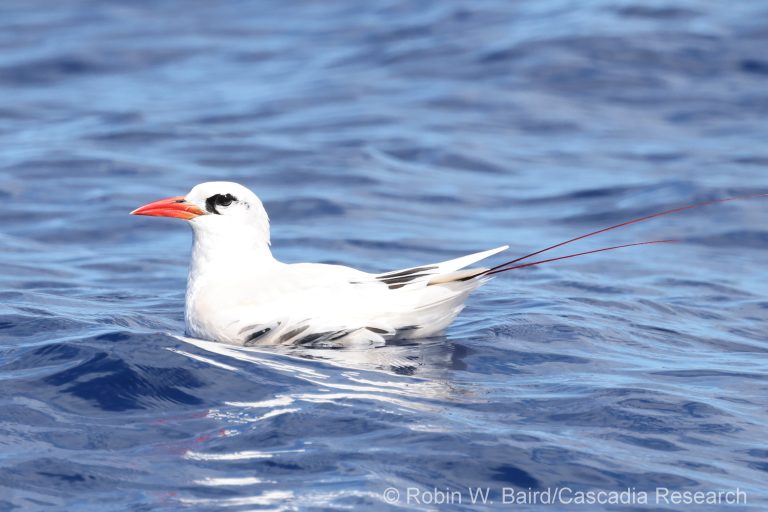
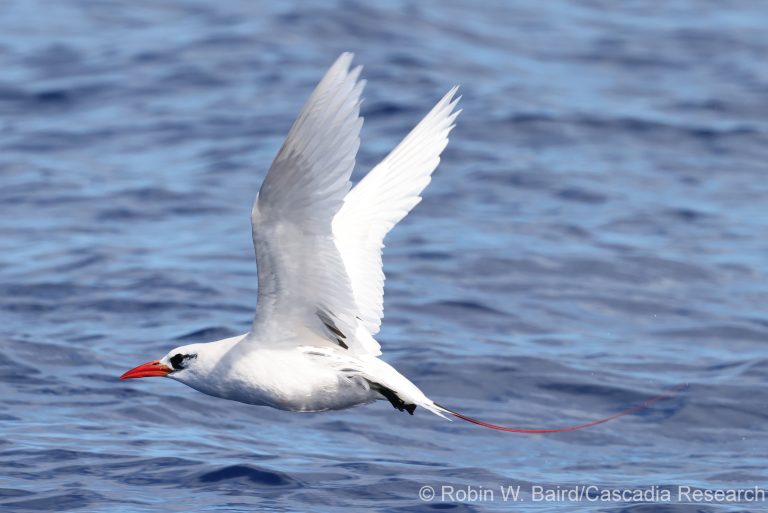
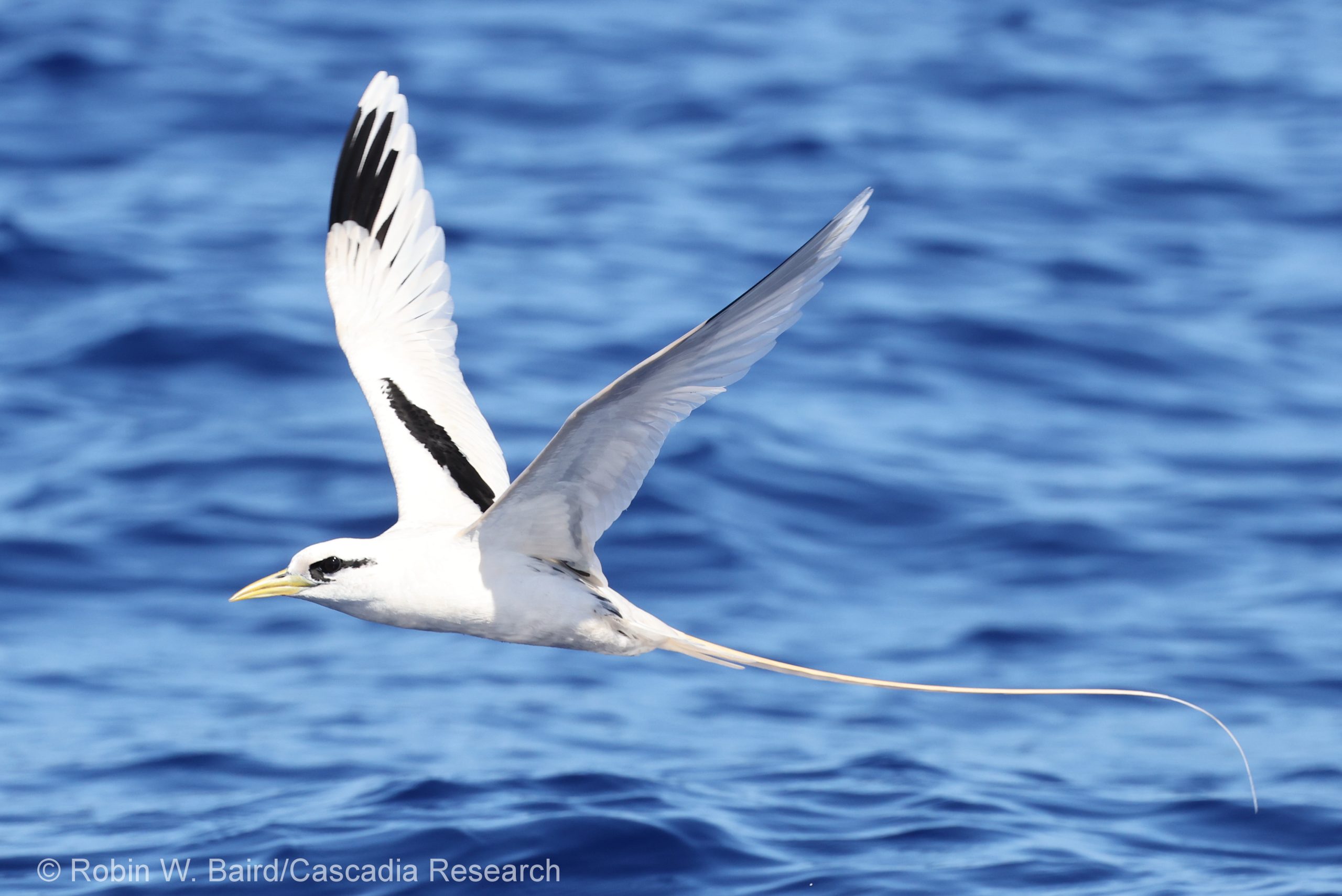
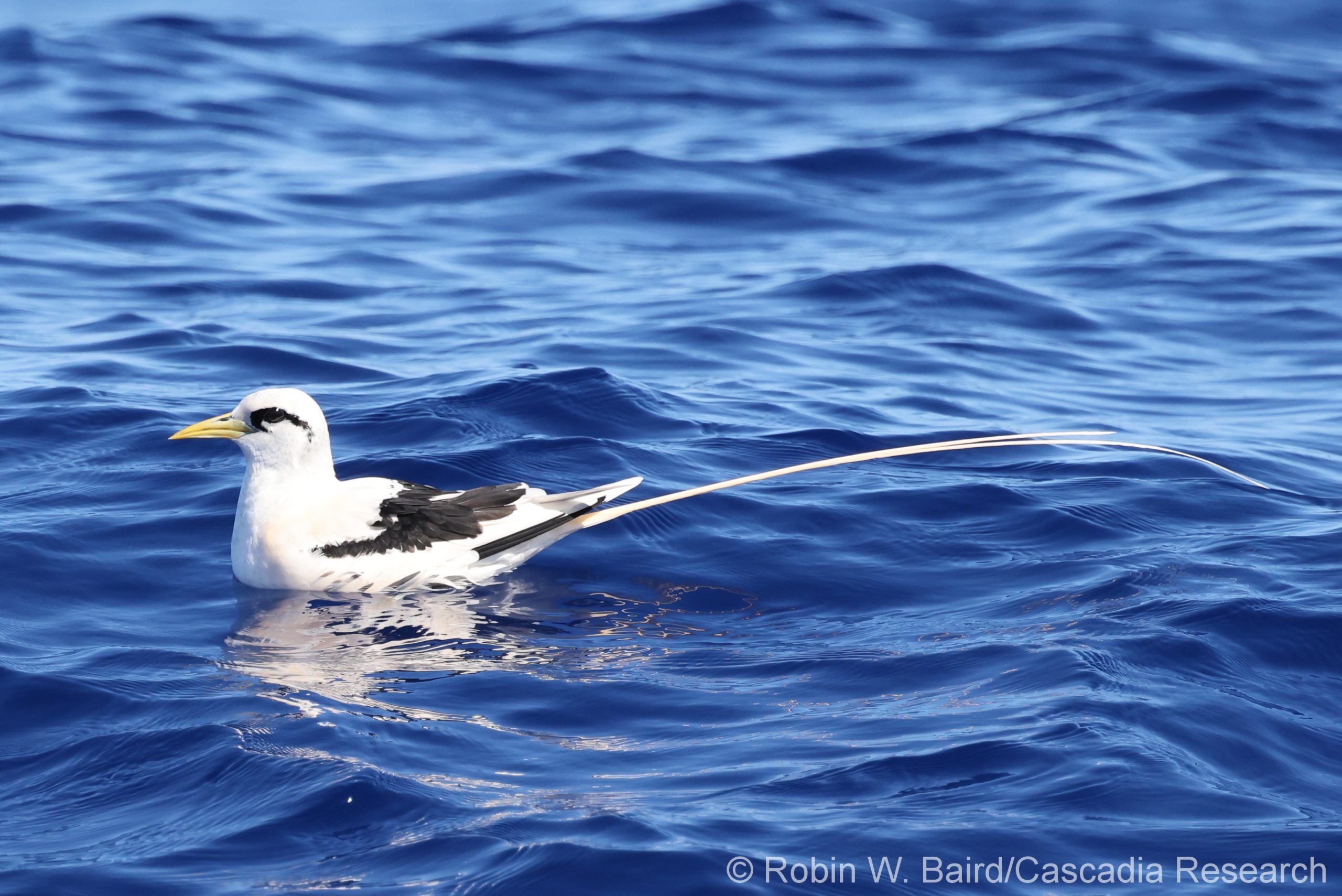
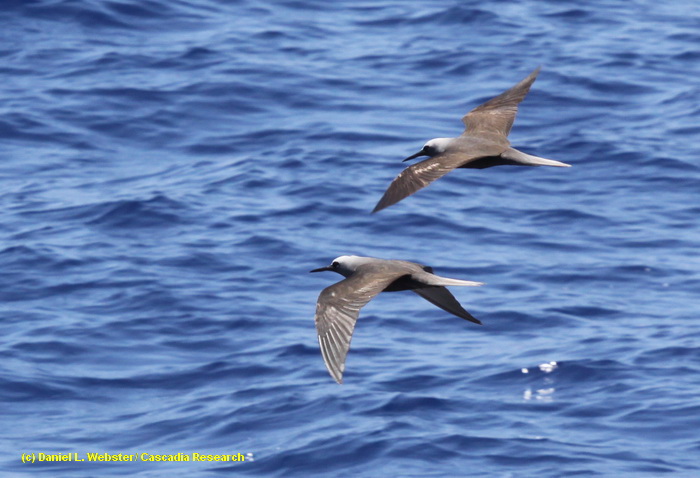
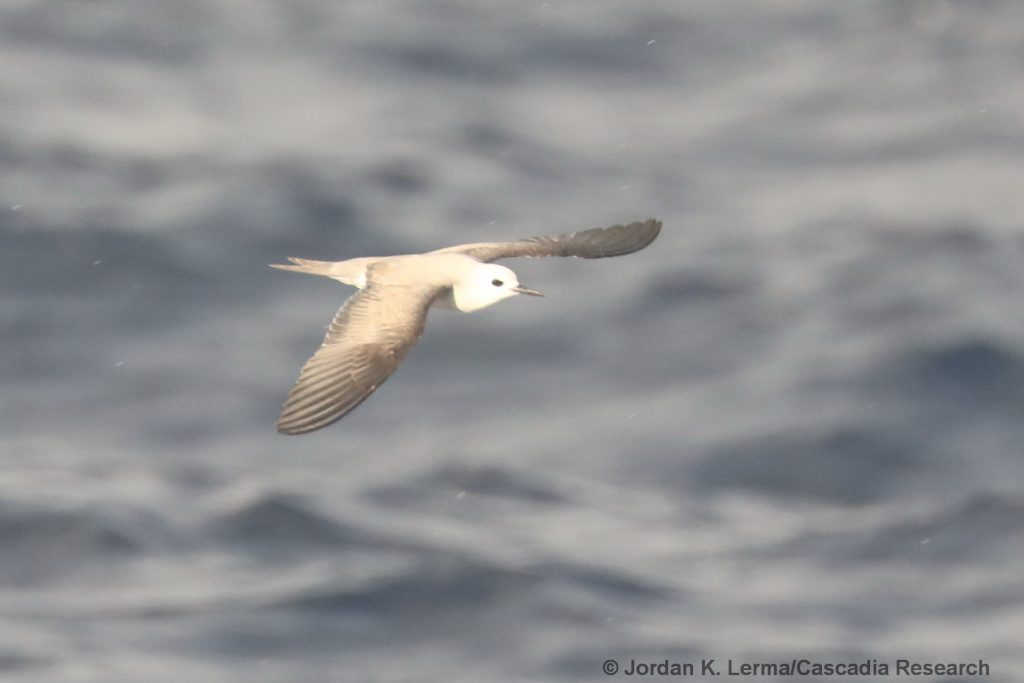
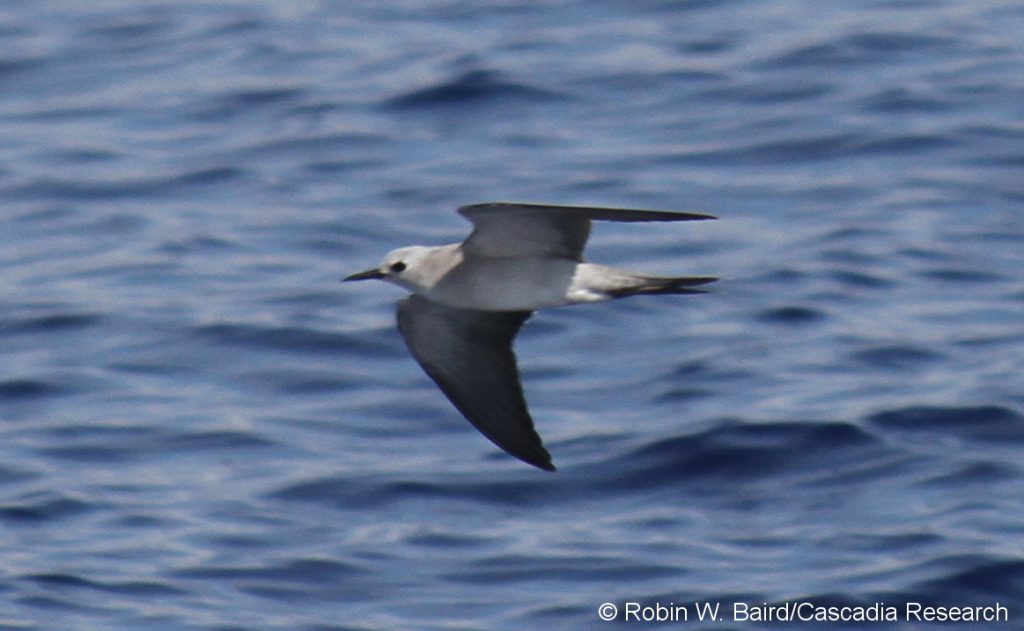
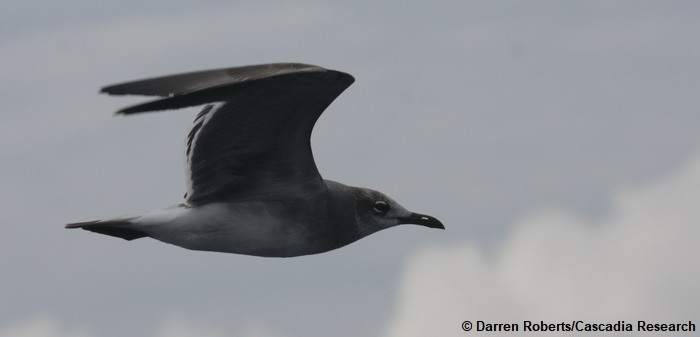
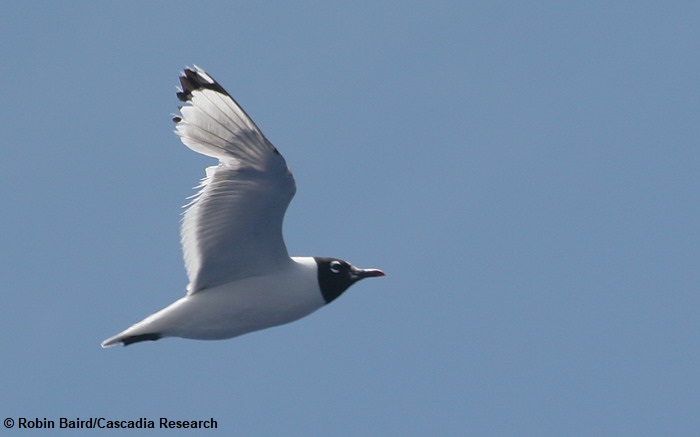
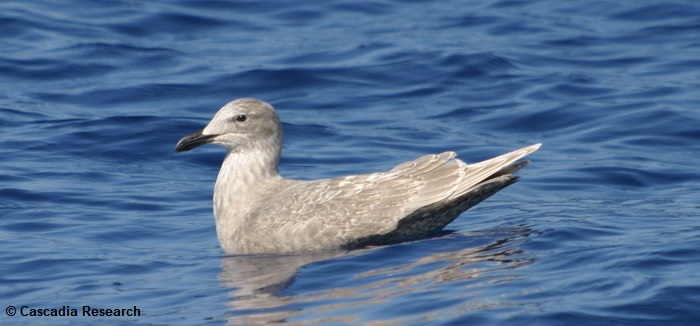
While our studies in Hawai’i focus on whales and dolphins, we have been attempting to photograph rare or uncommon species of seabirds since about 2003, and for most field projects we tally all seabird sightings. Over the years we’ve taken over 150,000 photos of seabirds. For many years all of our seabird photos were sent to Peter Pyle of the Institute for Bird Populations for identification, and many have been included in the online Birds of the Hawaiian Islands. Unusual sightings and photographs have been reported in the quarterly reports of North American Birds, and are also shared with local birders through social media and (more recently) eBird. We’ve co-authored two papers with Peter on seabirds in Hawai‘i, one on Dark-rumped Petrels (Pterodroma phaeopygia/sandwichensis) and one on white-rumped dark storm petrels (i.e., Leach’s and Band-rumped Storm Petrels) in Hawaiian waters – copies can be downloaded below. As well as an important opportunity to document the seabird community in Hawai‘i, we also record information on seabirds interactions with various species of whales and dolphins. We’ve worked off Kona every year from 2002 through 2026, and off Kaua‘i in 16 different years between 2003 and 2025, so our ability to assess seabird seasonality and presence around the islands is greatest for those two areas, but we’ve also worked off Maui Nui in 11 different years (between 2000 and 2025) and off O‘ahu in seven different years (between 2002 and 2025), so have some information on seabirds off those areas. We present below photographs of most species of seabirds we have documented in Hawaiian waters. There are still a few species of seabirds that have been recorded in Hawaiian waters that we have not yet seen, but we have hope we’ll continue to document new species (we are really hoping we’ll see a Short-tailed Albatross next).
The species we’ve documented in Hawai’i are listed below (English names followed by Hawaiian names, when available) – click on a name for photos of each species (we are still adding some species) – all photos are taken in Hawaiian waters:
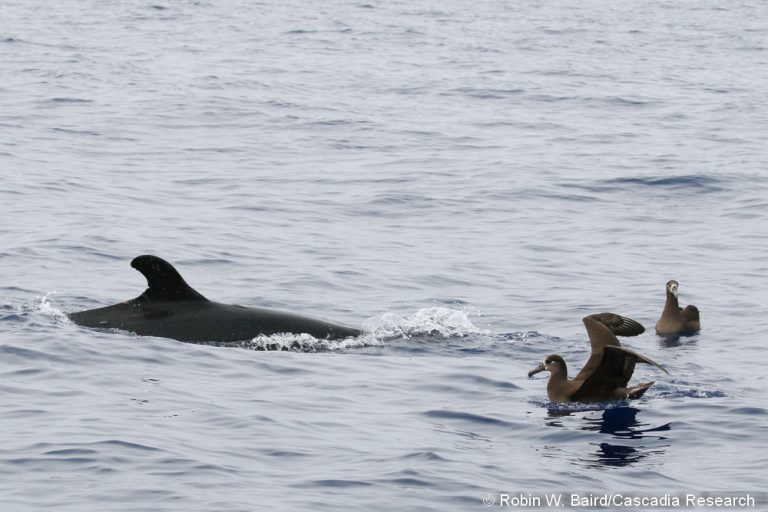
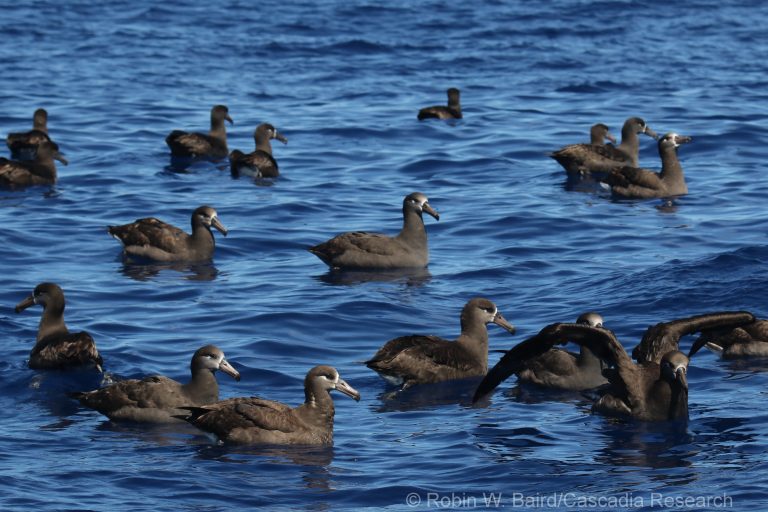
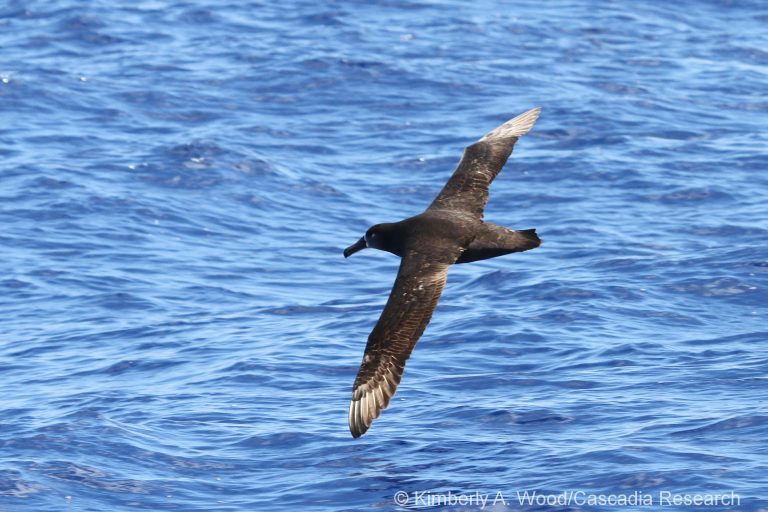
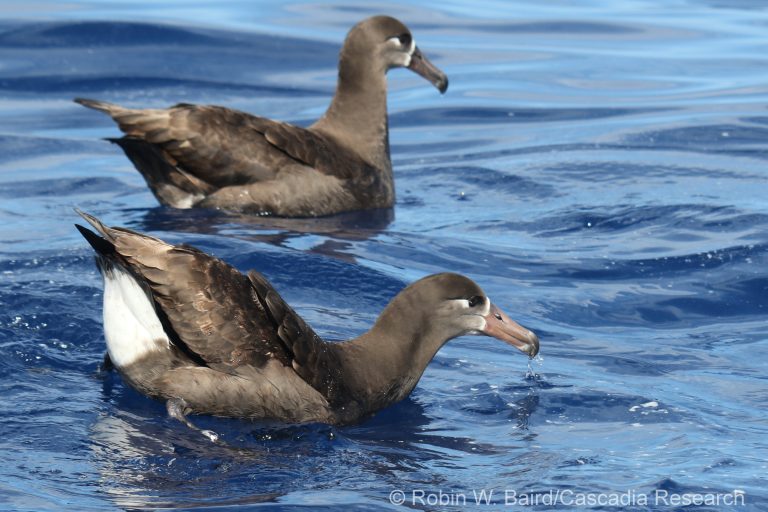
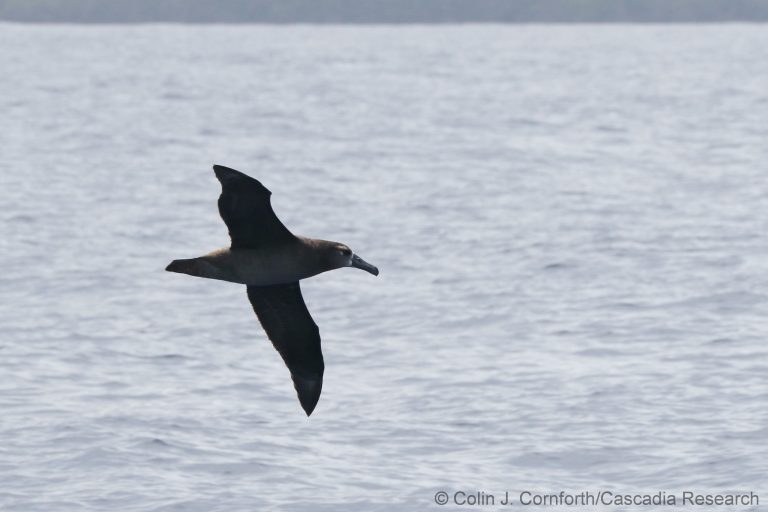
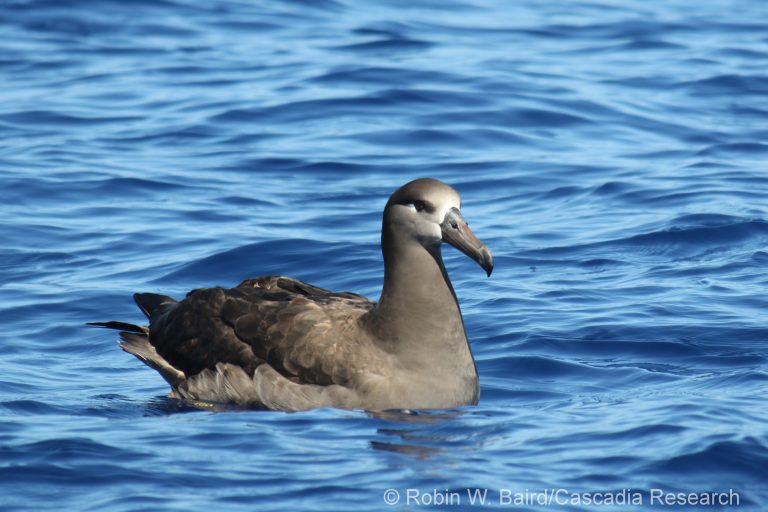
We’ve seen Black-footed Albatross off Kaua‘i, Lāna‘i, and Hawai‘i Islands, between the months of December and May, and see them every year when we have regular effort in the winter. The most we’ve ever seen in one day was 201 birds, seen off Kaua‘i on February 16, 2015. The large number seen that day was due to finding two dead whales that the albatross were feeding on – check out our project page for that effort for more photos.
Black-footed Albatross associated with a false killer whale off Lāna‘i. The false killer whale was carrying a large fish, and the albatross were scavenging bits that were left at the surface.
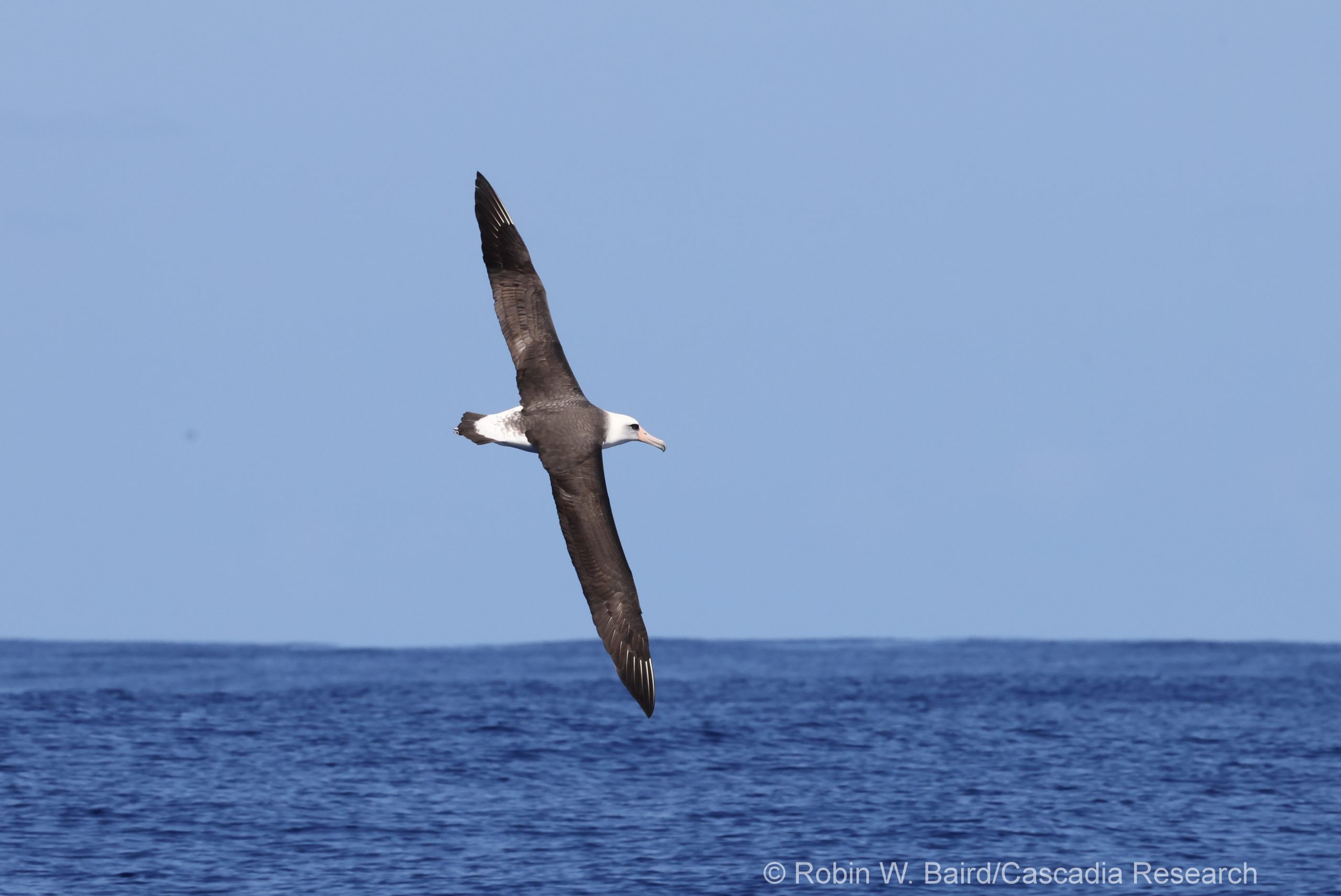
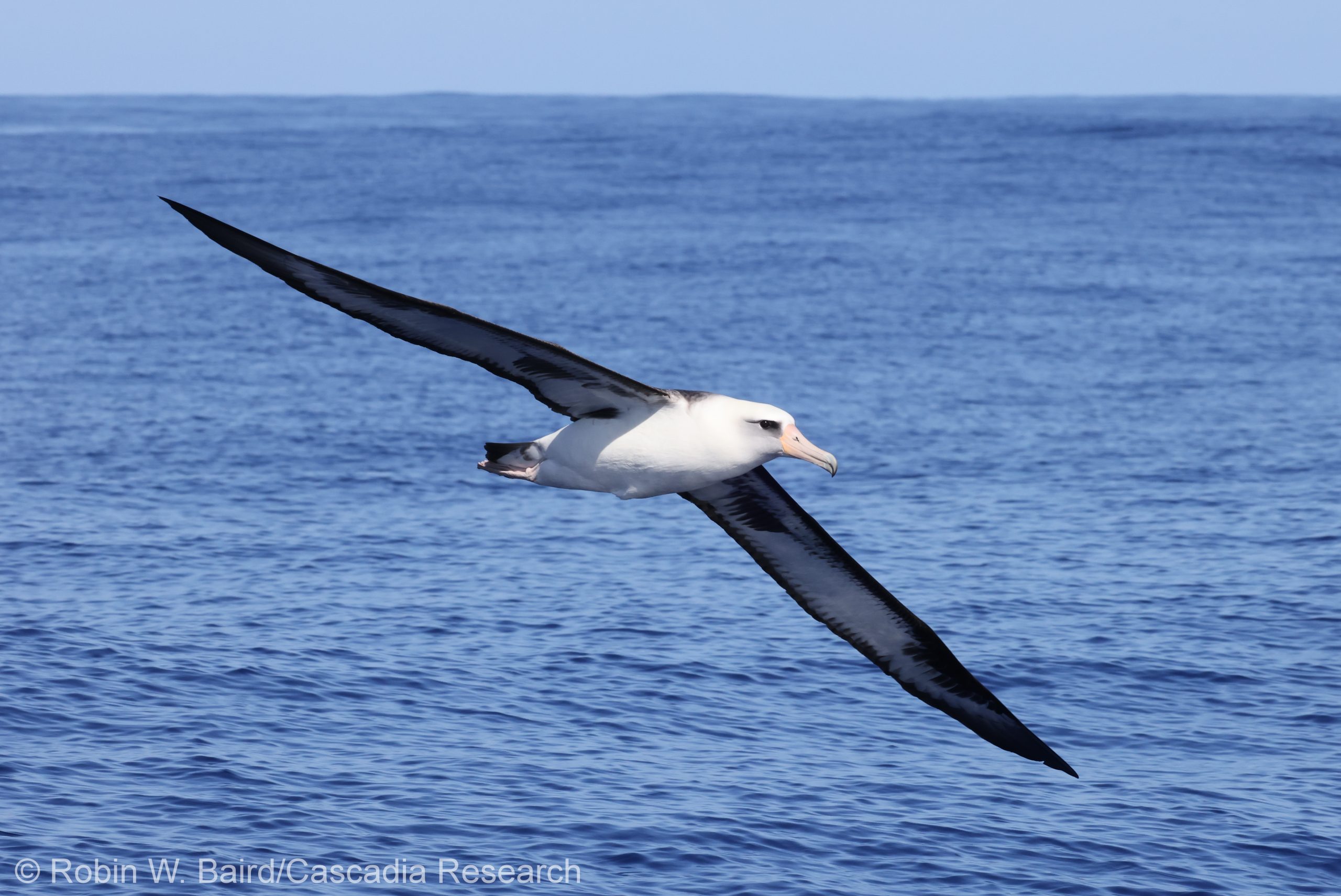
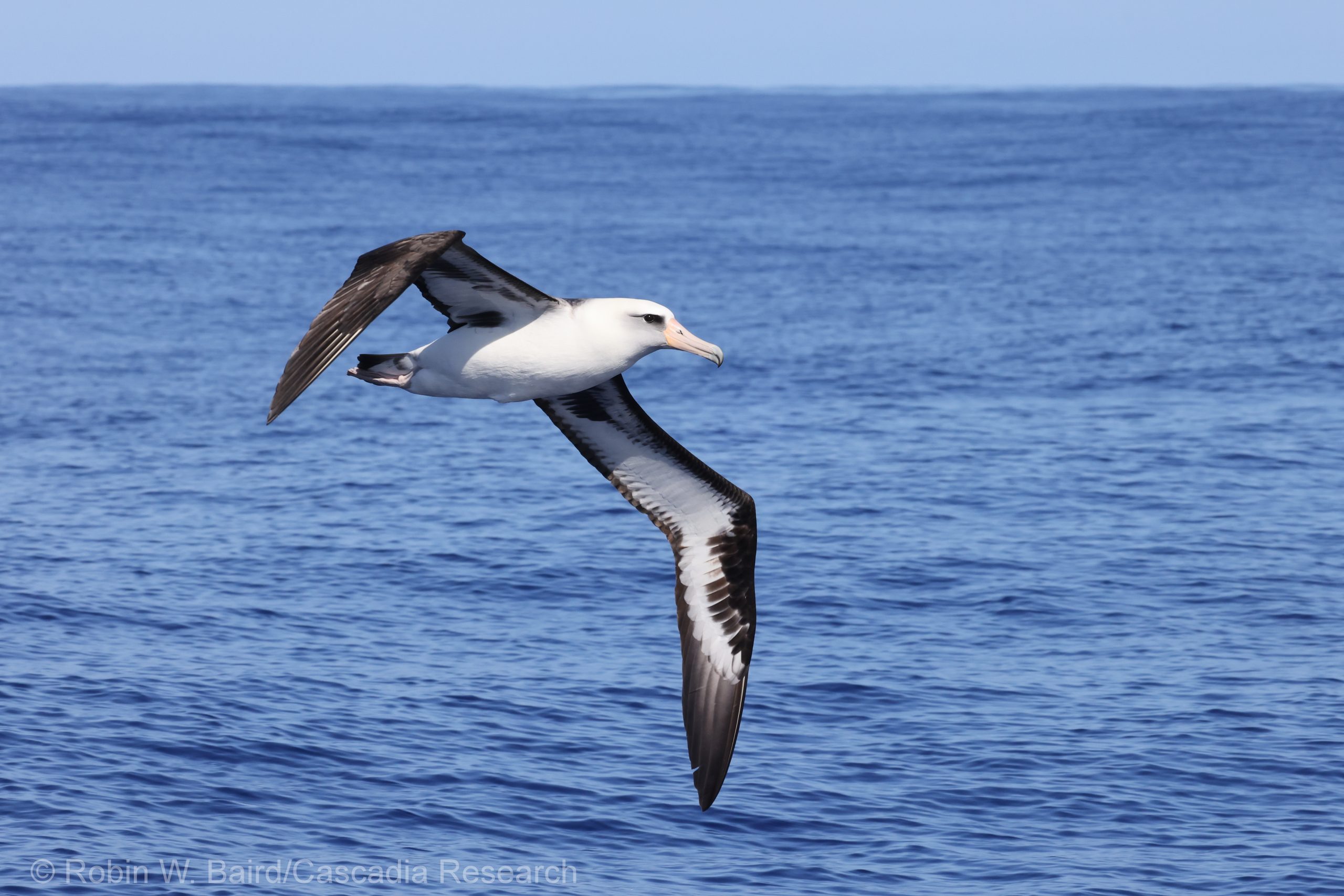
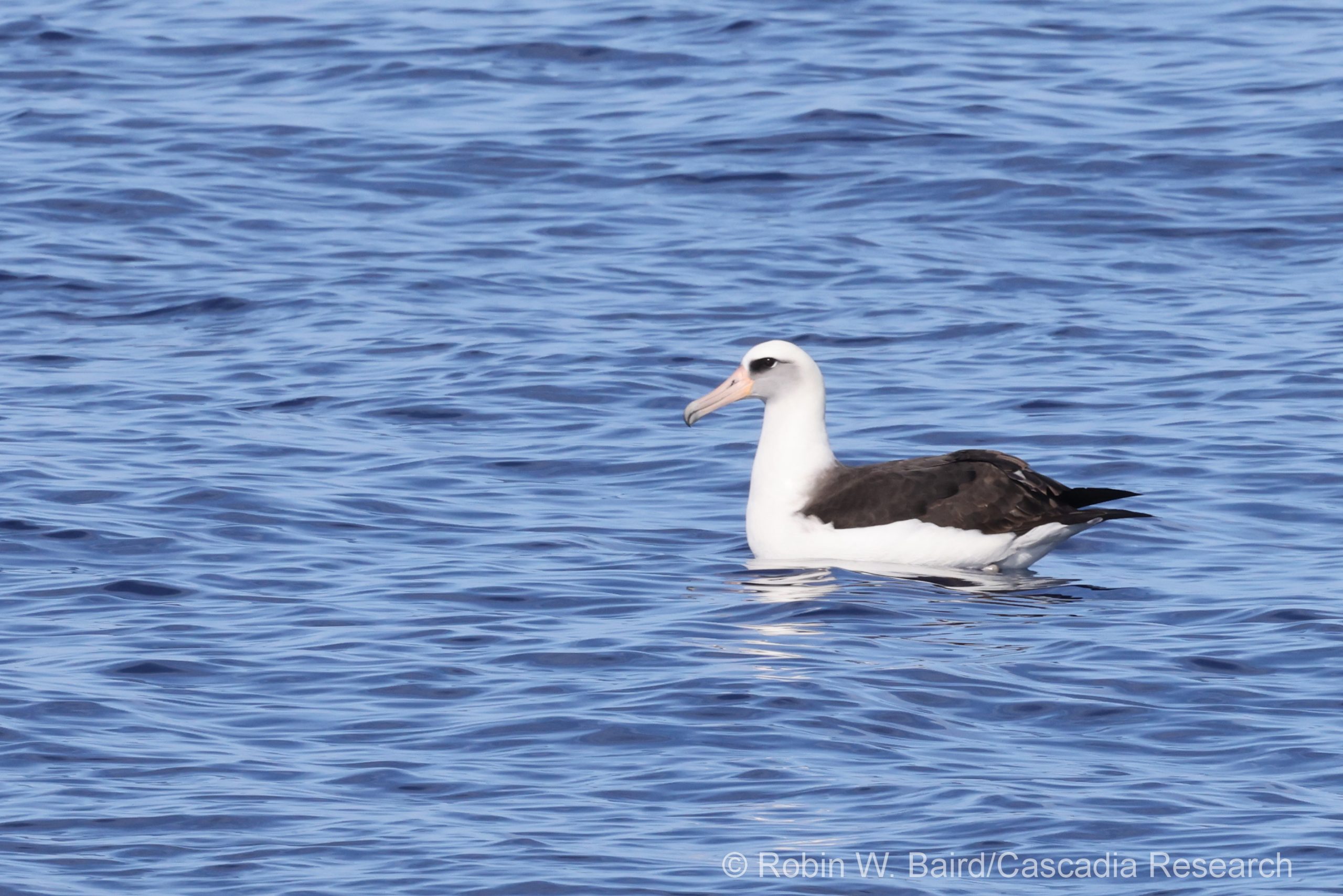
We’ve seen Laysan Albatross off Kaua‘i, O‘ahu, Lāna‘i, and Hawai‘i Islands, with sightings in eight different months of the year (October and November, and January through June), and like Black-footed Albatross, see them every winter we have considerable research effort. The largest number we’ve seen in a day was 76, off the island of Kaua‘i on February 16, 2015, with many associated with the two dead whales found that day.
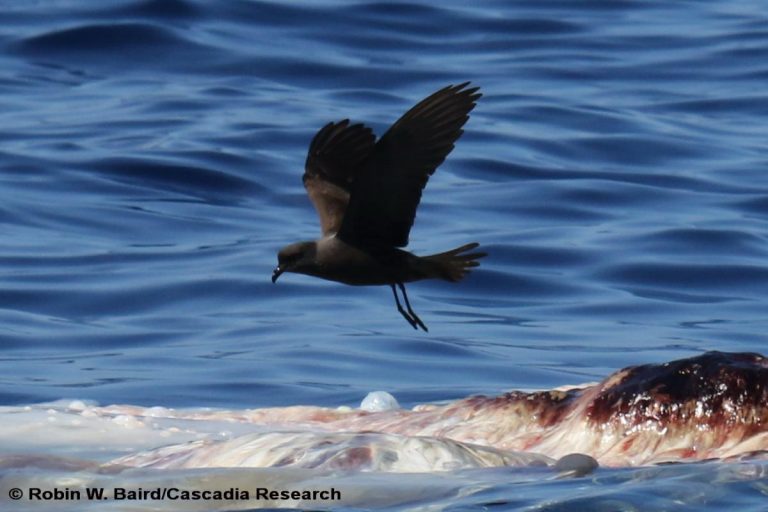
We’ve seen Hawaiian Petrels off Kaua‘i, O‘ahu, and Hawai‘i Island, with sightings in 10 months of the year (all except February and March). The largest number we’ve seen in one day was 25 individuals, see off Hawai‘i Island on August 28, 2020.
We’ve seen White-necked Petrels only off Lāna‘i and Hawai‘i Islands, with sightings from October through January, one sighting each in April and May, and two sightings in July. The largest number we’ve seen in a day was eight individuals, seen off Hawai‘i Island on November 16, 2014.
We’ve encountered Kermadec Petrels in February 2015 off Kaua‘i, July 2016, October 2009, November 2014, and December (2008 and 2009), all off Hawai‘i Island.
We’ve only obtained confirmed photos of Murphy’s Petrels on two occasions, both off Kona (on 20 December 2009 and 18 October 2010), but we’ve had photos that were probably Murphy’s Petrels on a number of other occasions off Kona (Sep 2004, December 2006, October 2009, December 2009, and October 2014).
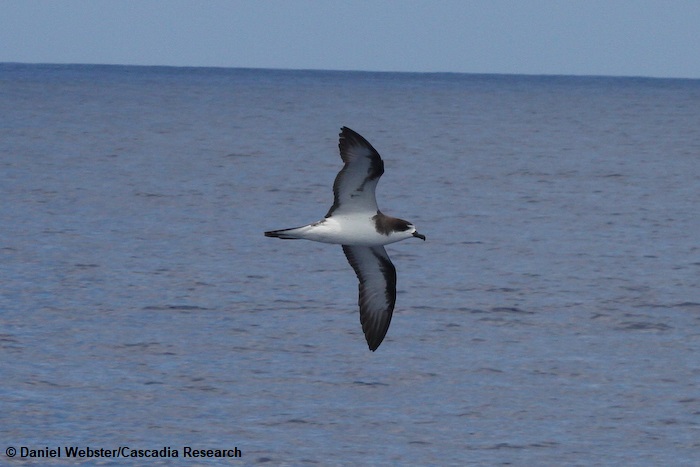
Black-winged Petrels are our most frequently seen petrel off Hawai‘i Island in the fall (October-December), but we have also photographed them once off Kaua‘i (in February 2016) and off Lāna‘i (in March 2017).
Bulwer’s Petrels can be relatively common in the summer, with almost all our sightings between April and July. We’ve seen them just a few times outside that window, a few times in August, and just once in March and once in October. The most we’ve ever seen in one day was 69 off Lāna‘i in July 2024.
Wedge-tailed Shearwaters are by far the most frequently seen seabird in our work. Most days we see from a few to a few dozen, but occasionally we see up to hundreds of Wedge-tailed Shearwaters in a day. That said, they are very rare in mid-winter – we’ve had many days of effort off Kaua‘i in the month of February, and during some of those projects we’ve see no Wedge-tailed Shearwaters.
We see Sooty Shearwaters migrating north early in the year (March-May) and south late in the year (September-December), sometimes in large numbers and almost always flying fast and in groups.
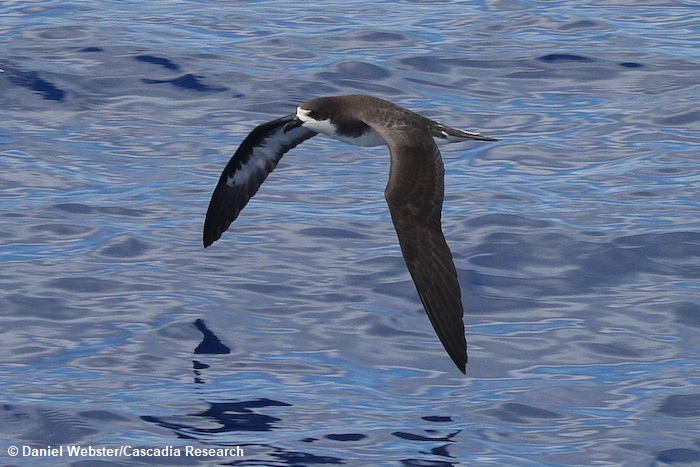
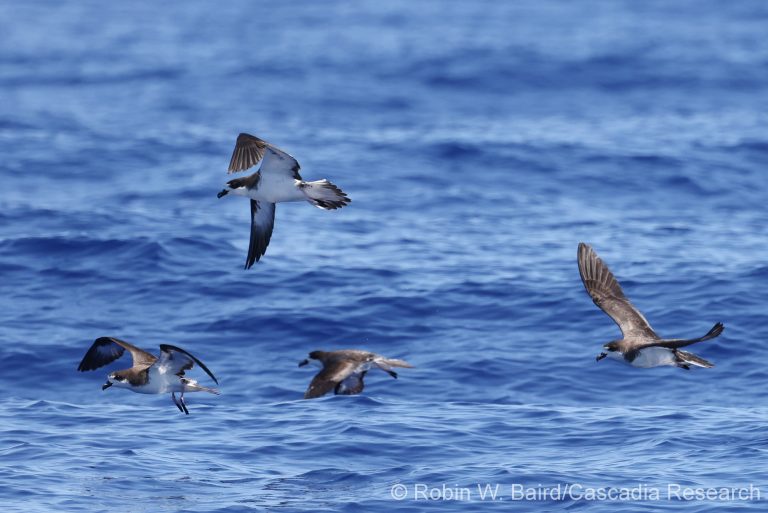
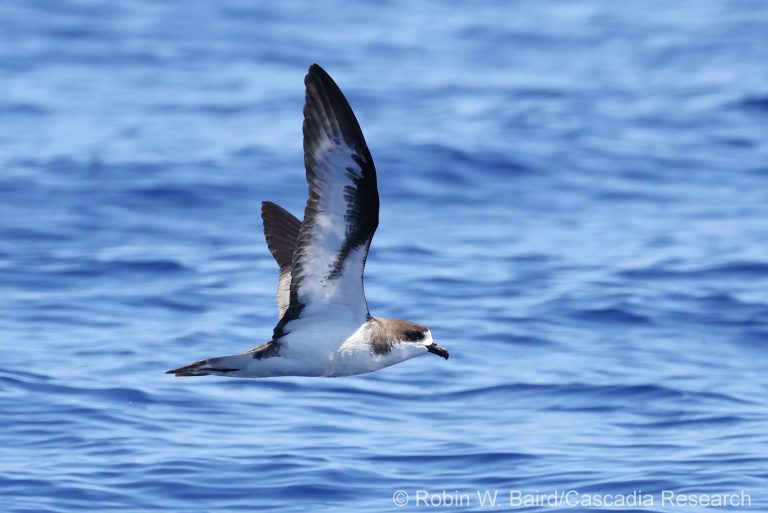
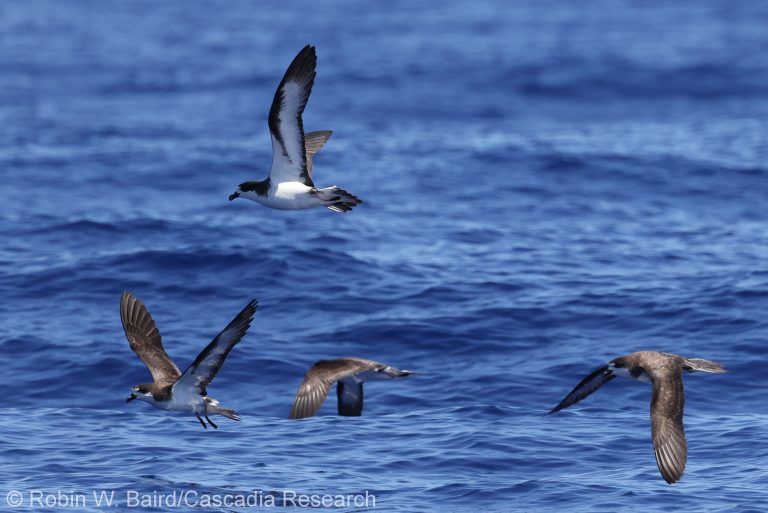
Prior to our June 2026 Kona field project we’d only photographed Buller’s Shearwaters on 10 different days over the years, in October 2009, April 2010, May 2012, June 2012, August 2012, May 2014, and October 2017. In June 2026 we had Buller’s Shearwaters on multiple days. All of our confirmed sightings of this species have been off Kona.
Short-tailed Shearwaters can be difficult to discriminate from Sooty Shearwaters, but we have photographed small numbers of Short-tailed Shearwaters primarily in the fall (November, December) migrating south.
We’ve only encountered a Streaked Shearwater on a single occasion, on May 31, 2026. This appears to be only the third record in the main Hawaiian Islands.
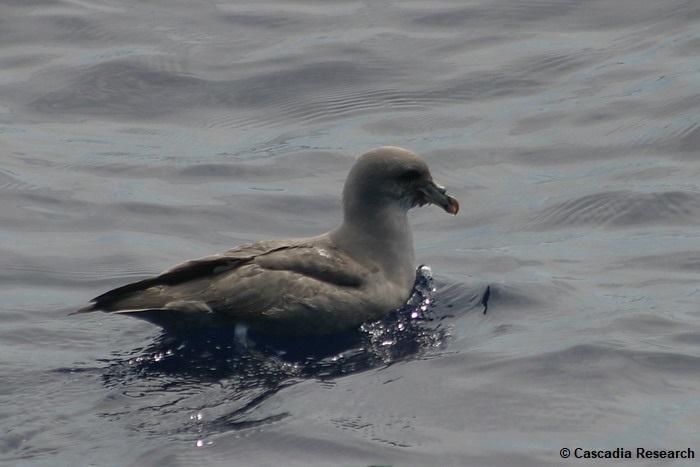
Newell’s Shearwaters are endemic to Hawai’i and are listed as threatened under the Endangered Species Act. We have seen Newell’s every month from March through November, with peak numbers in mid-summer. We usually see them in very small numbers, just one or two individuals at a time and usually just one or two a day. The most we have ever seen in one day was 20 individuals, seen off Kaua‘i in August 2023.
We’ve only had one confirmed sighting of a Christmas Shearwater, off Kona in November 2025. this species breeds on Lehua, a small island off the north tip of Ni‘ihau, so we’ve likely seen them more often but just mistaken them for dark-morph Wedge-tailed Shearwaters. The photos above were taken in the Northwestern Hawaiian Islands.
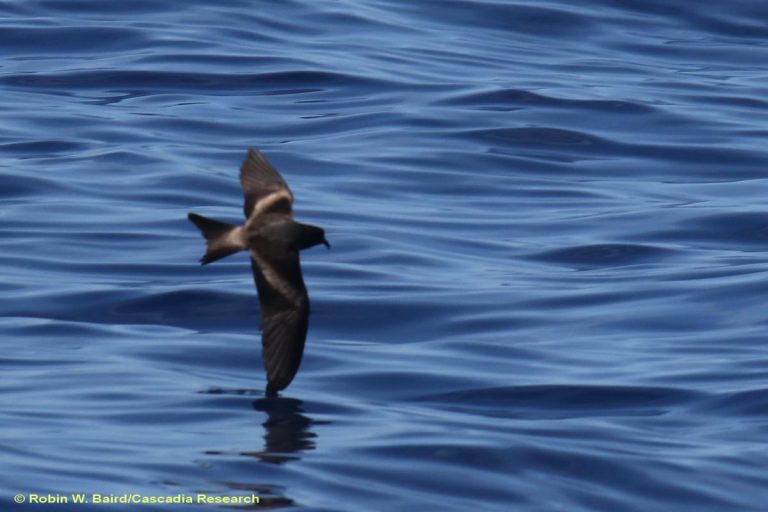
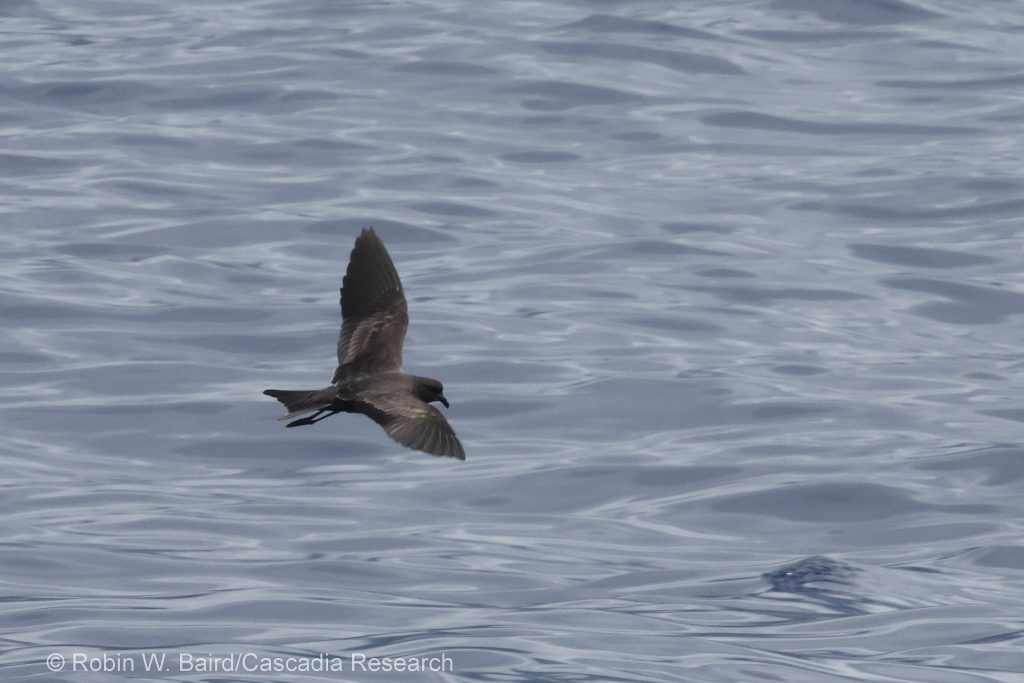
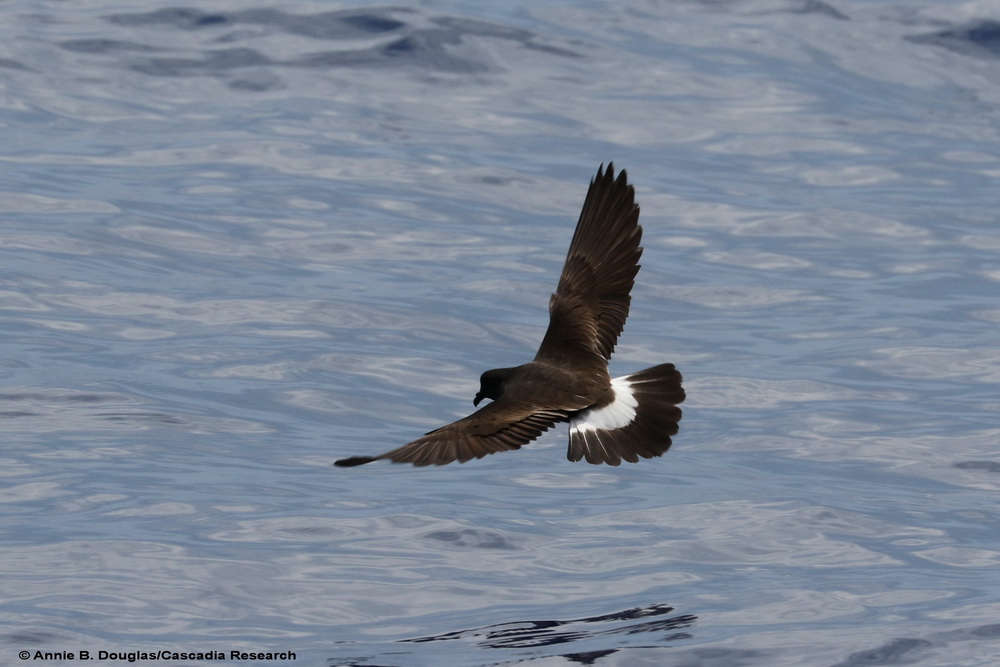
Leach’s Storm Petrels are very difficult to discriminate from Band-rumped Storm Petrels. Based on photographic identifications confirmed by Peter Pyle, we’ve documented Leach’s Storm Petrels only between the months of October and May , with peaks in sightings in April and November.
Ainley’s Storm Petrel is a recent split from Leach’s Storm Petrel. Ainley’s breeds off Mexico, and one way they can potentially be discriminated from Leach’s is by the timing of the molt, since they breed at a different time of year. This bird was seen in May 2012, and based on the molt has tentatively been identified as an Ainley’s Storm Petrel.
We’ve only documented Tristram’s Storm Petrel off Kaua’i, once on 16 February 2015 with a number of birds associated with two different whale carcasses floating off the north shore of Kaua’i, and twice in February 2020.
Band-rumped Storm Petrels are an endangered endemic population. We’ve documented this species off both Hawai‘i Island and Kaua’i. While we’ve had confirmed sightings (based on photographs) from April through November, most sightings we’ve had of this species have been in July and August. The most we’ve seen in one day was an estimated 80 individuals off Kaua‘i in August 2023.
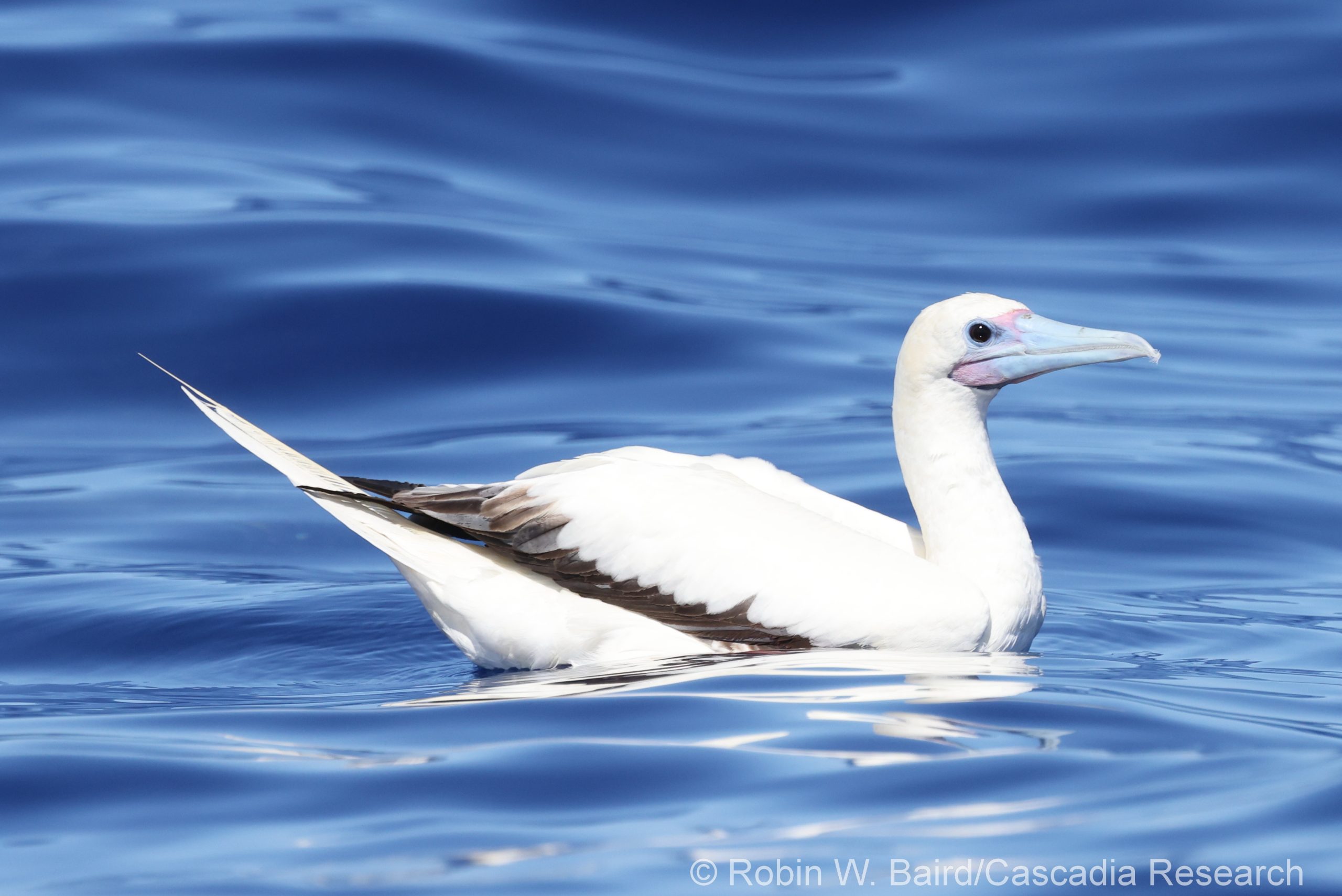
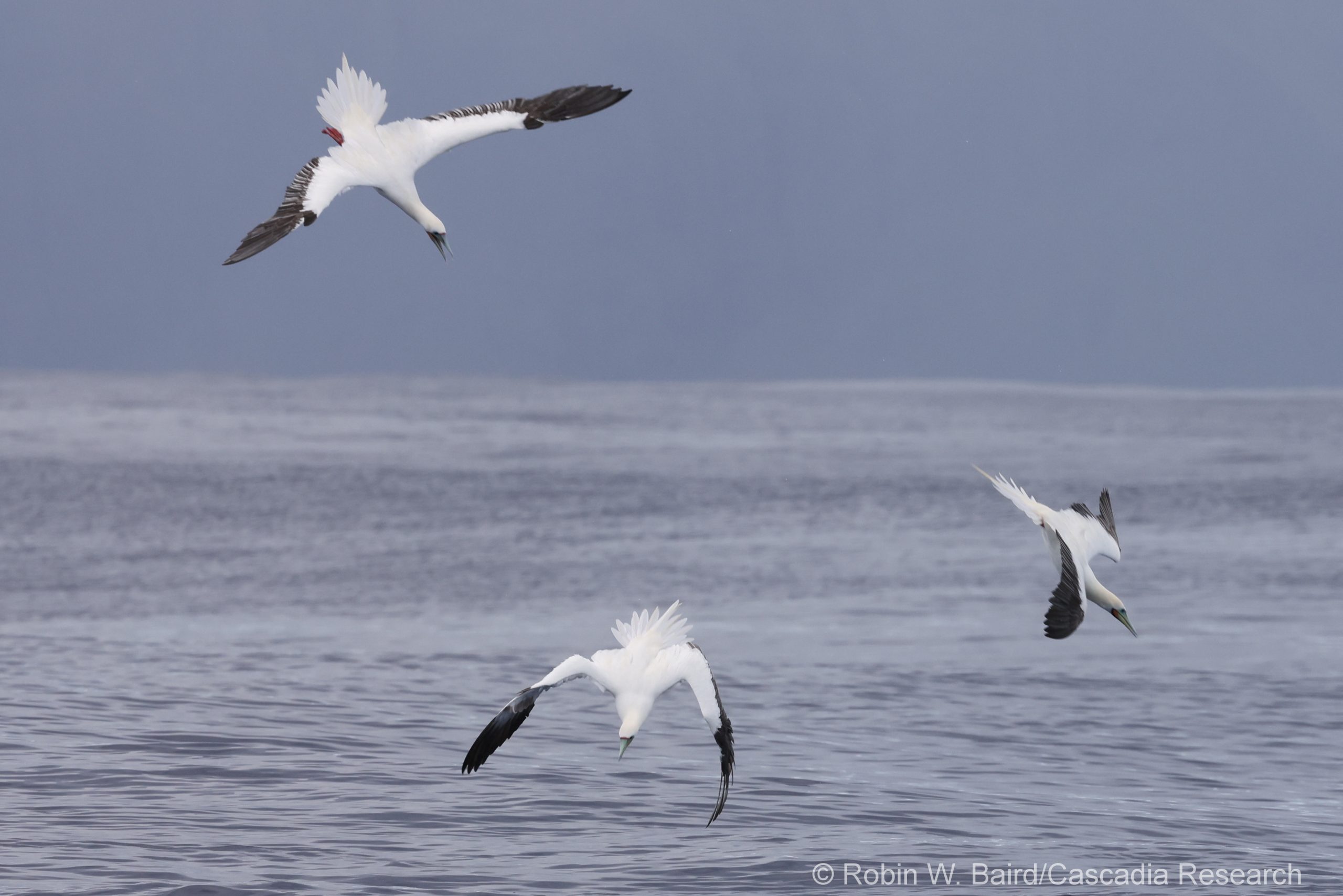
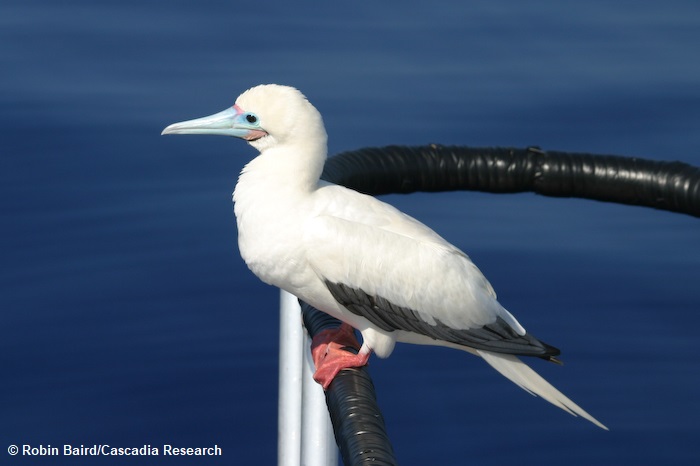
The Red-footed Booby is found around the main Hawaiian Islands year-round. Off most islands we typically only see one or two a day, at most, off Kaua‘i during the summer we often see dozens in a day (and occasionally over a hundred).
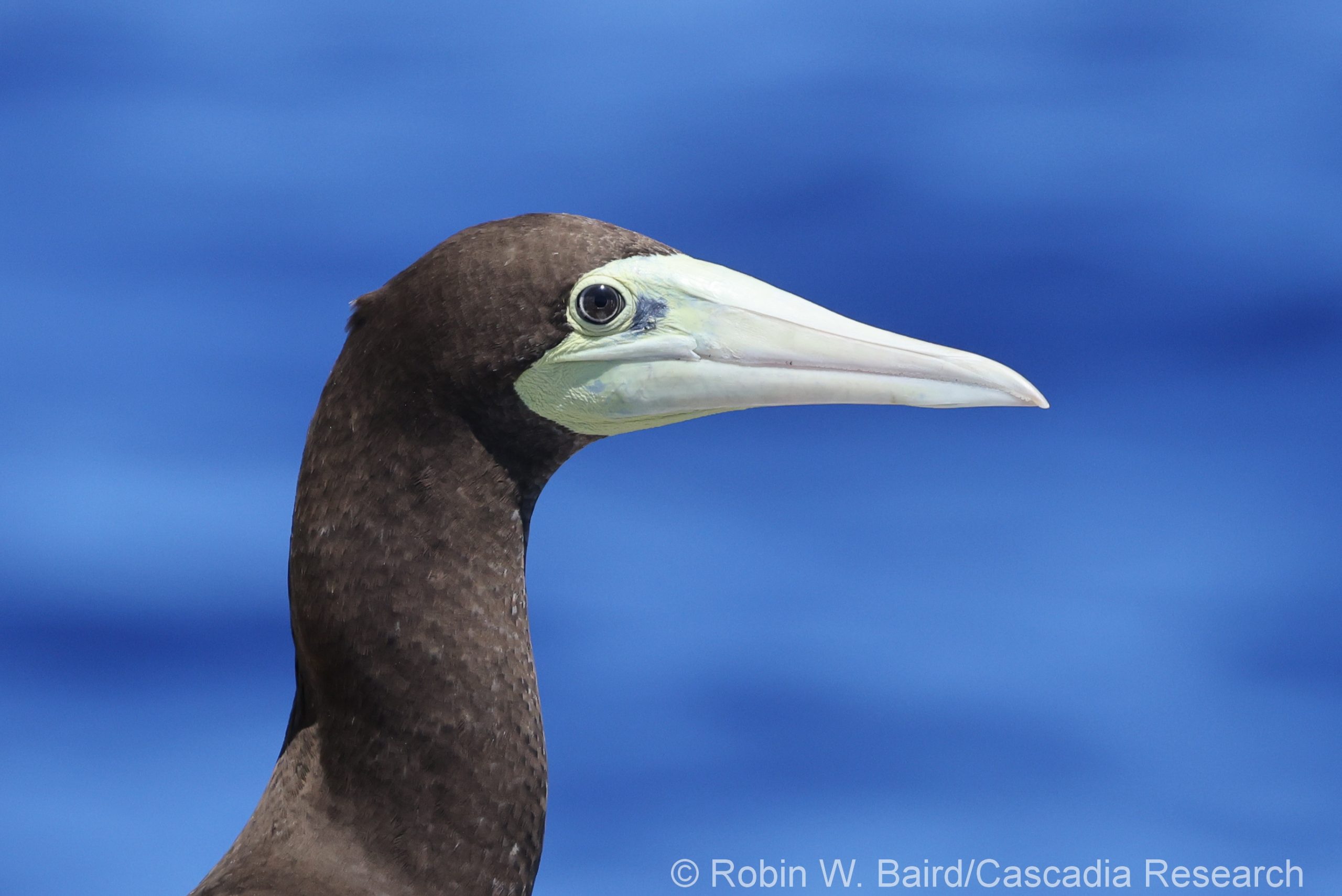
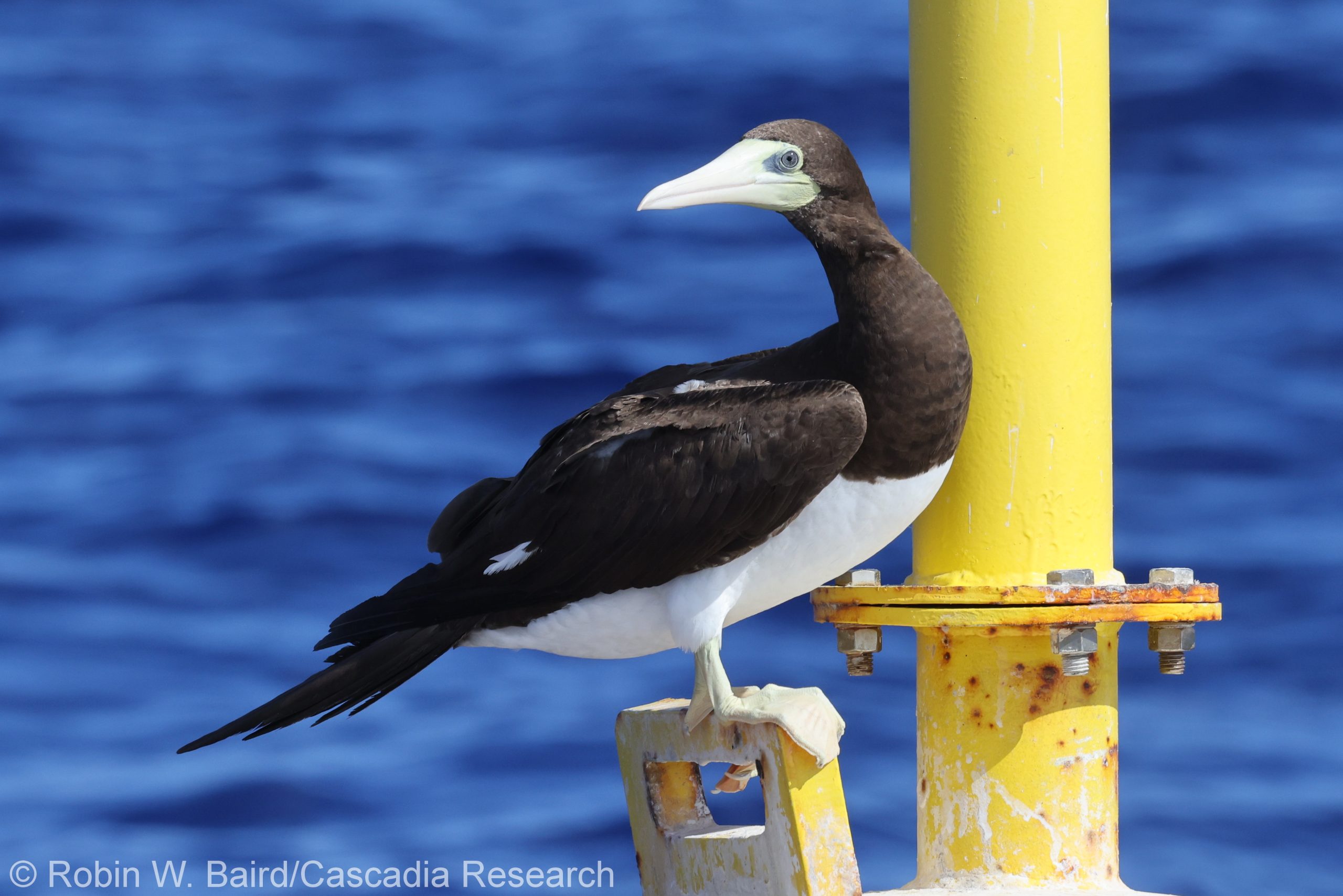
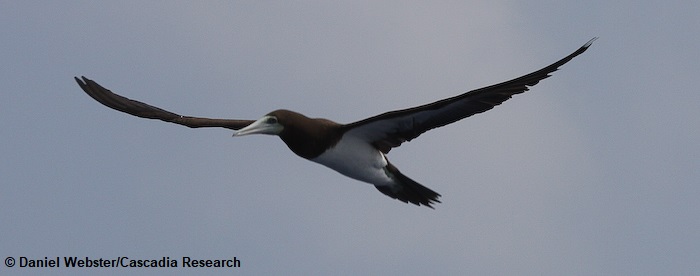
The Brown Booby is also found year-round around the islands. There is a second species, recently split from the Brown Booby, called the Cocos Booby – we have seen female Cocos Boobies but very rarely males.
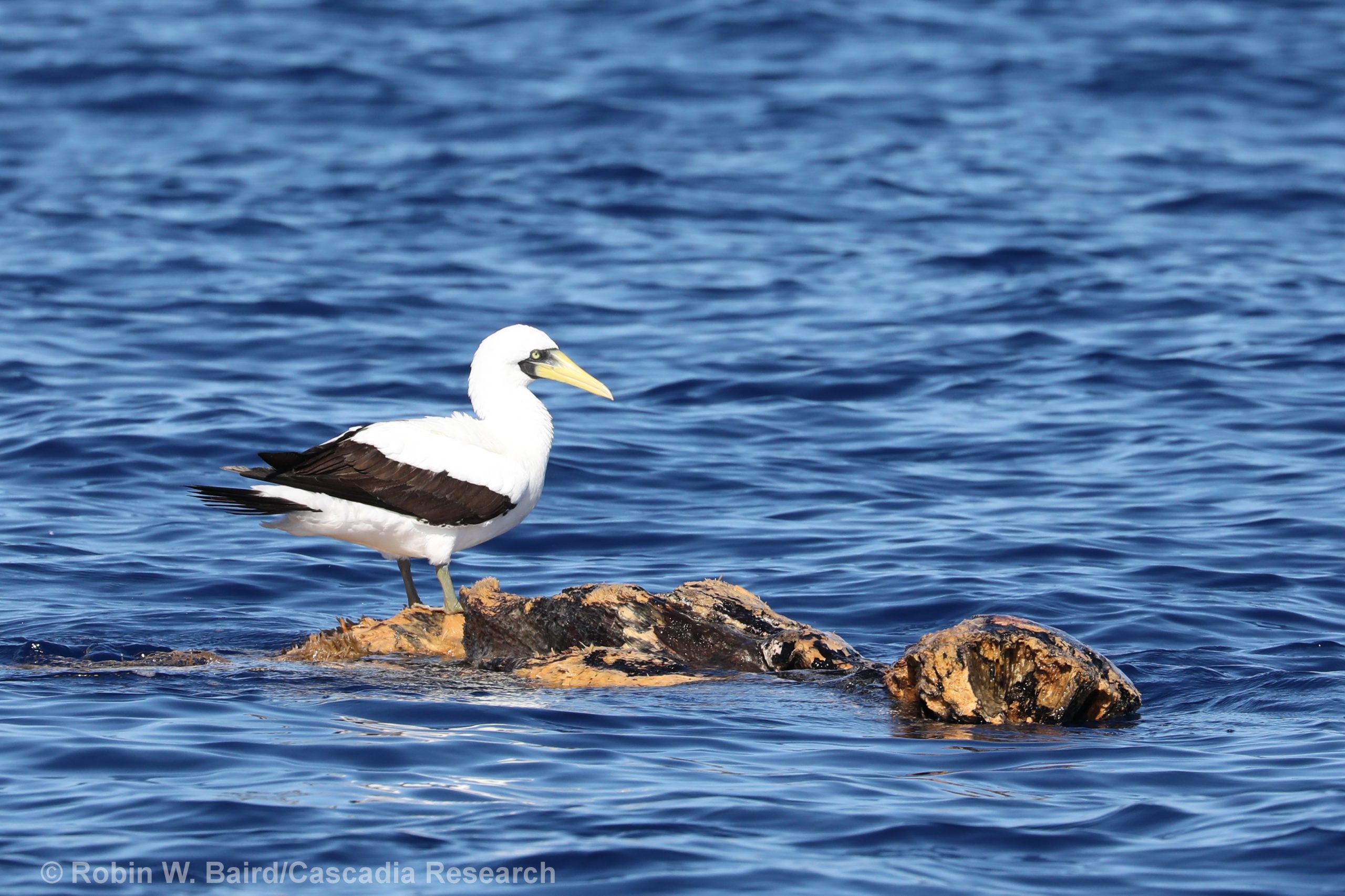
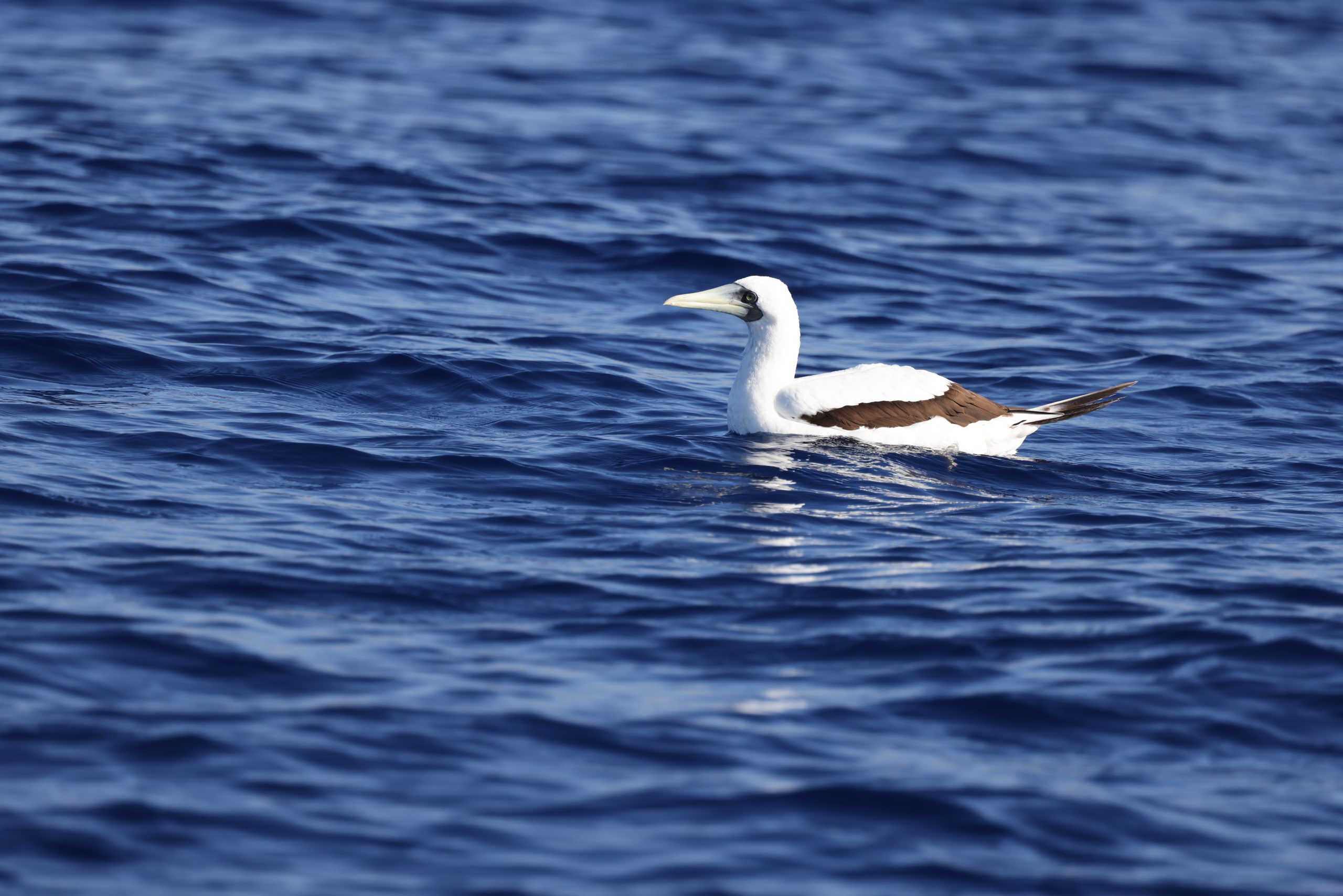
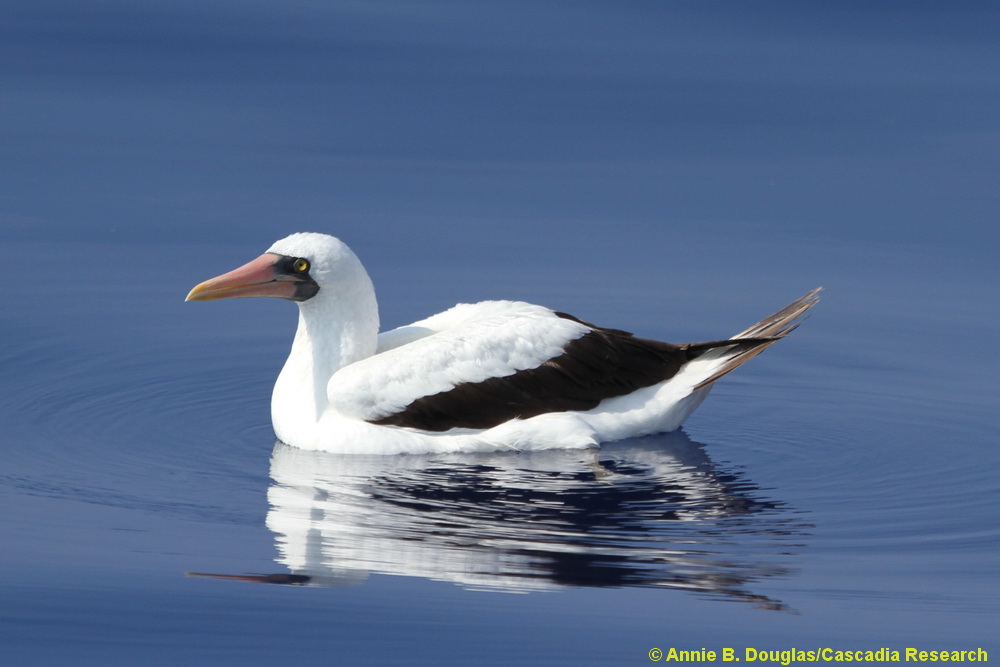
Masked Boobies are relatively uncommon – we’ve seen them in eight different months of the year but usually just one or at most two individuals in a day.
Nazca Boobies are relatively rare in Hawaiian waters – this bird was photographed off Kona 9 November 2015. We’ve also seen them off Kona in September and October 2023
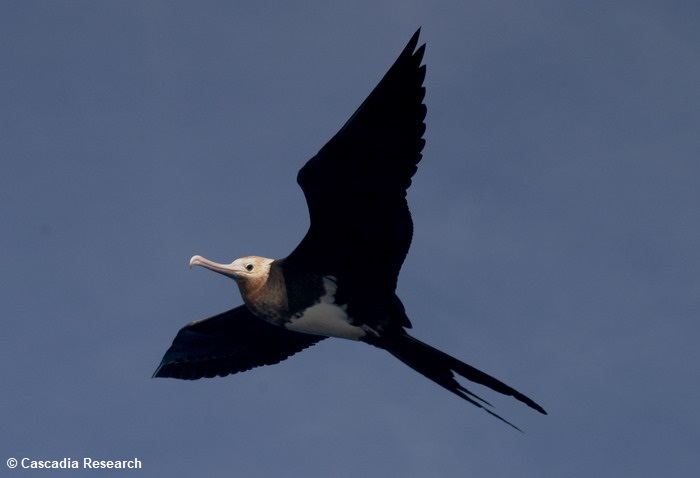
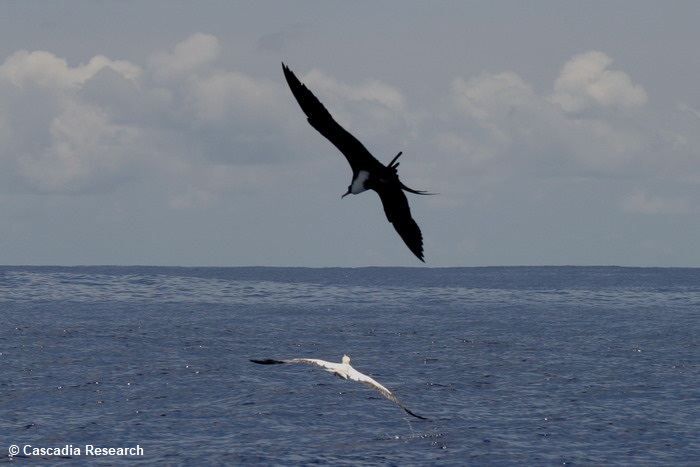
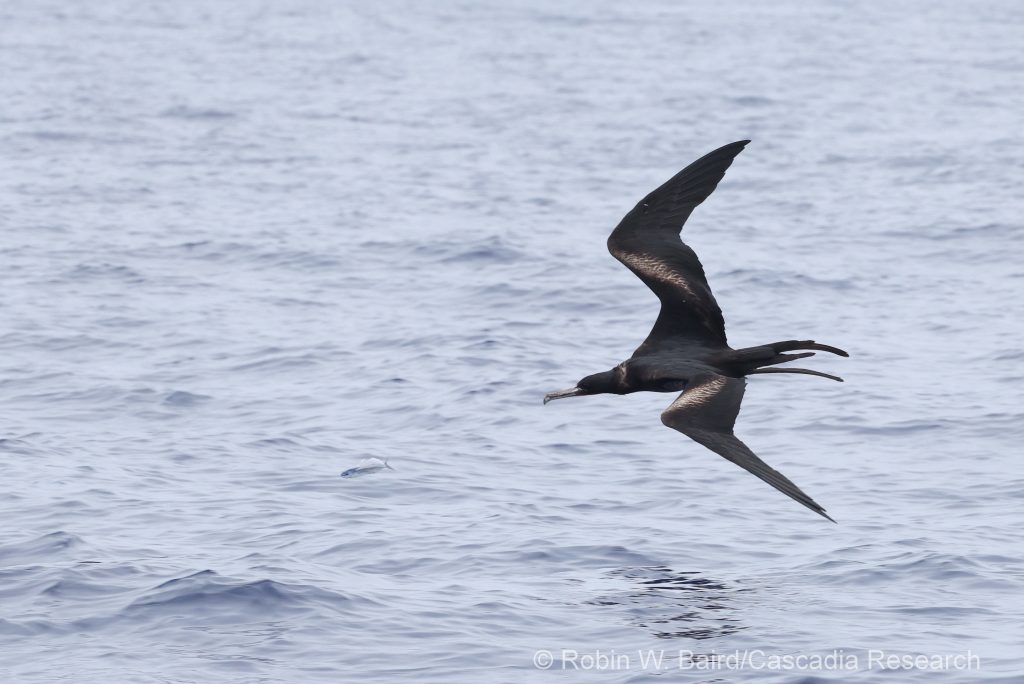
Great Frigatebirds are found year-round in Hawaiian waters. This species is occasionally associated with rough-toothed dolphins or pantropical spotted dolphins. Most days we might see just one or two Great Frigatebirds, but in June 2026 we had 31 one day, including 20 in one large aggregation (associated with pantropical spotted dolphins).
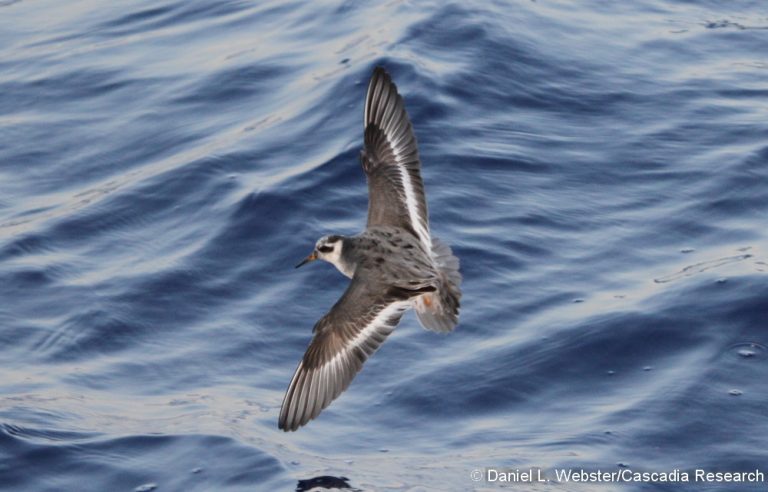
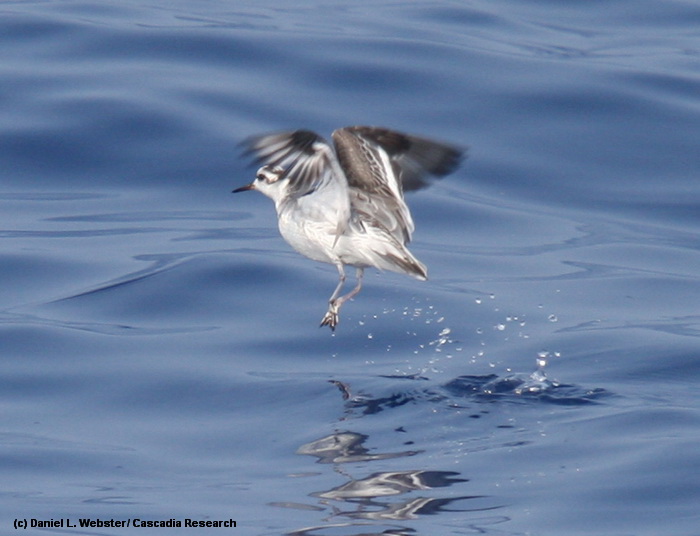
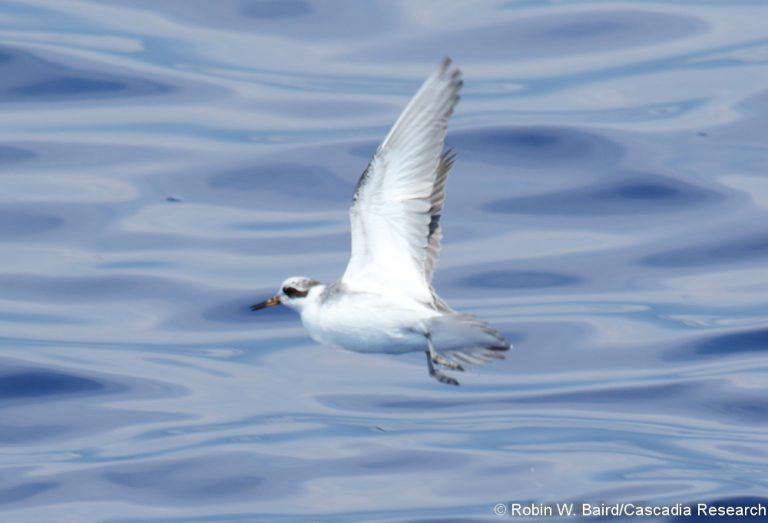
Red Phalaropes are often seen associated with current lines during their migration through Hawai’i. We have seen Red Phalaropes primarily in the spring (February, March, April, May), with occasional sightings in December.
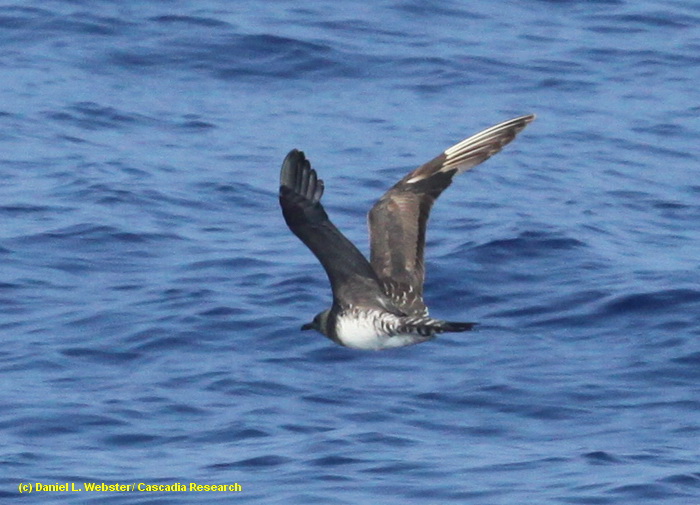
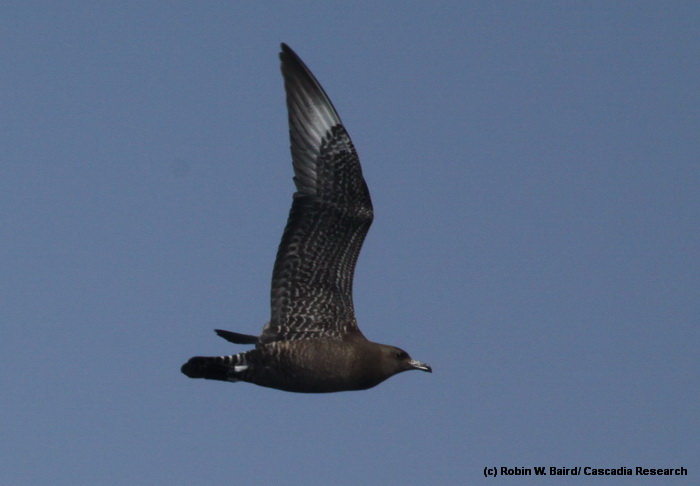
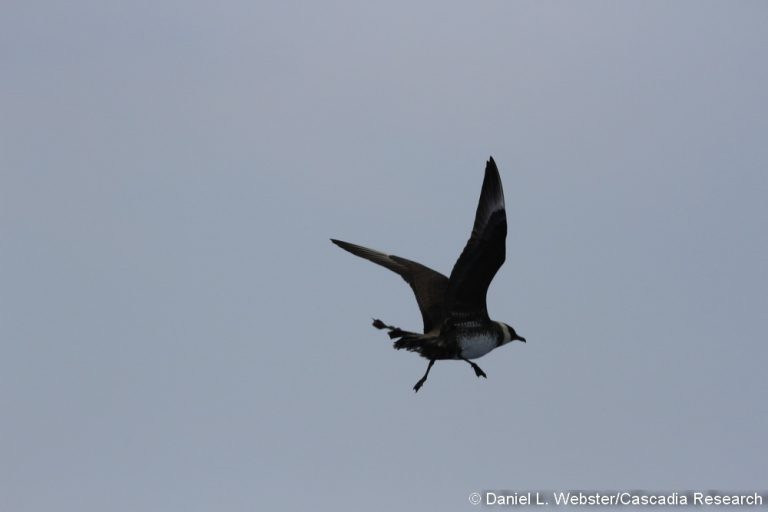
We’ve photographed Parasitic Jaegers off Hawai‘i Island in October 2010, November 2014 and November 2015, but none of the photos are particularly good.
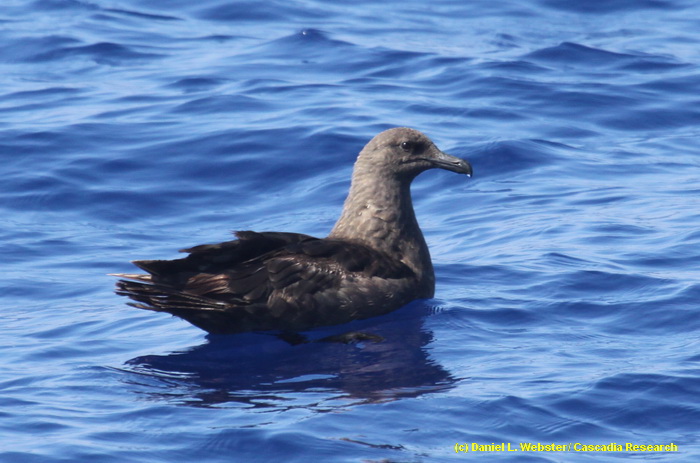
We’ve photographed South Polar Skuas in August 2007, July 2008, October 2009, and July 2011, 2013 and 2014. The largest group was three individuals sitting together off Kaua‘i in July 2011.
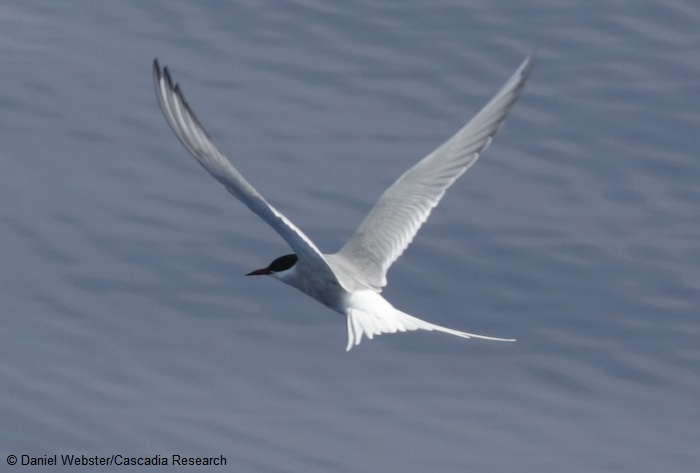
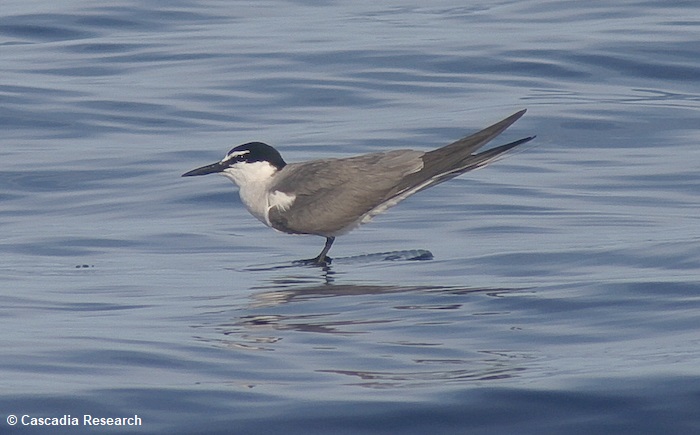
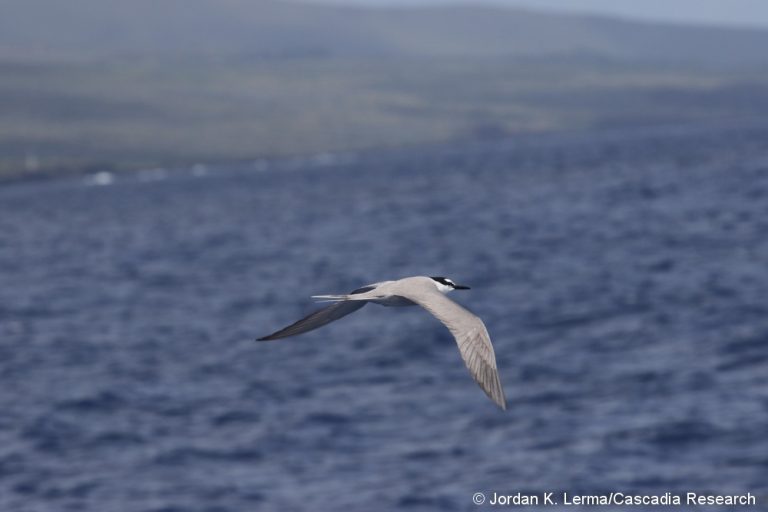
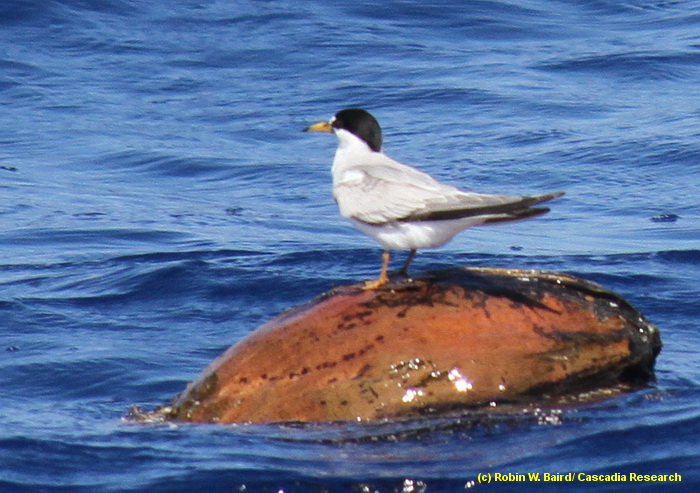
Gray-backed Tern sightings are rare around the main Hawaiian Islands, but we’ve documented them both off Kaua’i (in August 2023) and O’ahu (in June 2025).
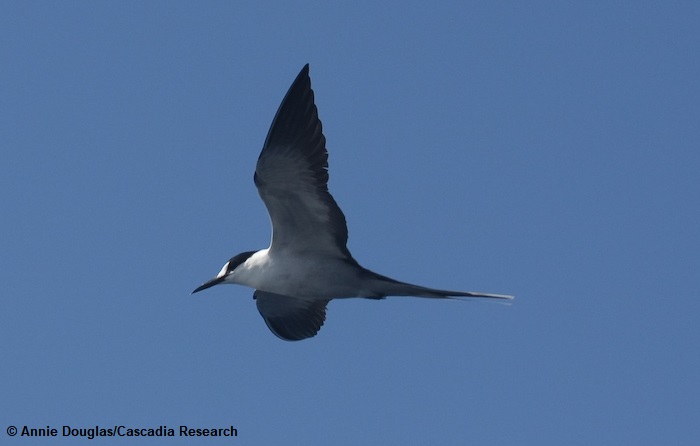
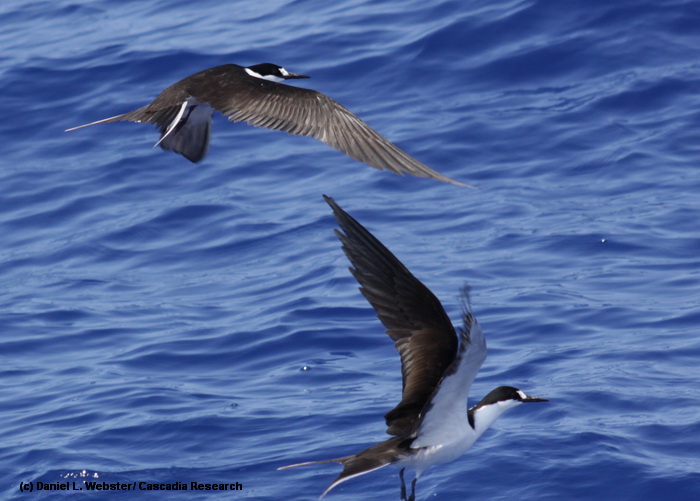
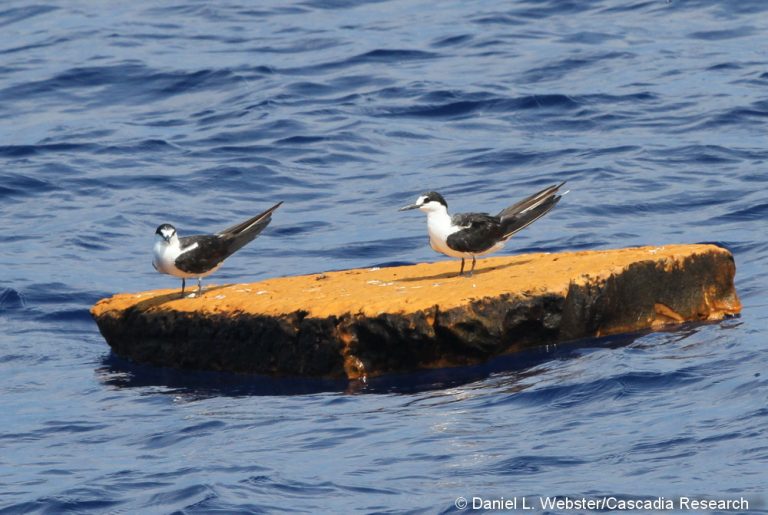
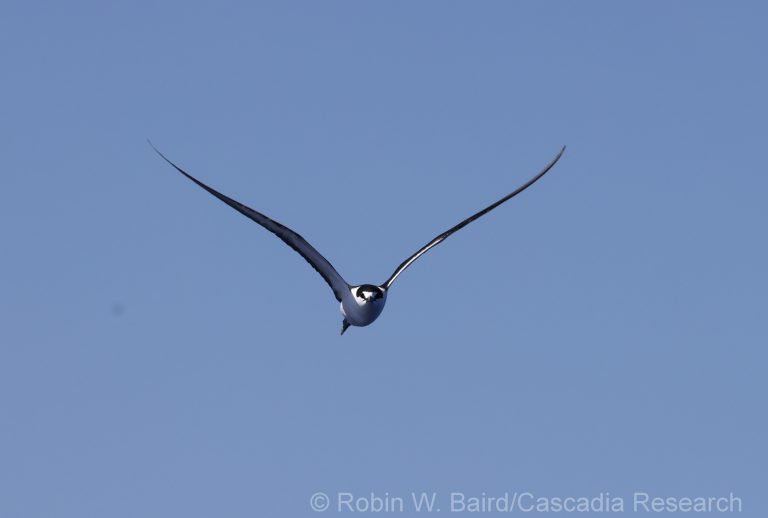
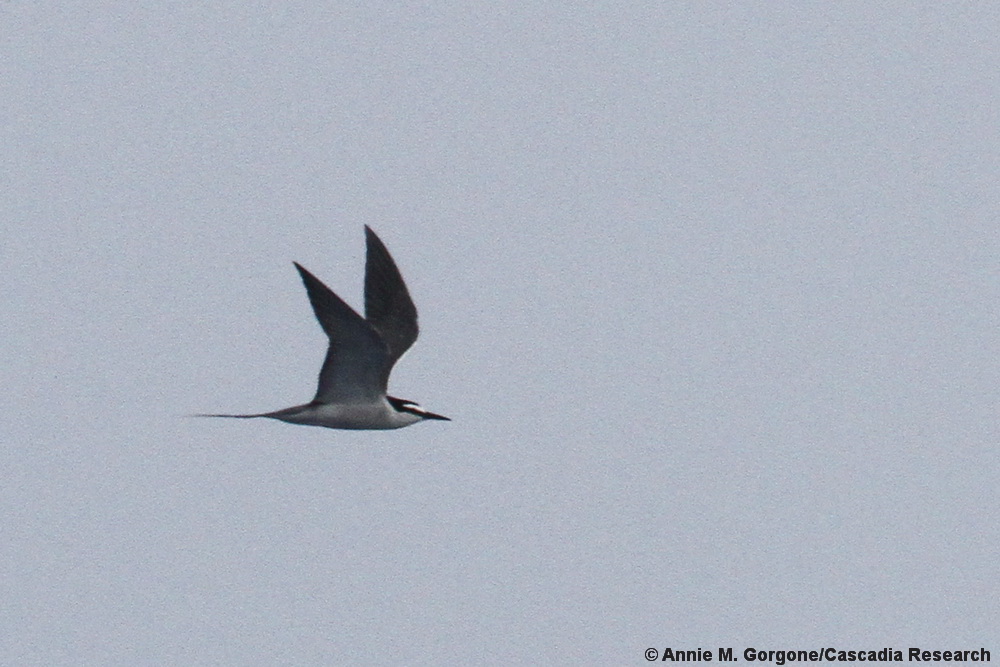
Sooty Terns are the most abundant breeding seabird in the Hawaiian archipelago, but breed primarily in the Northwestern Hawaiian Islands. We’ve documented them year-round, typically in small numbers and offshore.
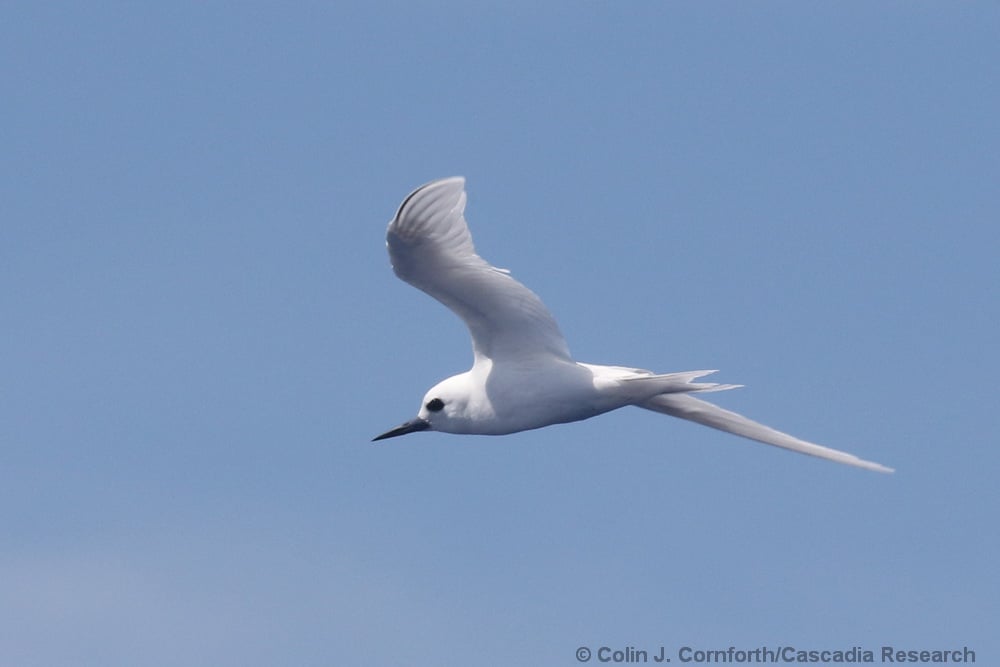
Blue-billed White-Tern – Manu o Kū (Gygis candida)
Blue-billed White-Terns appear to be becoming more common around the main Hawaiian Islands. While they breed on O‘ahu, we’ve documented them in recent years off Kaua‘i and sightings off Hawai‘i Island and Lāna‘i are increasing.
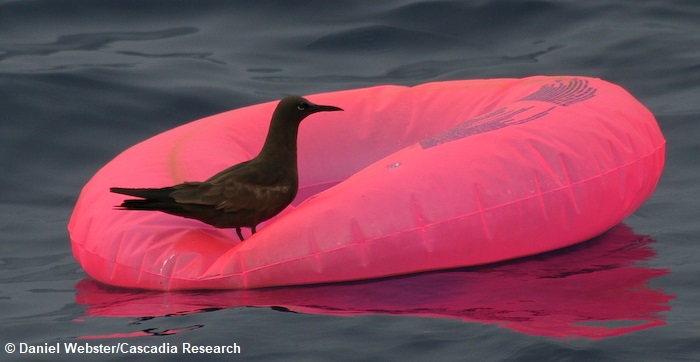
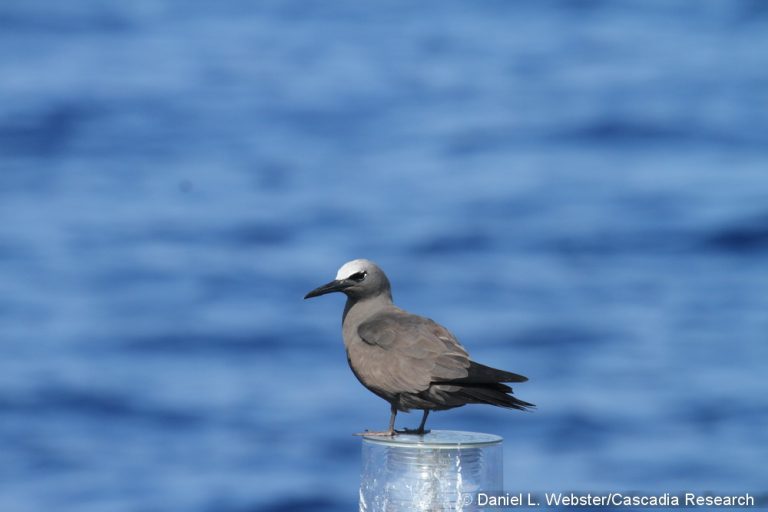
We’ve seen Blue-gray Noddies four times in our work, once off Hawai‘i Island (in December 2010), once off Lāna‘i (in December 2020), and twice off Kaua‘i (both in August 2022). The first two sightings were the first records for Hawai‘i and Maui counties, respectively.
A Blue-gray Noddy seen on 9 December 2020 south of Lāna‘i, likely the first record for Maui County.
A Blue-gray Noddy seen off Kona 11 December 2010, the first record for Hawai‘i County
Lerma, J.K., D.L. Webster, R.W. Baird, and P. Pyle. 2022. 17-years of sightings of seabirds during small-boat surveys for cetaceans around the southeast Hawaiian Islands. Talk presented at the Pacific Seabird Group, 2022 meeting. See video below.
Pyle, P., D.L. Webster and R.W. Baird. 2016. White-rumped dark storm-petrels in Hawaiian Island waters – the quandary of Leach’s vs. Band-rumped storm petrels throughout the world. Birding 47(1):54-57. Download PDF copy
Pyle, P., D.L. Webster and R.W. Baird. 2011. Notes on petrels of the dark-rumped petrel complex (Pterodroma phaeopygia/sandwichensis) in Hawaiian waters. North American Birds 65(2):364-367. Download PDF copy
Walker, W.A., R.W. Baird, D.L. Webster, J.M. Aschettino, G.S. Schorr, D.J. McSweeney and S. Fitzgerald. 2013. Diurnal occurrence of dead mesopelagic fish and squid at the sea surface and their importance as a previously unrecognized predictable food resource for oceanic marine birds. Poster presented at the Pacific Seabird Group 40th Annual Meeting, Portland, Oregon. Download PDF copy
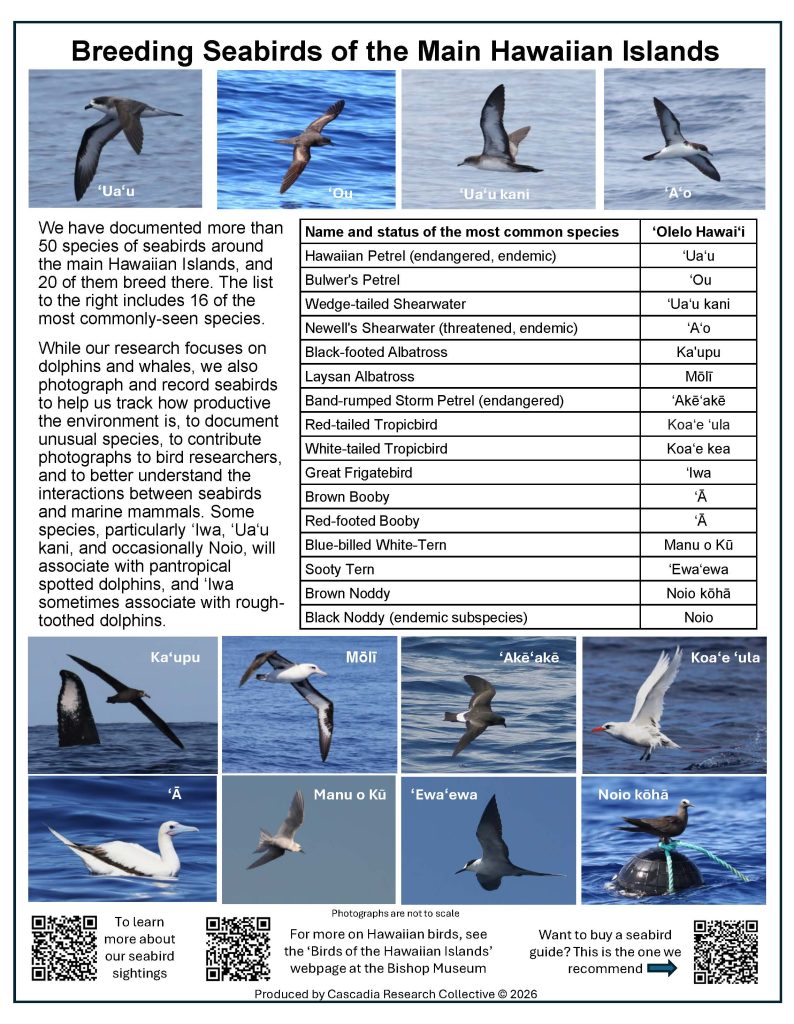
Want to learn the Hawaiian names of breeding seabirds around the islands? We’ve made up a handout (link here to a pdf version) that includes both English and Hawaiian names of the 16 most common breeding species in the main Hawaiian Islands.