Women are often advised to avoid cleaning cat litterboxes when pregnant, as cats pass a protozoan parasite, Toxoplasma gondii, in their feces. The parasite may not harm the woman, but it can pass to the fetus and Toxoplasma can cause miscarriage or birth defects (Fallahi et al. 2017). Cats are the definitive host of Toxoplasma – the parasite needs cats for sexual reproduction, and infected cats shed millions of microscopic eggs, called oocysts, into the environment (Dubey et al. 2020). Only a single oocyst is needed to cause an infection, and Toxoplasma oocysts are considered a public health problem (Torrey and Yolken 2013). In one study in California, oocyst density in the environment was estimated to be between 9 and 434 oocysts per square foot (Dabritz et al. 2007). These oocysts are washed into streams and then into the ocean where they can persist in salt water for more than a year (Lindsay & Dubey 2009).
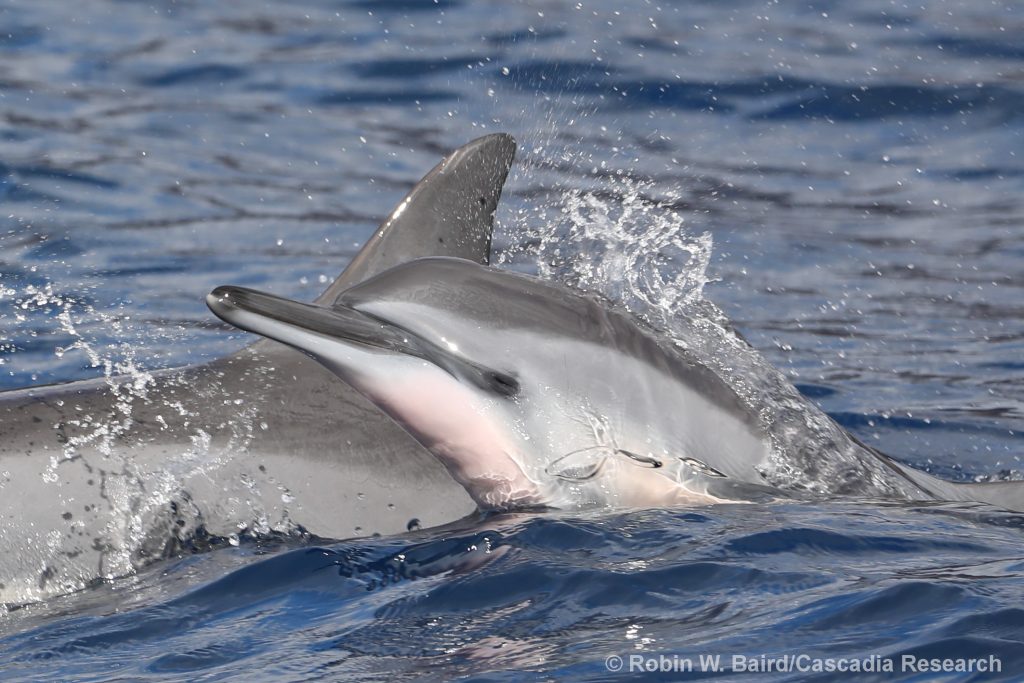
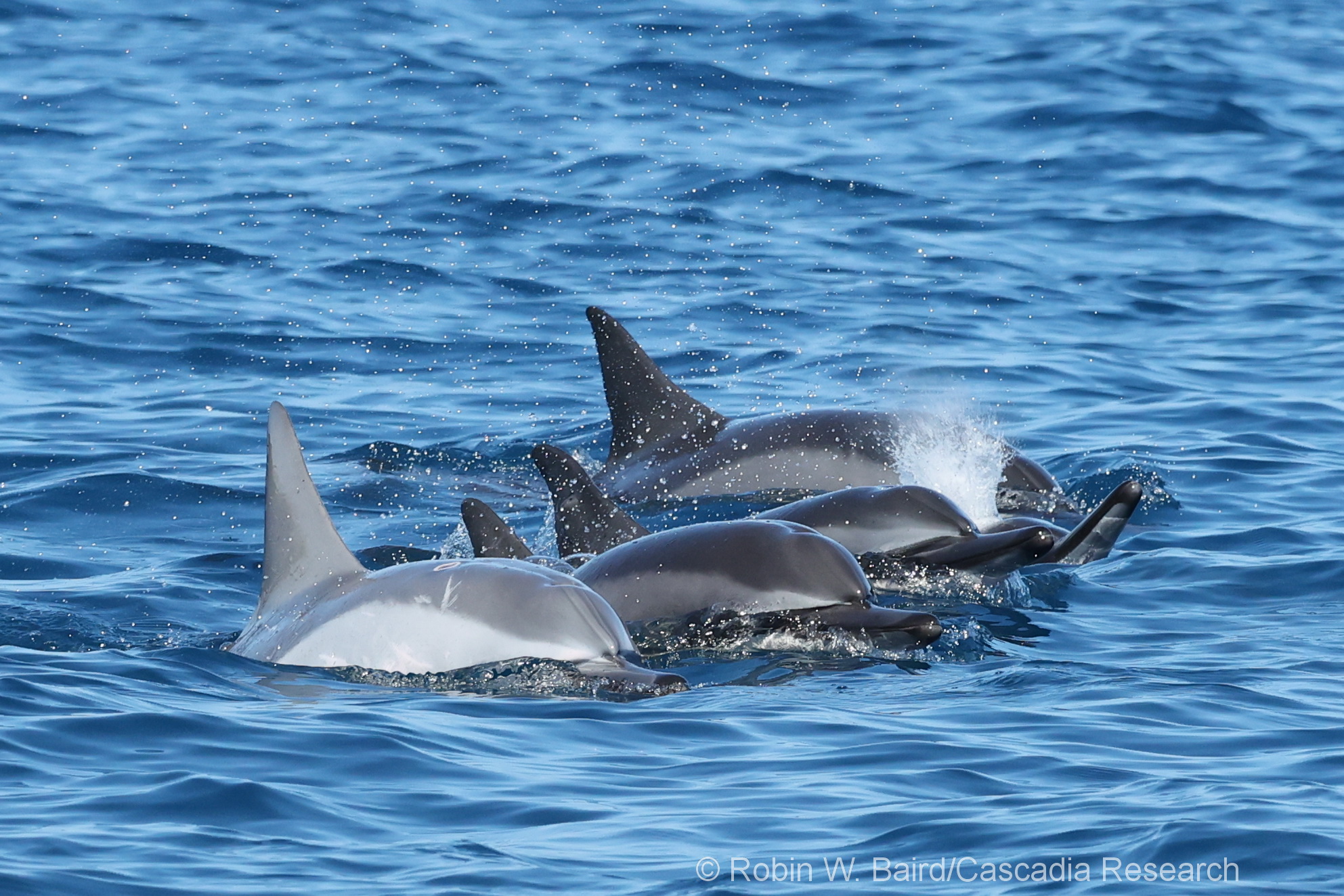
While Toxoplasma only affects warm-blooded animals, in the marine environment the oocysts are likely consumed by filter feeders and small marine organisms such as euphausiids and copepods, and are retained in the issues unchanged. These organisms are then consumed by larger predators that are eventually consumed by marine mammals. In one study in the Mediterranean, Toxoplasma DNA was documented in 12 different fish species that were obtained from fish markets (Marino et al. 2019). In warm-blooded animals, indirect consumption of Toxoplasma oocysts can result in an infection referred to as toxoplasmosis. In Hawai‘i, disseminated toxoplasmosis (where the parasite infects multiple organs) is the leading disease-related cause of death for endangered Hawaiian monk seals (Barbieri et al. 2016; Robinson et al. 2024). Cetaceans in Hawaiian waters are also at risk. The first report of fatal disseminated toxoplasmosis in a spinner dolphin was published in 1990 (Migaki et al. 1990), and two additional cases were reported in 2022 (Landrau-Giovannetti et al. 2022). It is important to note that while fatal disseminated toxoplasmosis has only been documented in three spinner dolphins in Hawai‘i, given a very low carcass recovery rate (5% or less), these strandings represent an estimated “60 animals over the last 30 yr” that have died from toxoplasmosis (Landrau-Giovannetti et al. 2022). West et al. (2025) have also documented fatal disseminated toxoplasmosis in a common bottlenose dolphin in Hawai‘i. Exposure to other species of cetaceans in Hawaiian waters also occurs — a study by Traina et al. (2024) noted that several offshore species (Fraser’s dolphins, Risso’s dolphins, and rough-toothed dolphins) have tested positive for exposure (K.L. West, unpublished data).
Given detection in both coastal and offshore species, toxoplasmosis is likely a risk factor for most or all species of cetaceans in Hawaiian waters, including the endangered and declining population of false killer whales around the main Hawaiian Islands (Badger et al. 2025). Island-associated populations of spinner dolphins and common bottlenose dolphins are small and in some cases there is evidence of declining populations (Tyne et al. 2014; Van Cise et al. 2021). Toxoplasmosis may be contributing to declines or otherwise limit populations from recovering.
Reducing the prevalence of toxoplasmosis in Hawai‘i is complicated by the state’s large feral cat population, in addition to thousands of domestic pet cats that are allowed to roam freely outside. Infected adult cats rarely show symptoms (Elmore et al. 2010), yet infected individuals shed millions of oocysts that persist in the environment for long periods of time, helping maintain the parasite in soil, freshwater, and marine environments. Reducing the spread of toxoplasmosis in the Hawaiian Islands will require efforts to reduce the number of feral cats, which would also reduce predation on endangered seabirds (Raine et al. 2020). However, pet owners can also do their part to reduce the spread of toxoplasmosis by keeping their pet cats indoors and properly disposing of used cat litter in the garbage. This reduces the amount of oocysts that can enter the environment, with the added benefit of protecting native wildlife from predation.
References
Badger, J.J., R.W. Baird, D.S. Johnson, A.L. Bradford, S.D. Mahaffy, M.A. Kratofil, T. Cullins, J.J. Currie, S.H. Stack, and E.M. Oleson. 2025. Accounting for sampling bias reveals a decline in abundance of endangered false killer whales in the main Hawaiian Islands. Endangered Species Research 57:325-340. https://doi.org/10.3354/esr01423.
Barbieri, M.M., L. Kashinsky, D.S. Rotstein, K.M. Colegrove, K.H. Haman, S.L. Magargal, A.R. Sweeny, A.C. Kaufman, M.E. Grigg, and C.L. Littnan. 2016. Protozoal-related mortalities in endangered Hawaiian monk seals Neomonachus schauinslandi. Diseases of Aquatic Organisms 121:85-95. https://www.int-res.com/articles/dao2016/121/d121p085.pdf
Dabritz, H.A., M.A. Miller, E.R. Atwill, I.A. Gardner, C.M. Leutenegger, A.C. Mellis, and P.A. Conrad. 2007. Detection of Toxoplasma gondii-like oocysts in cat feces and estimates of the environmental oocyst burden. Journal of the American Veterinary Medical Association 231:1676-1684. https://avmajournals.avma.org/view/journals/javma/231/11/javma.231.11.1676.xml
Elmore, S.A., J.L. Jones, P.A. Conrad, S. Patton, D.S. Lindsay, and J. P. Dubey. 2010. Toxoplasma gondii: epidemiology, feline clinical aspects, and prevention. Trends in Parasitology 26:190-196. https://digitalcommons.unl.edu/cgi/viewcontent.cgi?article=1529&context=publichealthresources
Fallahi, S., A. Rostami, M. Nourollahpour Shiadeh, H. Behniafar, and S. Paktinat. 2018. An updated literature review on maternal-fetal and reproductive disorders of Toxoplasma gondii infection. Journal of Gynecology Obstetrics and Human Reproduction 47:133-140.
Landrau-Giovannetti, N.., T.B. Waltzek, N. Lopez-Orozco, C. Su, D. Rotstein, G. Levine, T.C.S. Rodrigues, I. Silva-Krott, C. Humann, and K. West. 2022. Prevalence and genotype of Toxoplasma gondii in stranded Hawaiian cetaceans. Diseases of Aquatic Organisms 152:27-36. https://www.int-res.com/journals/dao/articles/dao03699
Lindsay, D.S., and J.P. Dubey. 2009. Long-term survival of Toxoplasma gondii sporulated oocysts in seawater. Journal of Parasitology 95:1019-1020.
Marino, A.M.F., R.P. Giunta, A. Salvaggio, A. Castello, T. Alfonzetti, A. Barbagallo, A. Aparo, F. Scalzo, S. Reale, W. Buffolano, and M. Percipalle. Toxoplasma gondii in edible fishes captured in the Mediterranean basin. Zoonoses and Public Health 66:826-834.
Migaki, G., T.R. Sawa, and J.P. Dubey. 1990. Fatal disseminated toxoplasmosis in a spinner dolphin (Stenella longirostris). Veterinary Pathology 27:463-464.
Raine, A.F., S. Driskill, M. Vynne, D. Harvey, and K. Pias. 2020. Managing the effects of introduced predators on Hawaiian endangered seabirds. Journal of Wildlife Management 84:425-435.
Robinson, S., K. Falinski, D. Johnson, E. VanWormer, K. Shapiro, A. Amlin, and M. Barbieri. 2024. Evaluating the risk landscape of Hawaiian monk seals exposure to Toxoplasma gondii. EcoHealth 21:141-154. https://pmc.ncbi.nlm.nih.gov/articles/PMC11649717/pdf/10393_2024_Article_1678.pdf
Torrey, E.F., and R.H. Yolken. 2013. Toxoplasma oocysts as a public health problem. Trends in Parasitology 29:380-384. https://www.cell.com/trends/parasitology/abstract/S1471-4922(13)00090-1
Traina, S., K.L. West, C. Clifton, I. Silva-Krott, and others. 2022. Determination of exposure to Toxoplasma gondii in stranded Hawaiian cetaceans. Presentation at the 25th Biennial Conference on the Biology of Marine Mammals, Perth, Australia.
Tyne, J.A., K.H. Pollock, D.W. Johnston, and L. Bejder. 2014. Abundance and survival rates of the Hawai‘i island associated spinner dolphin (Stenella longirostris) stock. PLoS ONE 9:e86132.
Van Cise, A.M., R.W. Baird, A.E. Harnish, J.J. Currie, S.H. Stack, T. Cullins, and A.M. Gorgone. 2021. Mark-recapture estimates suggest declines in abundance of common bottlenose dolphin stocks in the main Hawaiian Islands. Endangered Species Research 45:37-53. https://doi.org/10.3354/esr01117.
West, K., I. Silva-Krott, D. Rotstein, and G. Levine. 2025. Pacific Islands cetaceans: a review of strandings from 2006—2024. Diseases of Aquatic Organisms 164:217-242. https://www.int-res.com/journals/dao/articles/dao03877
Information prepared by Robin W. Baird, June 2026