
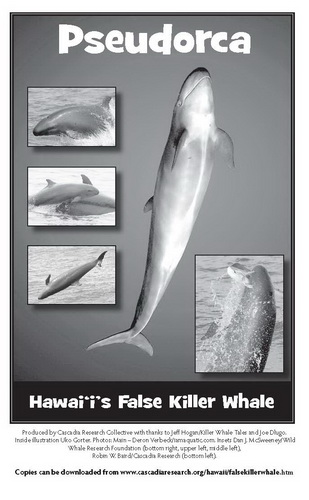
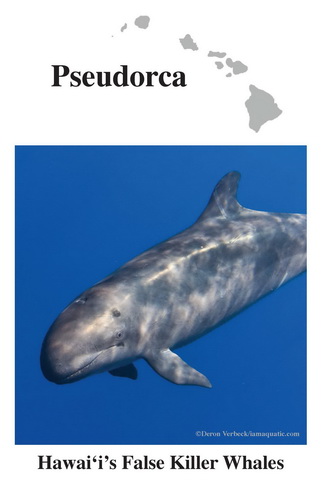
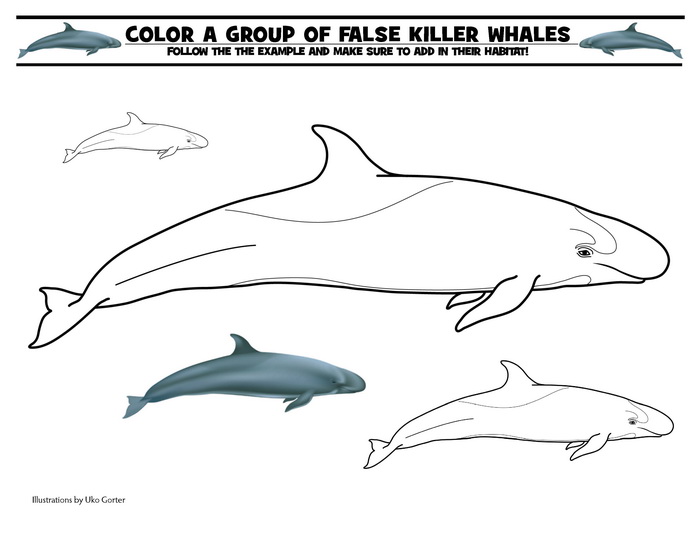
View a Powerpoint | Publications & presentations | Download brochure or kid’s handout | ID guides for ocean users | Video footage | Crittercam footage
Animation of movements of tagged Pseudorca | Management of Pseudorca
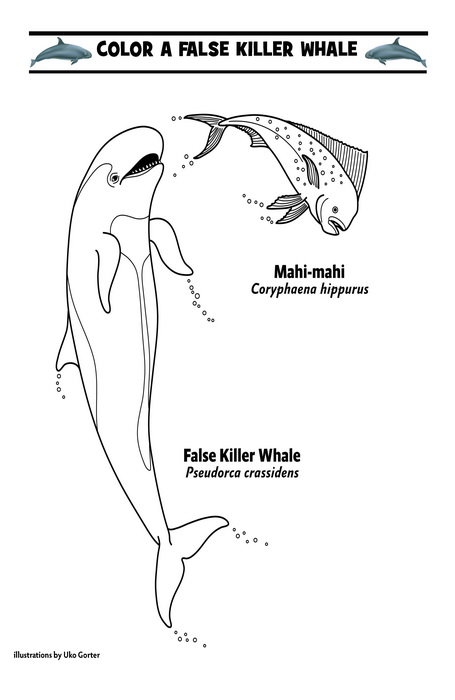
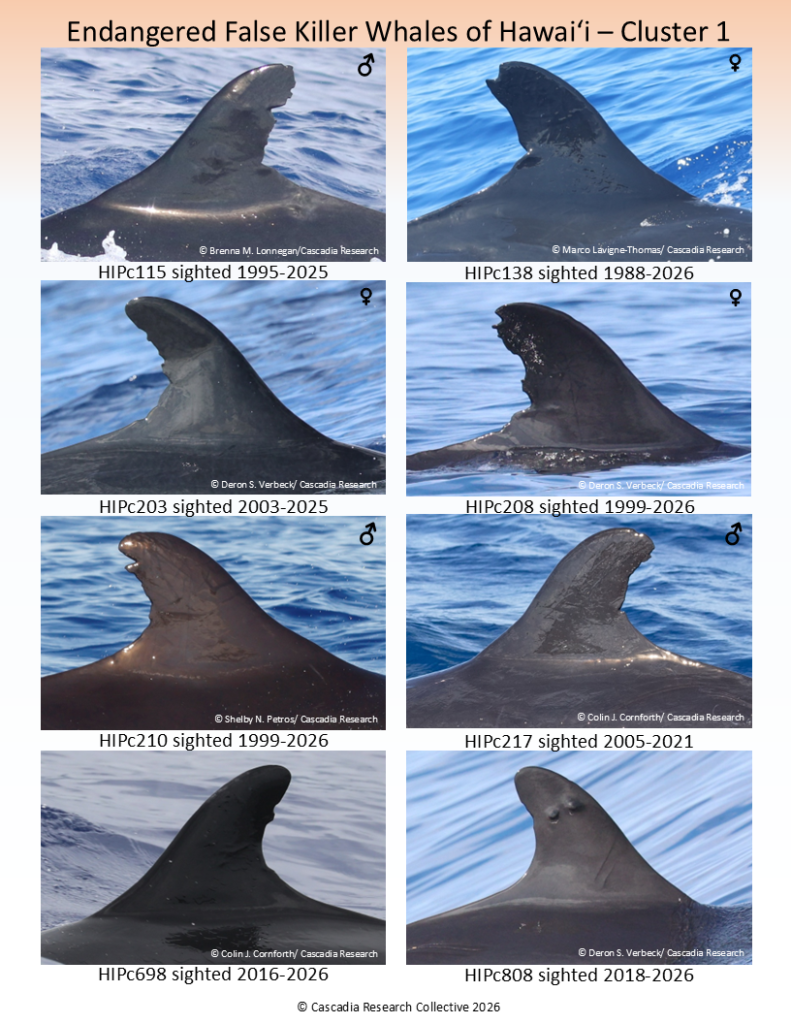
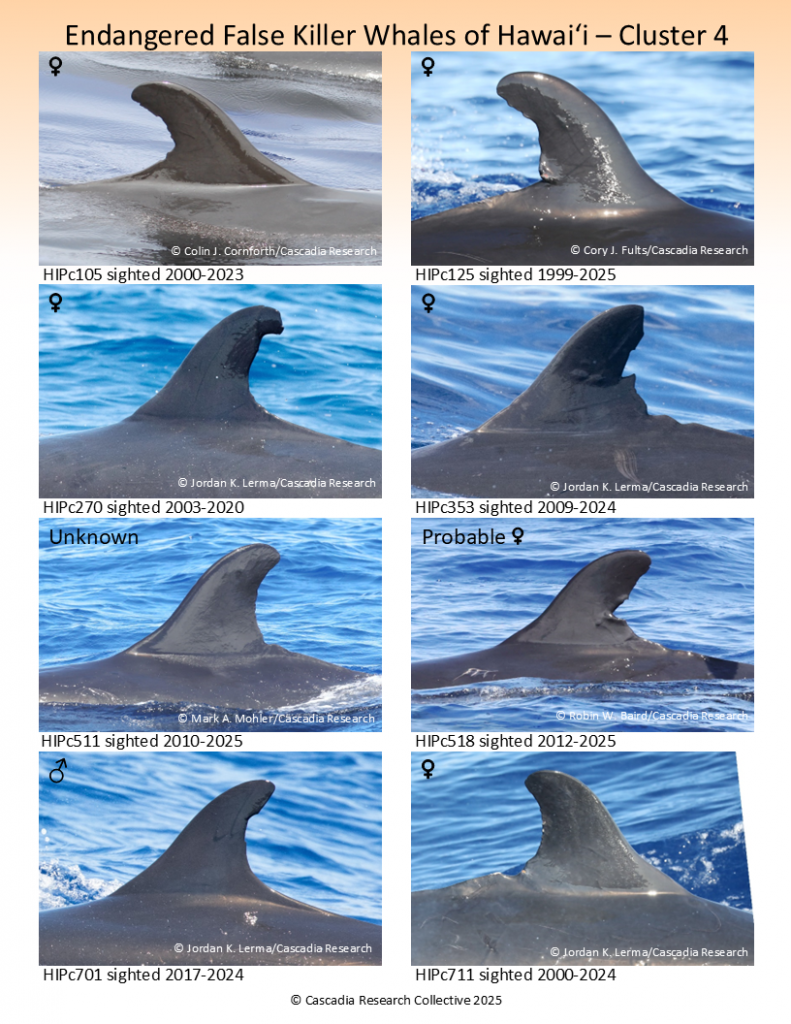
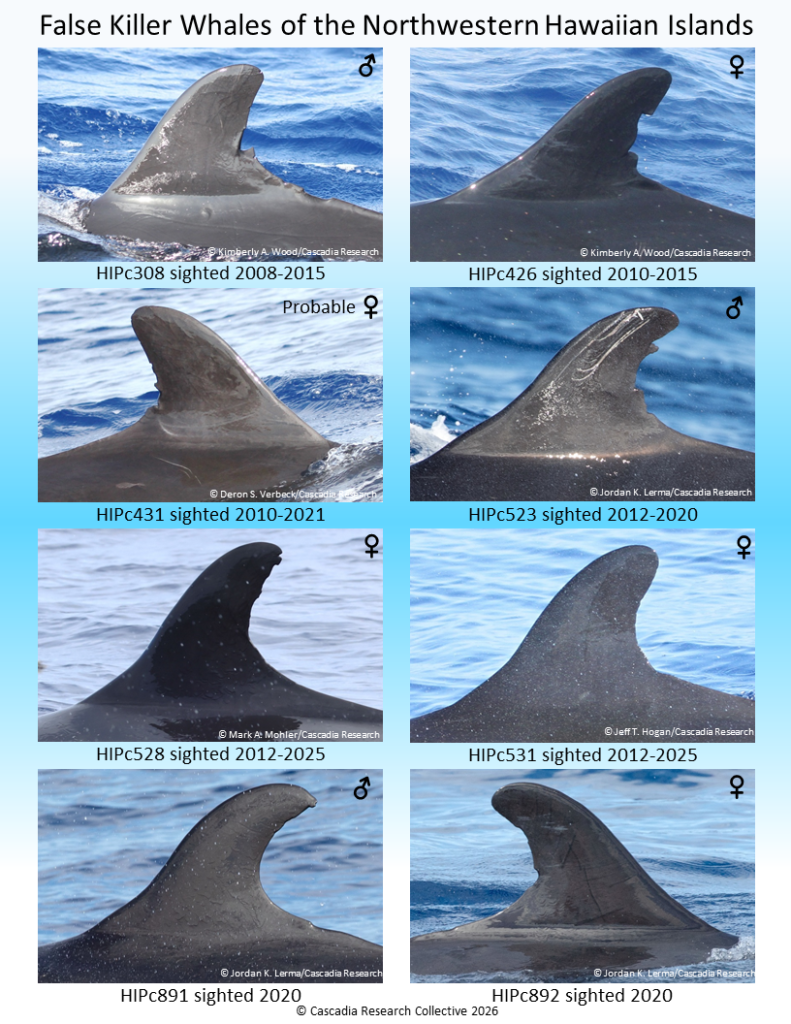
Pseudorca crassidens, or false killer whales, are a large toothed whale that lives in the tropical and sub-tropical open ocean. In Hawaiian waters there are three populations: an offshore (pelagic) population, a Northwestern Hawaiian Islands population, and a small population associated with the main Hawaiian Islands – this latter population are long-term residents, they are kama‘aina, truely Hawaiian, Pseudorca. This population was listed as Endangered under the Endangered Species Act in November 2012. More is known about Pseudorca in Hawaiian waters than anywhere else in the world, and they are one of the highest priority species for our Hawai‘i research program. Below you will find photographs and a variety of information on Pseudorca in Hawai‘i and elsewhere.
Pseudorca are uncommon everywhere – they are at the top of the food web, and like other top predators are naturally rare. A NMFS study of all of Hawaiian waters out to the international boundary found that false killer whales were the least abundant of the 18 species of toothed whales and dolphins found in Hawaiian waters.
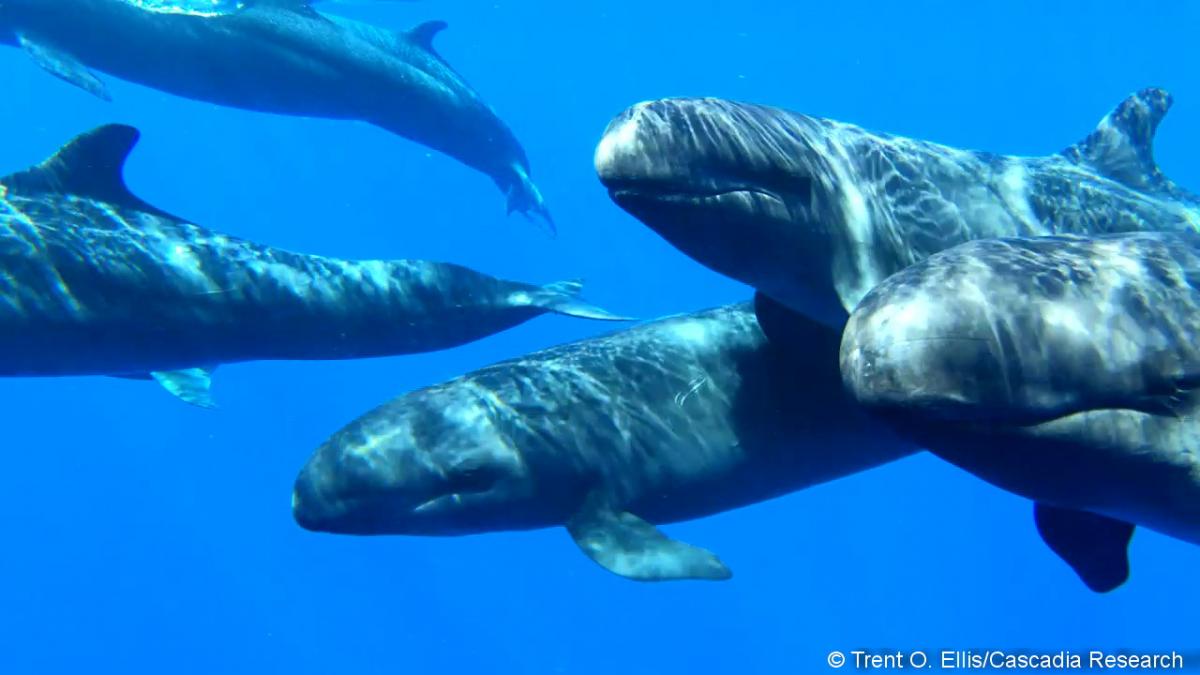
A group of Pseudorca encountered off Lāna‘i in March 2019.
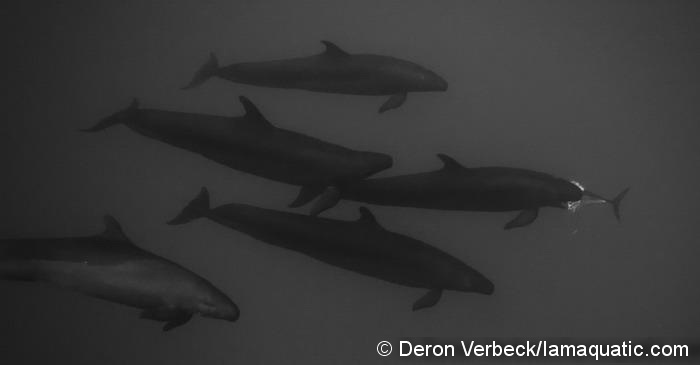
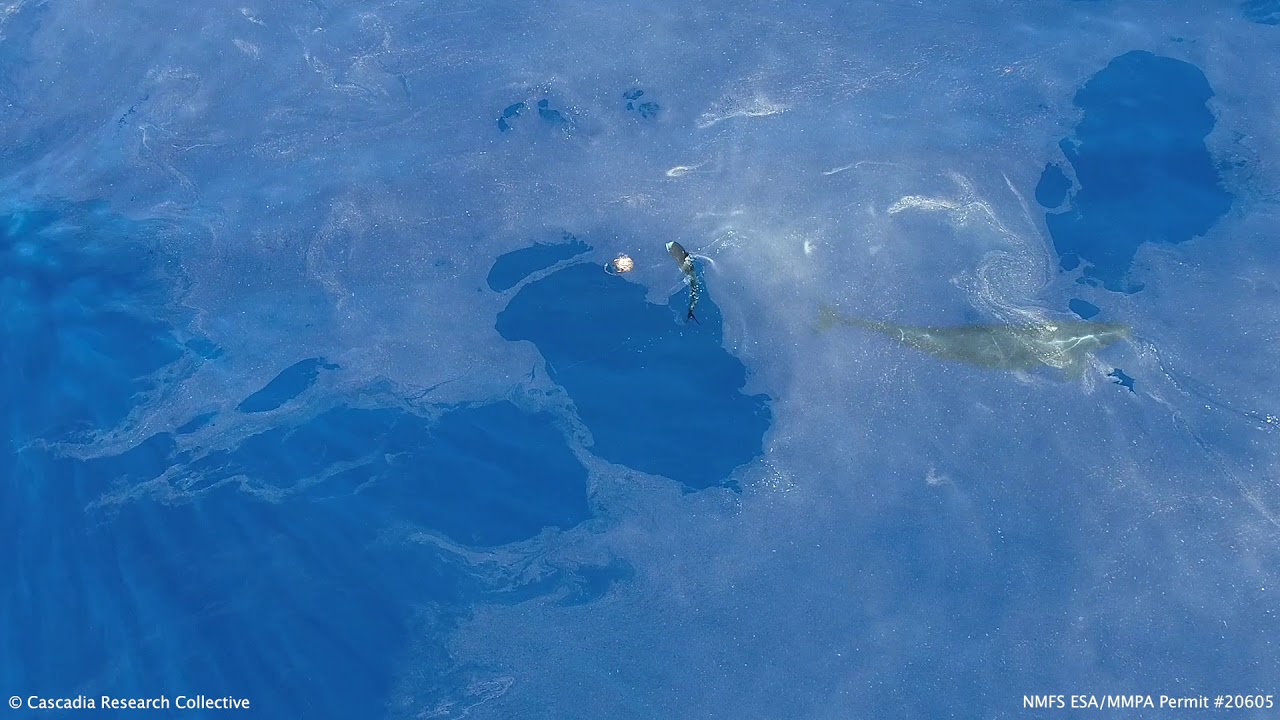
A Pseudorca carrying a tuna, followed by its hunting companions.
In Hawaiian waters Pseudorca regularly use near-shore areas. The island-associated population is genetically differentiated from Pseudorca in offshore Hawaiian waters (Chivers et al. 2007; Martien et al. 2011). Photographs obtained by researcher Dan McSweeney (of the Wild Whale Research Foundation, based in Holualoa) from the mid-1980s and 1990s have been used to demonstrate that this population has long shown fidelity to the area (Baird et al. 2008). The most recent population estimate for the main Hawaiian Islands insular population is approximately 139 individuals (in 2022). Like the killer whale (not particularly closely related but with a very similar skull), Pseudorca are long-lived (into their 60s), slow to reproduce (having one calf only every 6 or 7 years), and do not start reproducing until their teens. Like humans, females go through menopause, and have a long post-reproductive period. Thus Pseudorca populations would be very slow to recover from any impacts from human activities. Also like killer whales, because they are long-lived upper-trophic level predators, they accumulate high levels of toxins and may be impacted by competition with human fisheries.
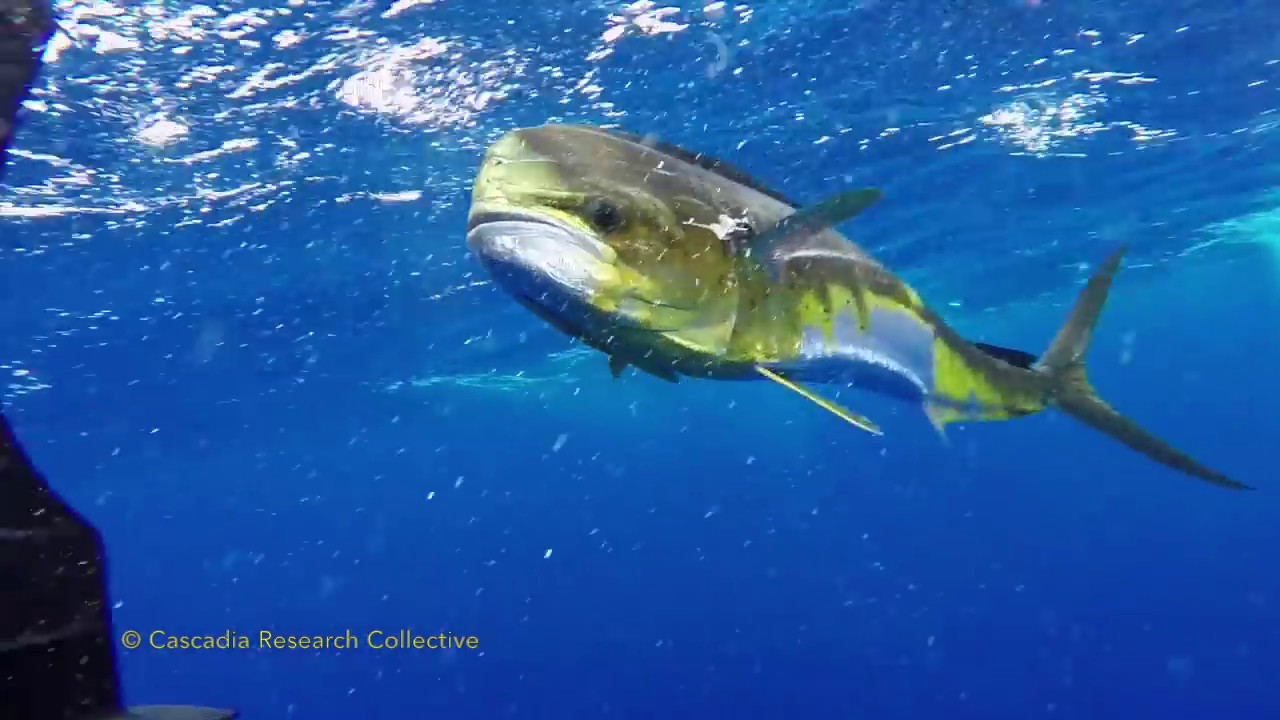
Our photo-identification work has demonstrated that Pseudorca have long-term bonds. They share their prey, not only with their companions, but also with humans. A Pseudorca that was alone in British Columbia and Washington from the late 1980s until a few years ago, far from their normal range off Mexico, repeatedly caught large salmon and would offer them to boaters. In Hawaiian waters, Pseudorca have offered fish to human snorkelers and divers.
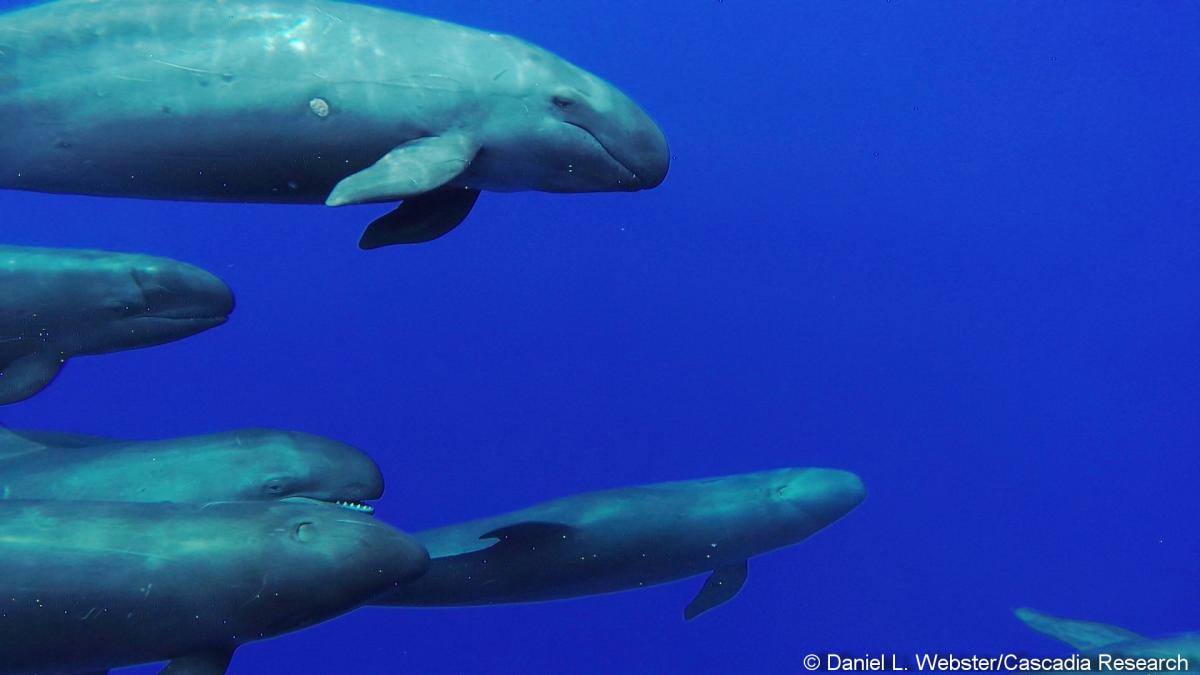
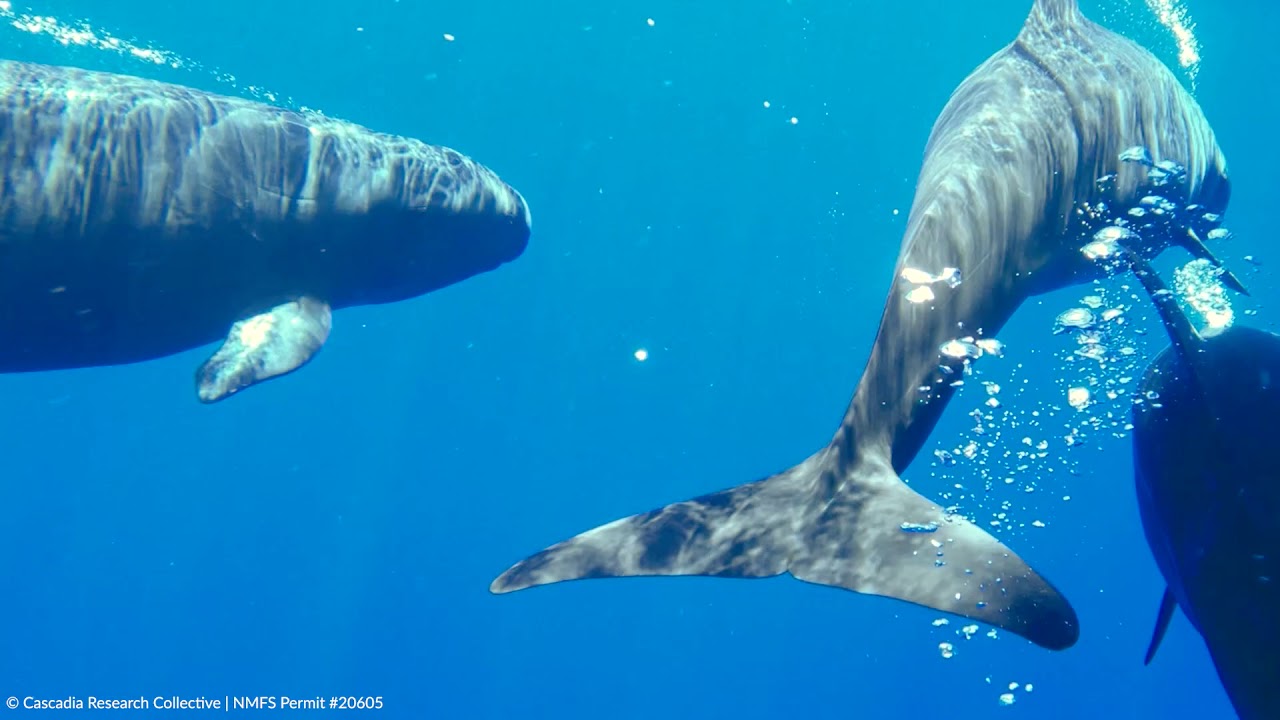
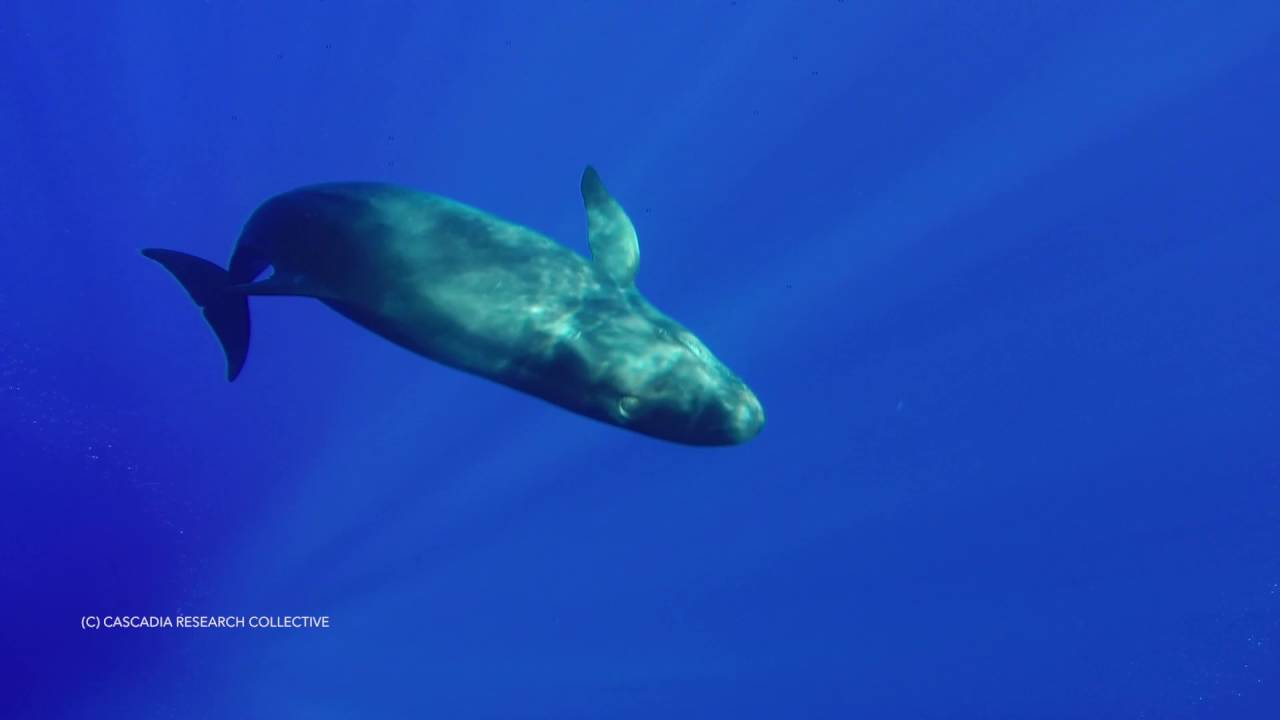
A group of Pseudorca from the insular population.
Recent evidence indicates the insular population of Pseudorca in Hawai‘i has declined dramatically since the 1980s and 1990s (Reeves et al. 2009). Five years of aerial surveys undertaken from 1993 through 2003 by Joe Mobley of the University of Hawai‘i West O‘ahu have shown a steep decline in sighting rates. Group sizes of the largest groups documented in surveys undertaken by Steve Leatherwood and Randy Reeves in 1989 were almost four times larger than the entire current population estimate (Reeves et al. 2009).
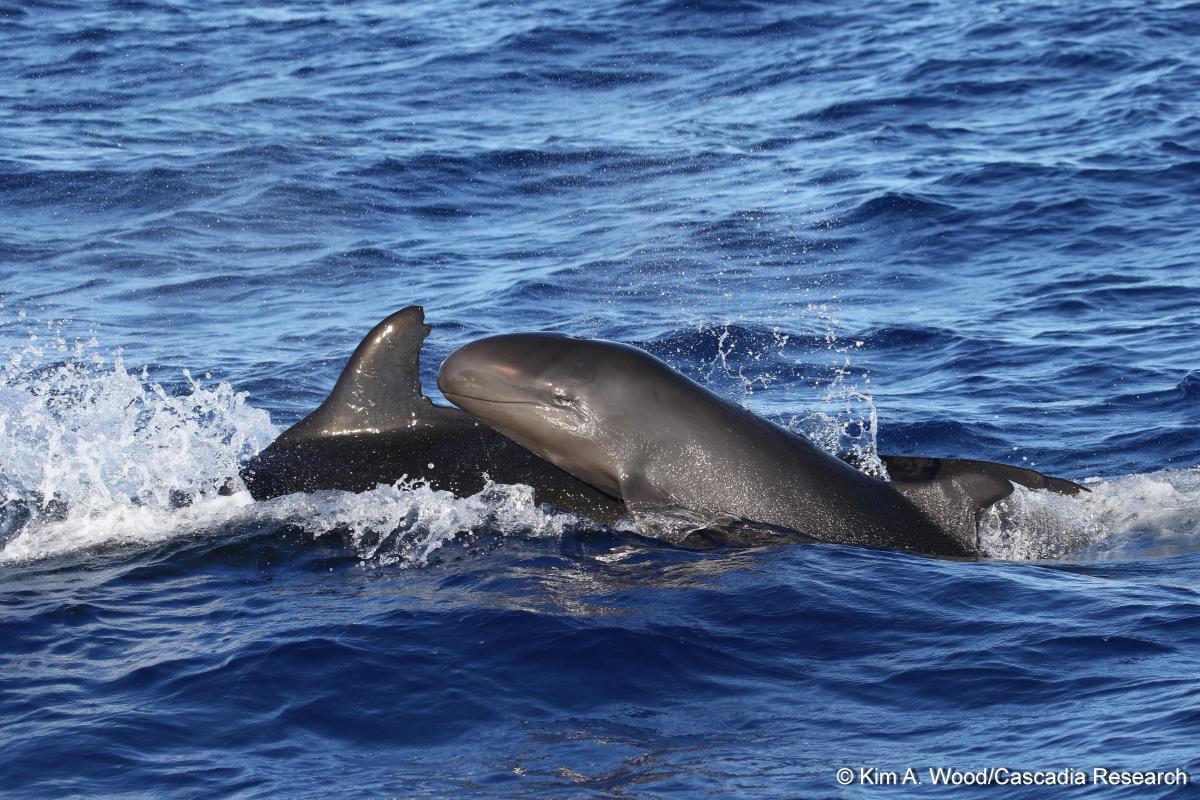
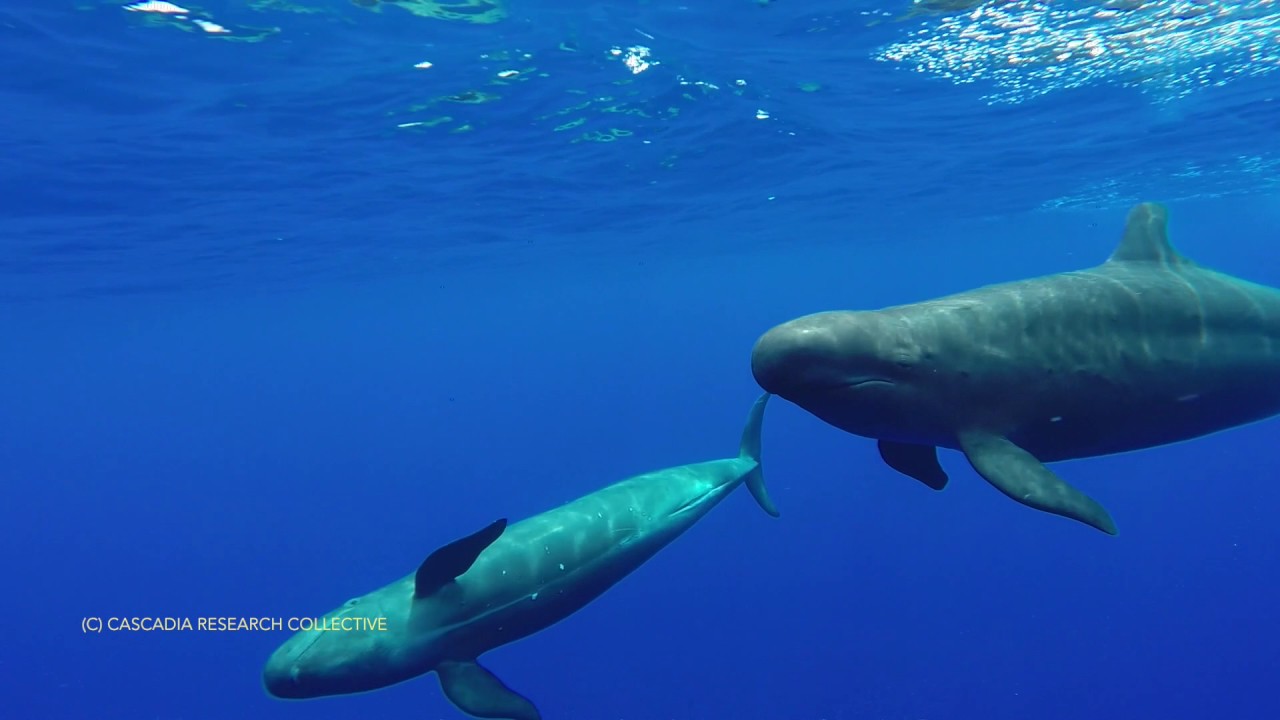
Mother and calf Pseudorca, 13 November 2017.
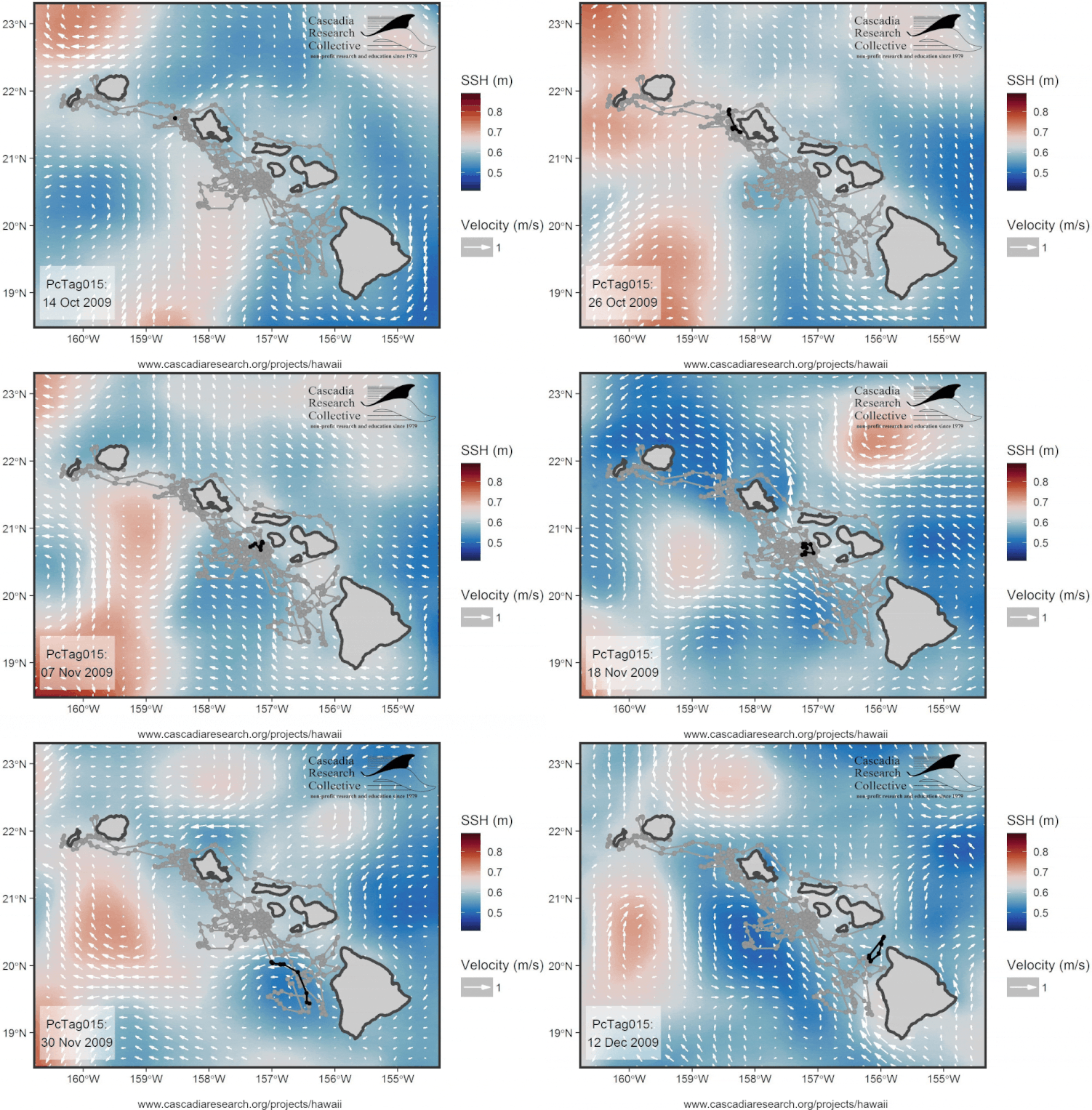
Above: an animation of the movements of PcTag015 in relation to eddy fields.
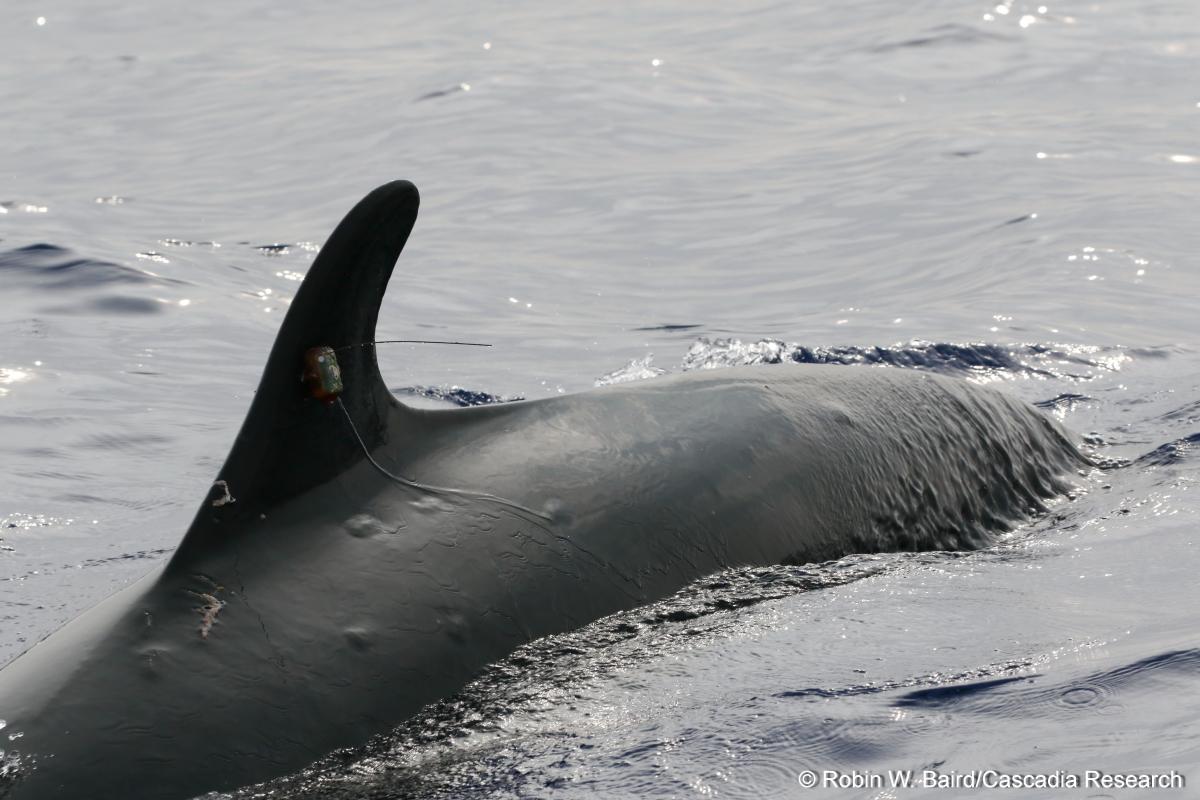
Pseudorca with a satellite tag. We are using these tags to examine movements of both the insular and offshore populations in Hawaiian waters, in part to try to assess interactions with the long-line fishery.
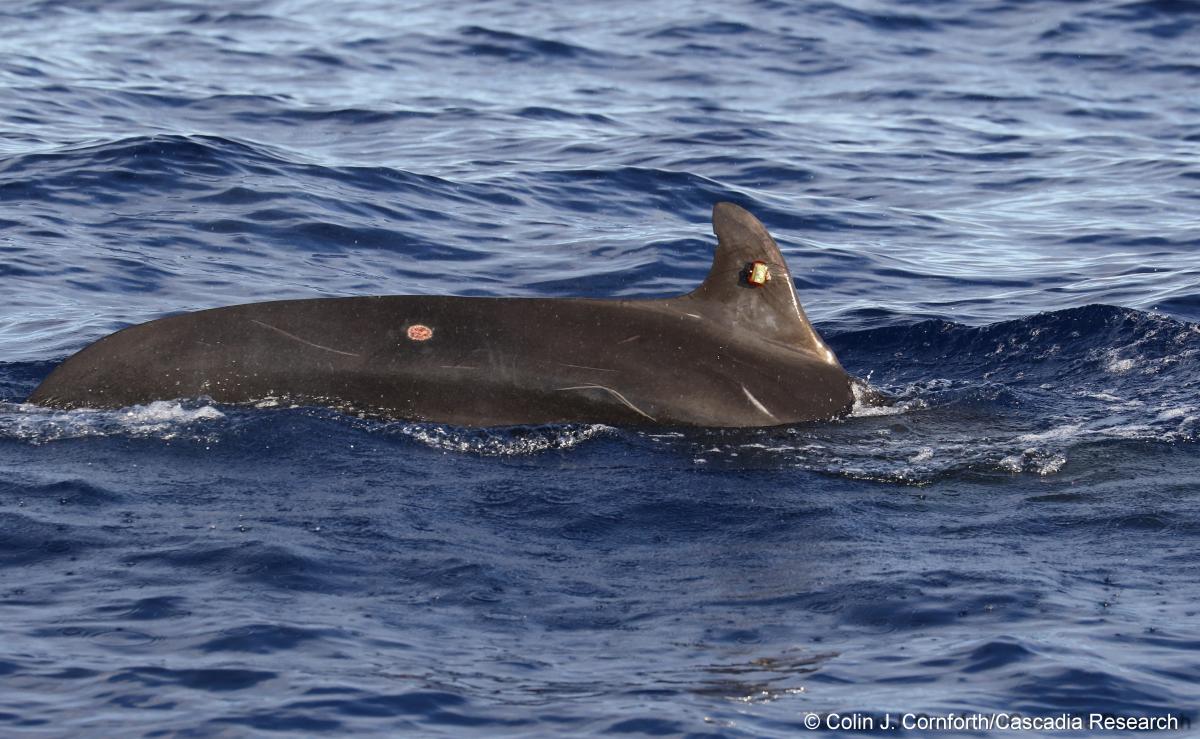
Pseudorca with a satellite tag. We are using these tags to examine movements of both the insular and offshore populations in Hawaiian waters, in part to try to assess interactions with the long-line fishery.
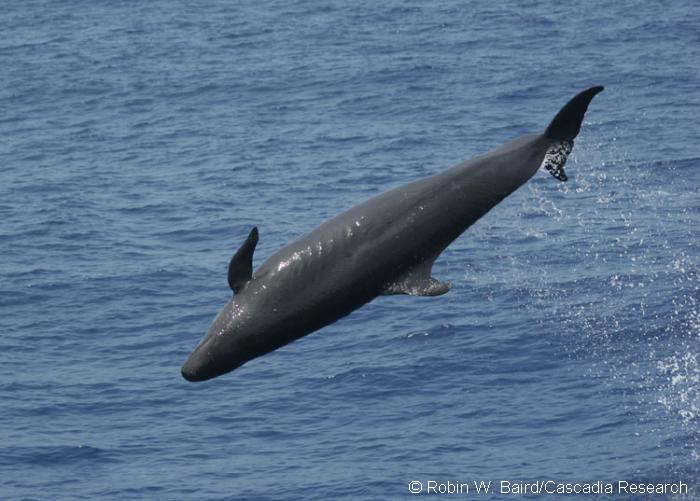
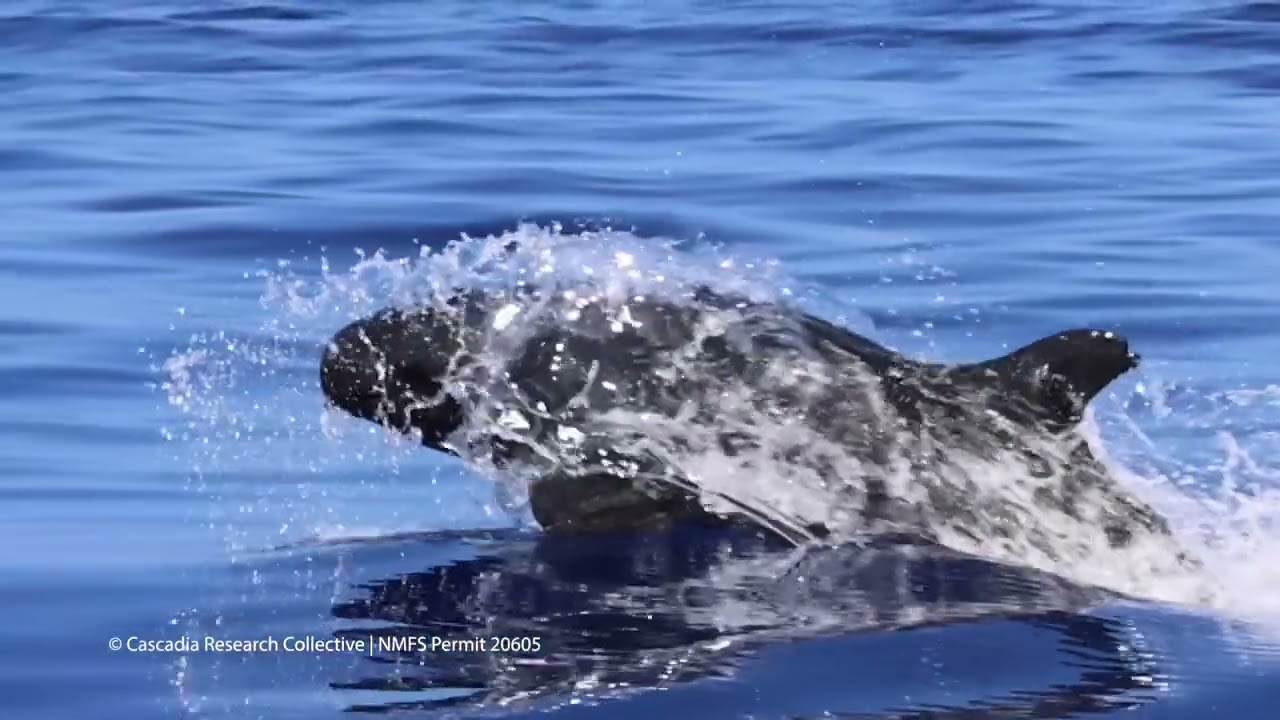
A Pseudorca from the offshore population leaping while chasing prey.
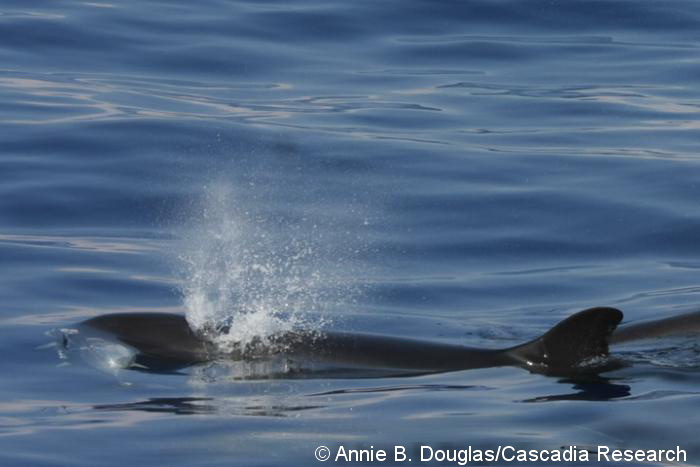
Pseudorca with tuna.
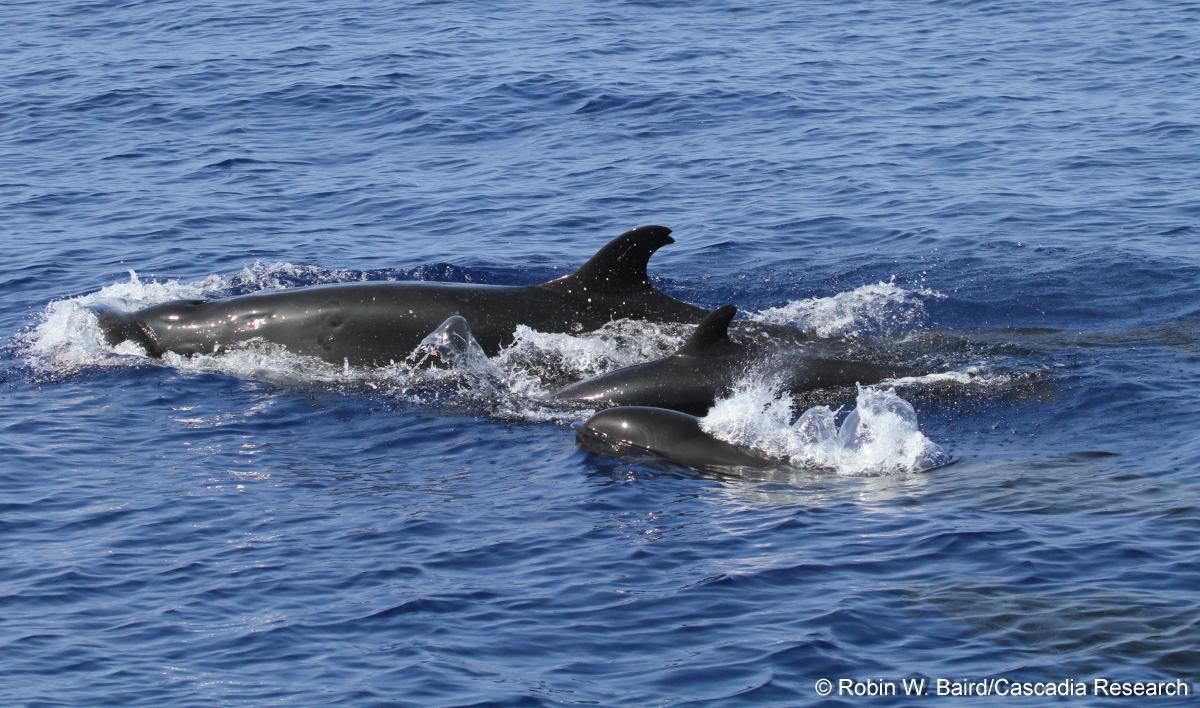
Offshore Pseudorca group with a calf.
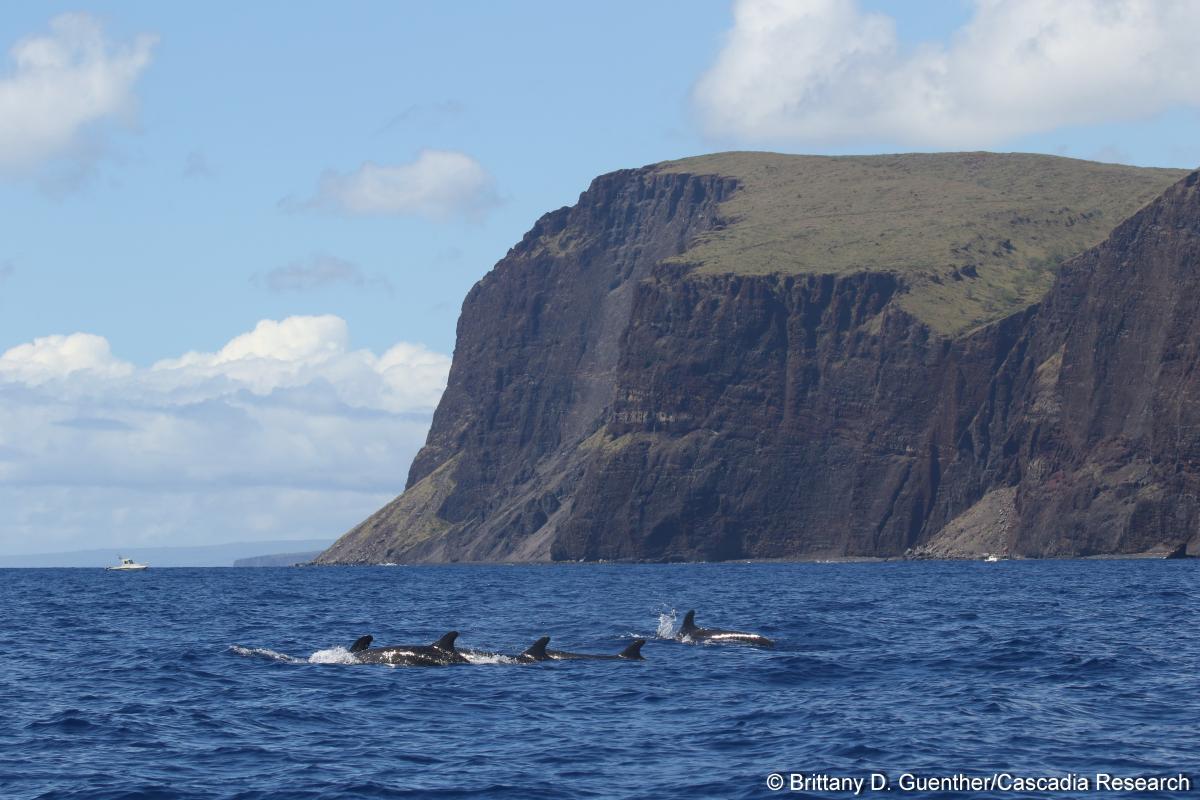
Pseudorca off the island of Lāna‘i .
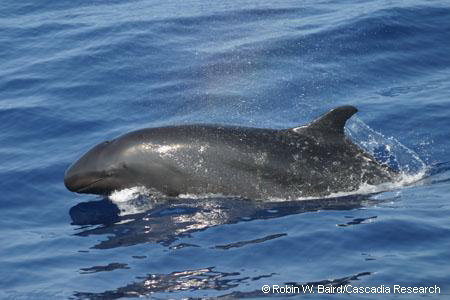
Pseudorca off the island of Hawai‘i.
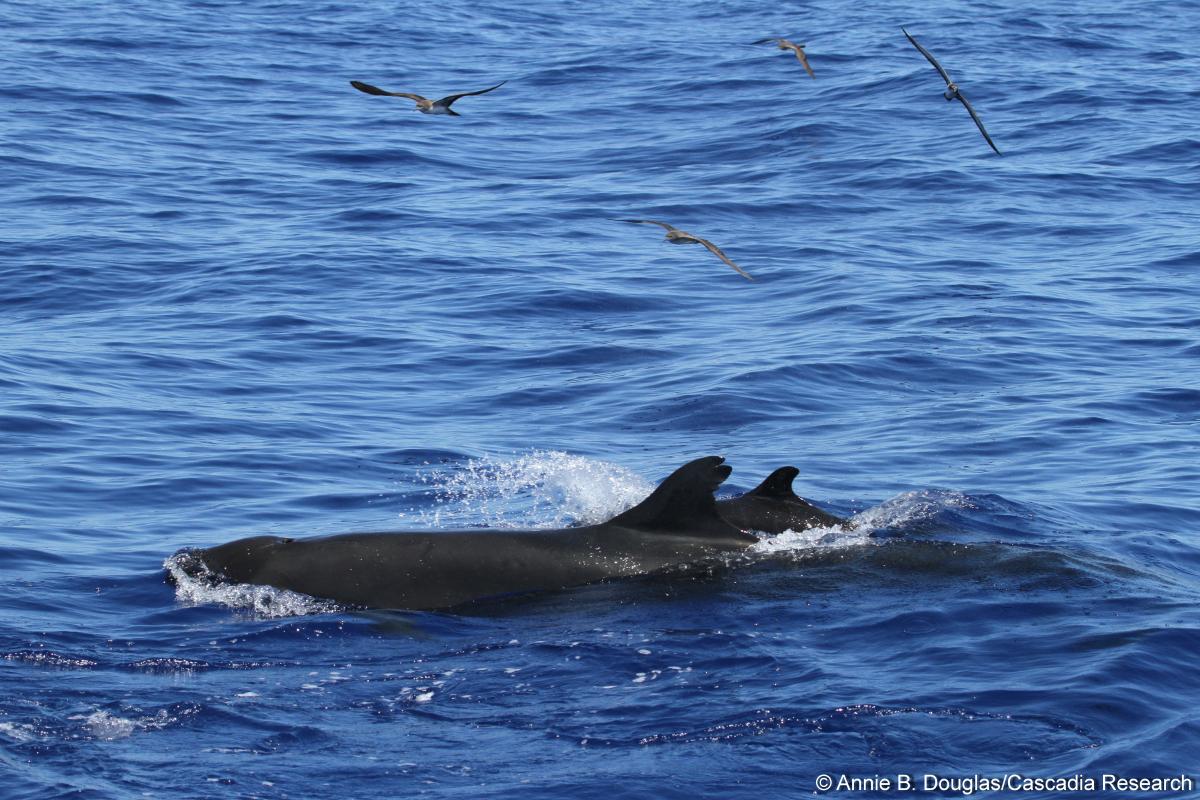
Pseudorca mother and calf.
Pseudorca are closely related to, and often confused with pygmy killer whales, short-finned pilot whales and melon-headed whales, all of which are also found in Hawaiian waters.
Attention educators – if you would like a copy of a Powerpoint presentation for educational purposes/displays please contact Robin Baird at rwbaird (at) cascadiaresearch.org
Playlist


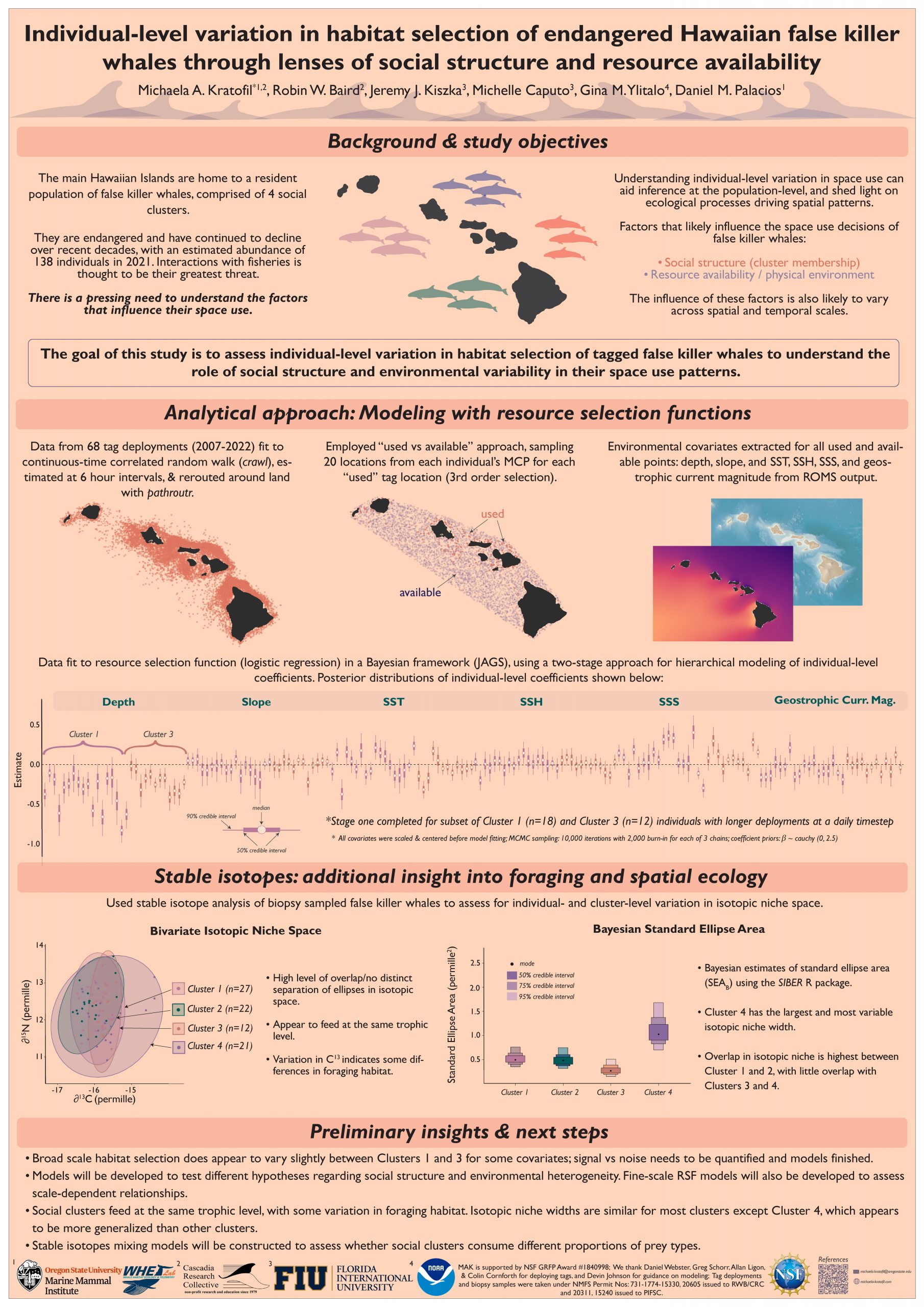
False killer whales in the news
There have been a number of articles and stories on false killer whales in the news in recent years – links to some of these are below.
 | 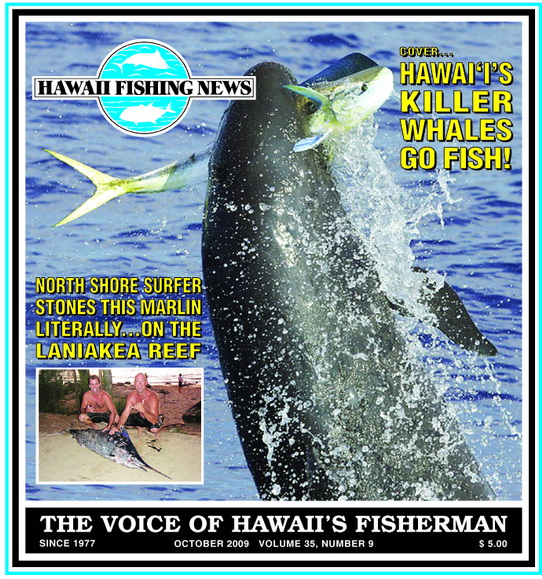 |
Click on the images above to go to the articles in the Honolulu Weekly (February 24, 2010) or the Hawaii Fishing News (October 2009)
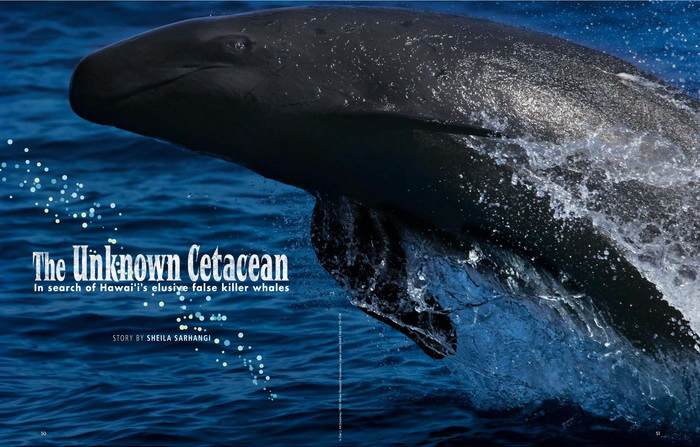
The unknown cetacean – in search of Hawai‘i’s elusive false killer whale by Sheila Sarhangi, in Hana Hou!, October/November 2011. Click on the image above to get a copy of the article
Killers with manners in Environment Hawai‘i, May 2010
The greenest band on the planet? by Treena Shapiro in The Honolulu Advertiser, March 29, 2010
Feds try to reduce deaths of dolphins off Hawaii’s shores by Audrey McAvoy in The Maui News, January 23, 2010 (for more information on the false killer whale Take Reduction Team see the web pages of NOAA Fisheries headquarters or the Pacific Islands Regional Office)
Save the Pseudorca by Rob Parsons in MauiTime, November 12, 2009
Photos taken under NMFS Scientific Research Permits (Nos. 731-1774 and 15330). All photos are copyrighted and should not be used without permission.
Updated May 2026.
Return to the Hawaiian Dolphin and Whale Species Page
Got photos? We have photo-ID catalogs for several Hawaiian cetacean species! If you have photos that you would be willing to share, you can learn how to submit those to us at this link, or contact us at Hawaii@cascadiaresearch.org